
Key points to keep in mind
- An isolation transformer creates galvanic separation between the supply and the load, which helps control how faults and noise travel.
- It is especially useful in PLC panels, drive systems, test benches, and instrumentation where ground loops and interference are common.
- It can support voltage matching and local neutral reference arrangements in UK systems that commonly run at 230 V, 50 Hz.
- It improves resilience, but it does not replace proper earthing, protective devices, surge protection, or good panel design.
- The right unit depends on load type, inrush, harmonics, shielding, enclosure rating, and how the system is actually used.
What an isolation transformer actually changes in a circuit
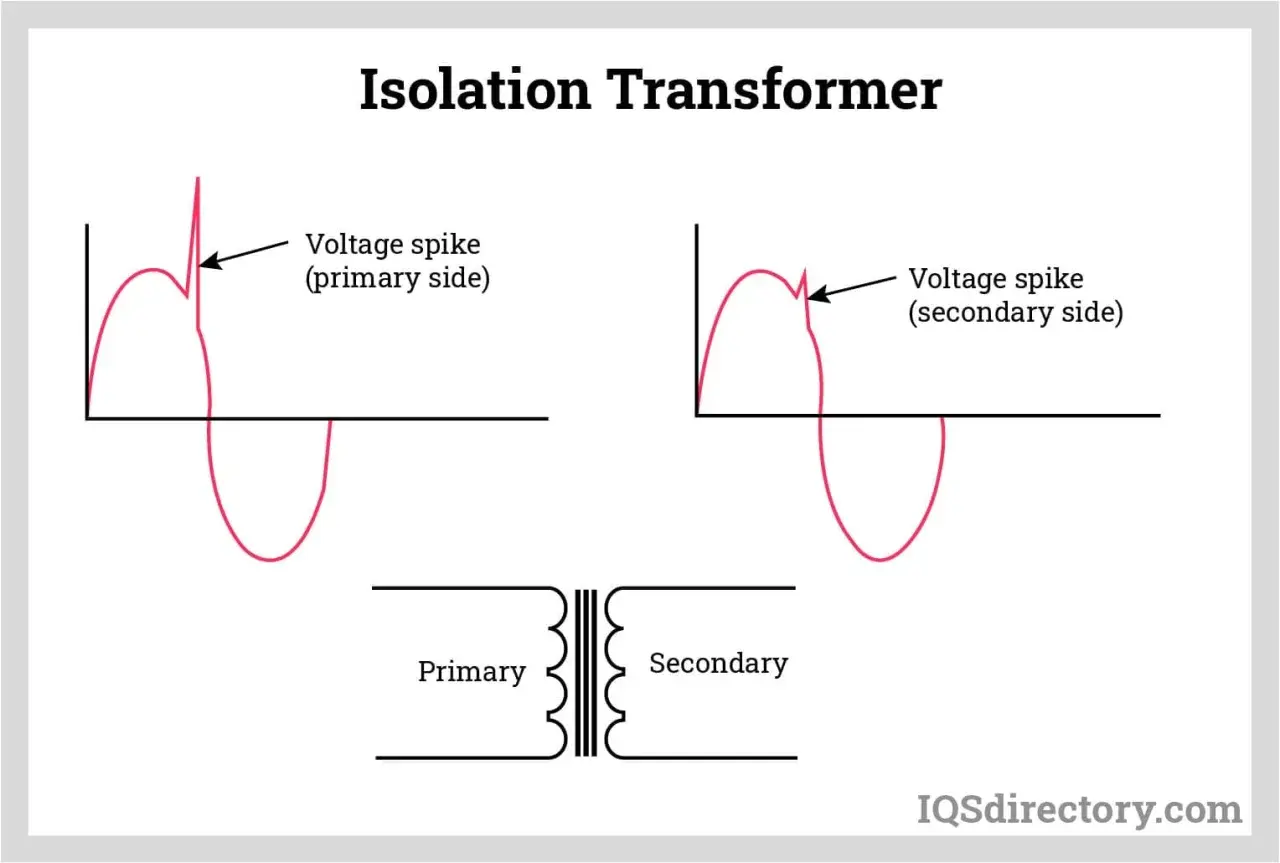
An isolation transformer transfers AC power through magnetic coupling instead of a direct conductive path. That is the key point: the primary and secondary are electrically separated, so the load can be powered without sharing the same hard connection to the supply side. The output may be the same voltage as the input, or a different one, but the main value is the separation itself.
In a UK industrial setting, that separation is often more useful than it sounds. Many problems in control cabinets, instrumentation loops, and drive panels are not caused by a lack of power. They are caused by noise, poor reference paths, or fault currents travelling in places they should not. A transformer does not magically make a system perfect, but it gives you a cleaner boundary to work with.
I usually treat it as a design tool, not a generic accessory. If you understand what it changes in the circuit, the rest of the decision becomes much easier.
The main reasons engineers specify one
When I see an isolation transformer in an electrical system, it is usually there for one of four reasons: safety, noise control, voltage or grounding flexibility, and equipment protection. Those sound broad, but they show up in very specific ways on the shop floor.
Safer fault containment and clearer maintenance boundaries
An isolation transformer can limit how a fault on one side of the system couples directly into the other side. That does not make the secondary harmless, and I would never present it that way. But it does give engineers a cleaner way to define a local power island, which is useful during maintenance, commissioning, and troubleshooting.
It is also why isolation is common in test rigs and temporary setups. When multiple instruments, laptops, analyzers, and field devices are connected at once, a well-defined isolation point can reduce the chances of one bad reference taking down the rest of the system.
Less noise in control and instrumentation circuits
Industrial automation is full of small signals living near big electrical noise. Variable frequency drives, switched-mode power supplies, relays, contactors, and servo equipment all generate interference that can creep into sensitive electronics. A transformer helps by breaking direct conductive paths that allow common-mode noise and ground loops to spread.
That is especially useful when a PLC, sensor network, or metering circuit behaves unpredictably for no obvious reason. In practice, the transformer is not the only answer, but it often forms part of the answer alongside shielding, separation of power and signal cabling, and proper earthing.
Local voltage and neutral arrangements
In some installations, the transformer is used to create a new local reference point or to convert one supply arrangement into another. In the UK, where sites commonly work with 230 V, 50 Hz supplies and 400/230 V three-phase distribution, this can simplify how downstream equipment is connected and protected.
This is one reason isolation transformers appear in panel building and retrofit work. They let the designer create a controlled secondary side instead of forcing every device to live with the exact quirks of the upstream network.Read Also: LED EMI Filter - Stop Noise & RCD Trips in UK Systems
Protection for sensitive or expensive equipment
When you are protecting instrumentation, networked controllers, or custom manufacturing hardware, the cost of a nuisance event is often higher than the cost of the transformer itself. A transformer can help shield downstream electronics from certain coupling effects, especially when the upstream environment is noisy or when multiple earth references are unavoidable.
That said, I would not use a transformer as a substitute for surge protection or filtering. It is a layer, not the whole stack. The best installations usually combine it with the right protective devices and sensible layout choices.
Those benefits become more convincing when you look at the places where isolation does the most work, which is where the next section matters.

Where isolation pays off in industrial automation
The strongest use cases are usually the ones where power quality and uptime both matter. In industrial automation and smart manufacturing, that often means control panels, process lines, commissioning benches, and mixed-signal environments where a small electrical disturbance can become a real production problem.
| Application | What it helps with | What I would watch for |
|---|---|---|
| PLC and I/O cabinets | Reduces the chance that noise from nearby power equipment reaches fragile control electronics | Separate signal and power routing still matters; a transformer alone will not fix poor cabinet layout |
| Variable frequency drive areas | Helps isolate control power from drive-related electrical noise and commutation effects | Check inrush and harmonics, especially if multiple drives share the same supply chain |
| Test and commissioning rigs | Creates a clearer boundary for measurements and temporary device setups | Make sure the transformer rating matches the real test load, not just the nominal device rating |
| Mixed-vendor retrofit panels | Helps when new equipment must coexist with older grounding practices and unpredictable reference paths | Document the earthing scheme carefully so the secondary side is not left ambiguous |
| Monitoring and IoT gateways | Protects low-power electronics that sit close to noisy plant equipment | Verify that the extra isolation does not interfere with the communications architecture |
That is why the device shows up so often in industrial automation discussions. It is not there because engineers enjoy adding hardware. It is there because some problems only show up when the system is already live, interconnected, and carrying real load.
In a plant with smart sensors, edge devices, and connected machinery, the transformer is often the quiet part of the design that keeps the rest of the stack usable.
When it is the wrong answer
An isolation transformer is useful, but it is not a universal fix. If the real issue is overload, undersized conductors, poor protective coordination, or a badly designed EMC layout, a transformer will not save the installation. It may even make the problem more expensive if it is added too early or specified too large.
The first limitation is loss. Every transformer introduces core and copper losses, so there is always some heat and standing power consumption. The second is size. Once you move above small control ratings, the hardware becomes physically larger and more expensive, which matters in tight panels. The third is inrush. A transformer can pull a substantial magnetising current when energised, and if that is ignored you can end up with nuisance tripping or overstressed upstream protection.
There are also cases where another component is the better tool. If the issue is high-frequency noise, an EMC filter or line reactor may be more effective. If the issue is surges, a surge protective device is the priority. If the issue is safety isolation for a specific task, a properly designed control circuit or SELV/PELV arrangement may be more appropriate than adding another transformer just because it feels robust.
That distinction matters, because good engineering is mostly about choosing the simplest solution that actually solves the problem.
How I would choose the right transformer for a UK installation
If I were selecting one for a UK industrial panel, I would start with the load and work backwards. The supply side is rarely the real mystery. The load side tells you whether you need basic separation, noise attenuation, voltage conversion, or all three.
| Selection factor | What to check | Why it matters |
|---|---|---|
| Voltage ratio | Match the primary and secondary to the actual supply and load, such as 230 V to 230 V or 230 V to 110 V | A mismatch wastes money and can create downstream protection issues |
| Capacity | Size for continuous load, inrush, and any future margin | Undersizing leads to heat, poor regulation, and nuisance trips |
| Load type | Identify whether the load is resistive, inductive, nonlinear, or drive-fed | Nonlinear loads and drives stress transformers very differently from heaters |
| Shielding | Consider an electrostatic shield if noise rejection is important | It improves attenuation of certain coupled disturbances between windings |
| Earthing scheme | Define how the secondary neutral and protective earth will be handled | Bad grounding can undo the benefit of the transformer |
| Enclosure and environment | Check temperature rise, ventilation, and IP rating | Industrial spaces are hot, dusty, and often cramped |
I usually leave 20 to 30 percent headroom for continuous loads, and more when the connected equipment has meaningful inrush or harmonic content. That is not a rule carved in stone, but it is a practical starting point that avoids the common mistake of sizing only for the nameplate current.
In UK installations, I also pay attention to whether the panel is single-phase or three-phase, how the neutral is being used, and whether the transformer is expected to support control power, test equipment, or a mix of both. Those details change the specification more than most buyers expect.If you want the transformer to improve noise performance, look at the whole path, not just the transformer data sheet. Cable segregation, bonding, filtering, and the enclosure layout still decide how well the system behaves in the real world.
What I would check before treating it as the fix
The real answer to why use an isolation transformer is that it gives you a controlled electrical boundary where one is needed. That boundary can improve safety, reduce nuisance problems, and make industrial systems easier to commission and maintain. But the value comes from fitting it to the actual fault, noise, or grounding problem, not from using it as a default upgrade.
If the system is noisy, I would first ask where the noise is entering. If the issue is protection, I would check coordination and fault levels. If the issue is control instability, I would look at grounding, shielding, and routing before I add hardware. In other words, the transformer is often the right answer, but only after the problem has been defined properly.
That is the practical habit I would keep in 2026: use isolation where separation genuinely improves the system, and resist the temptation to add it everywhere else just because it sounds more robust.
