
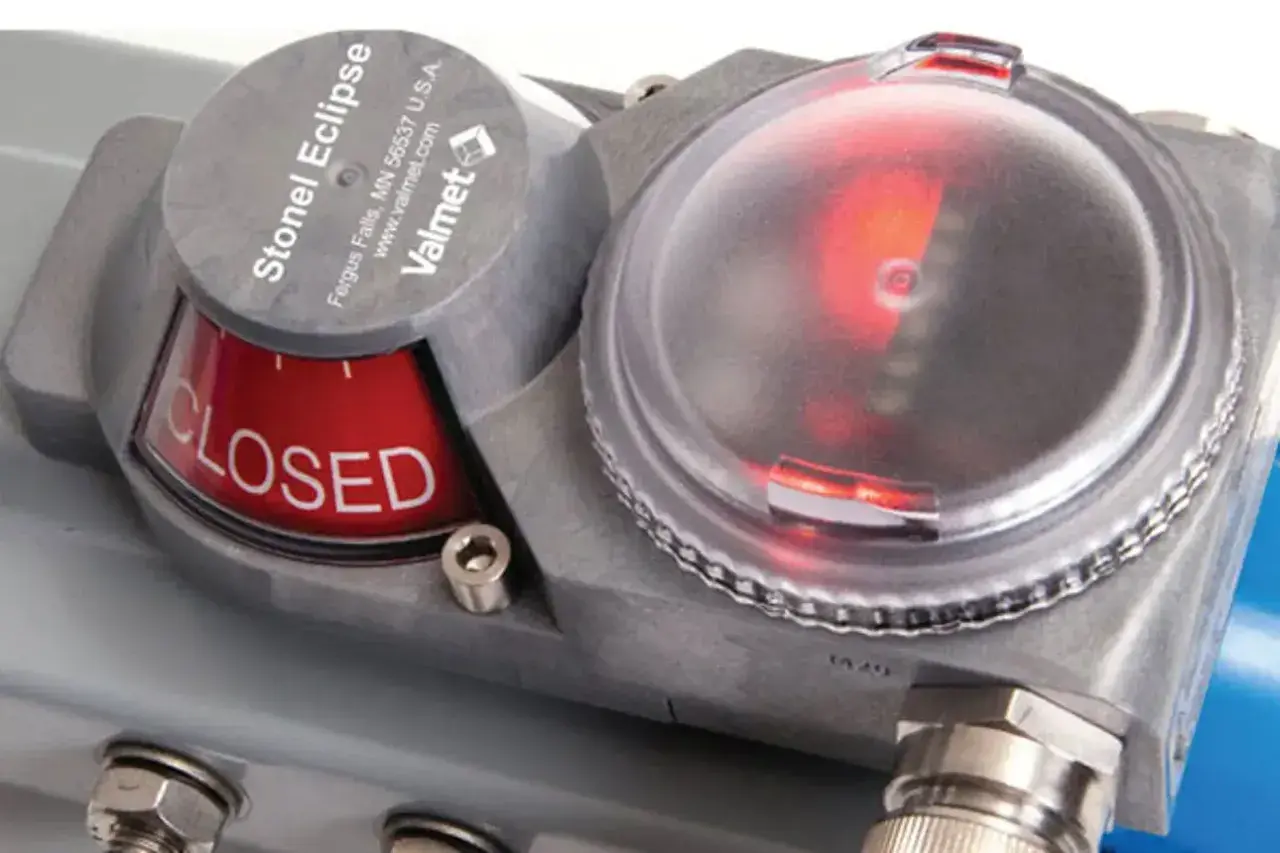
Stonel Quartz limit switches sit at the point where valve position, hazardous-area compliance, and maintenance pressure all meet. For UK buyers, the real question is not just whether the device works, but whether the vendor can supply the right enclosure, mounting hardware, approvals, and after-sales support without delaying a shutdown or project handover. This article breaks down what the Quartz series does, how the UK supply path works, and which checks I would make before placing an order.
The buying signals that matter most
- The official UK contact currently listed is Imtex Controls Limited in Tonbridge.
- The Quartz family is not a single build; QX, QN, QC, and QG versions serve different environments.
- The right vendor should confirm the full model code, mounting kit, and approvals before shipment.
- For hazardous or washdown service, support quality matters more than the lowest headline price.
- If the application is critical, I would ask who owns spares, documents, and fit-up support after the sale.
What the Quartz series is doing on the valve
This product is a position-feedback device for on/off automated valves. In practical terms, it tells operators and control systems whether a valve is open, closed, or moving, using mechanical switches, proximity sensors, transmitters, or communication modules. I see this kind of hardware most often where the environment is the real enemy: corrosive plants, heavy washdown zones, offshore assets, and process lines that punish weak enclosures first.
Its value is not marketing polish. It is the mix of compact packaging, quick adjustment, and multiple enclosure options that let it survive in places where a generic limit switch would become a maintenance problem. The family covers explosionproof, intrinsically safe, nonincendive, low-temperature, and general-purpose service, so the vendor’s first job is to stop the wrong configuration from reaching the site. That is why buying well here is less about the switch body and more about application fit.
Once that is clear, the vendor question becomes much easier to handle, because you know what support you actually need rather than just what is in stock.
Who I would trust in the UK supply chain
For the UK market, I would begin with the official country listing, which currently names Imtex Controls Limited in Tonbridge. That is the route I would prefer for anything that needs traceability, model-code support, or a configuration tied to approvals and documentation. In this category, a proper distributor is more useful than a generic reseller, because the risk is usually not “will it arrive,” but “will the exact build be correct when it does.”
| Buying route | Best for | What I would verify |
|---|---|---|
| Official UK distributor | New builds, critical spares, approval-sensitive orders | Exact model code, mounting kit, approval documents, and lead time |
| Local automation integrator | Retrofits and turn-key valve packages | That they are supplying genuine parts and owning the fit-up |
| Manufacturer channel contact | Unusual configurations or technical edge cases | Who in the UK will support the order if the application changes |
When the spend is tied to uptime, I always ask who is responsible if the wrong enclosure, sensor option, or mounting kit is quoted. The answer tells me very quickly whether I am dealing with a real vendor partner or just a sales layer, and that distinction matters even more once the project moves from catalog browsing to installation.
How I match the right version to the job
The Quartz family is broad enough that a vendor cannot responsibly sell it as a one-size-fits-all item. The most useful way to think about it is by environment first, then by signal type, then by mounting.
| Version | Best fit | Why it matters |
|---|---|---|
| QX | Explosionproof and harsh process areas | This is the build I would look at when hazardous area protection and corrosion resistance both matter. |
| QN | Intrinsic safety or nonincendive service | Useful when the site design depends on energy limitation rather than a heavy-duty flameproof enclosure. |
| QC | Low-temperature installations | Important for outdoor assets or plants where winter performance becomes a real operational issue. |
| QG | General-purpose plant areas | A sensible option when the application is not classed as hazardous and the environment is less aggressive. |
Beyond the enclosure, the family can be configured with 2, 4, or 6 mechanical or proximity switches, position transmitters with or without switches, and communication options such as AS-Interface or DeviceNet. That flexibility is useful, but only if the vendor confirms the control system can actually use the output you want. I also like the fact that the platform can be mounted to quarter-turn actuators, manual operators, linear operators, and positioners using stainless steel mounting systems, because that keeps the buying decision tied to the real machine rather than a paper spec.
In practice, the right version is the one that matches the area classification, temperature range, and control architecture without forcing the plant team into improvisation later.
What a good vendor should deliver beyond the part number
When I evaluate suppliers in this category, I assume the hardware is only half the job. A good vendor should be able to answer four questions without hesitation: which mounting kit fits, which approvals apply, which documents ship with the order, and how spare parts will be handled later.
- Full model-code confirmation, not just the product family name
- Mounting kit selection for the actuator or valve pattern
- Area-classification and temperature compatibility
- Installation and maintenance instructions for the exact build
- A clear spare-part and lead-time path if the asset needs service later
If a seller treats the unit like a commodity switch, I slow down. This is a piece of process equipment that often lives in regulated, high-consequence environments, so a vague answer on paperwork is a warning sign, not a minor inconvenience. I prefer vendors who can talk through setup and compliance in plain language, because that is usually the difference between a clean installation and a second purchase order.
That is also why the buying process should be short and deliberate rather than open-ended.
The checks that prevent a second order
For a UK project, I would keep the buying sequence tight. First, confirm the valve type and actuator interface. Second, lock the environment: hazardous area, washdown, temperature, and any communications requirement. Third, ask the vendor to quote the complete configuration, including mounting hardware and documents. If any of those items is vague, the quote is not ready.
- Identify the valve and actuator style before anything else.
- Confirm whether the area is hazardous, washdown-heavy, cold, or general purpose.
- Choose the correct enclosure and signal option for that duty.
- Ask for the full code, mounting kit, and documentation pack in one response.
- Clarify who will support spares if the unit needs work after installation.
I also pay attention to the small things that get ignored during urgent maintenance work. A screw-on cover only helps if the crew can reopen and reseal it safely. A compact visual indicator only matters if it stays readable once the unit is tightened into place. And if the asset is mission-critical, I ask the vendor which spare parts they recommend keeping locally, because waiting for a second shipment is rarely the cheapest outcome.
That is the practical way I would buy into this product family in 2026: start with the official UK channel, match the version to the environment, and make the vendor prove that they understand the application before the order leaves the building.
