
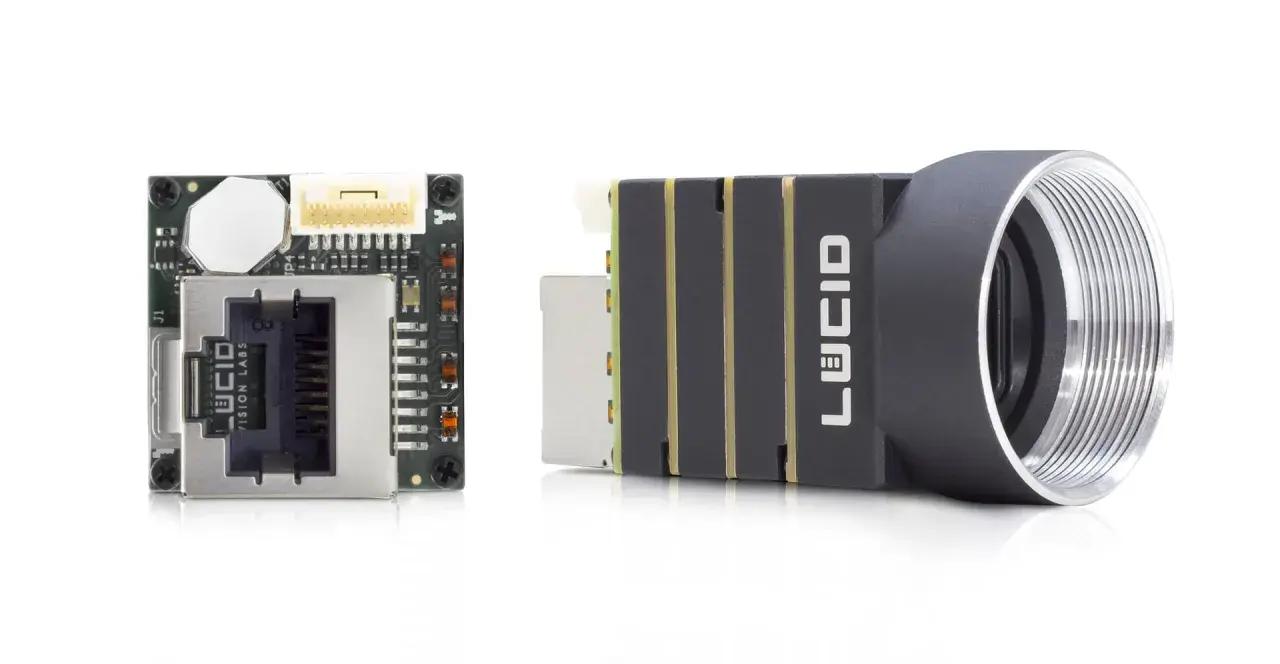
LUCID Vision Labs is one of the more established names in industrial machine vision, and it is worth reviewing as a vendor if you need cameras that fit real production constraints rather than lab conditions. In this article I focus on where it fits in the supplier landscape, which product families matter most, and what a UK buyer should verify before placing an order. The goal is practical: help you judge whether the vendor is a sensible match for your application, not just a familiar brand.
What matters most before you shortlist the vendor
- It is a camera vendor, not a full automation integrator. That matters if you need hardware, software, and services bundled into one accountable delivery model.
- The portfolio is broad. It covers general industrial cameras, rugged IP67 models, 3D time-of-flight units, and line-scan options.
- Integration support is a real asset. The support portal includes Arena SDK material and setup guides for common vision stacks.
- Network design is central. GigE Vision, PoE, PTP, and bandwidth planning will affect success as much as the sensor choice.
- For UK projects, procurement details matter. Lead times, local support, spares, and import handling can decide whether a pilot becomes a production rollout.

Where the vendor fits in an industrial vision project
When I assess a camera supplier, I start with a simple question: does it solve a narrow imaging problem well, or does it try to be everything at once? This vendor is firmly in the first camp. It supplies machine vision cameras and supporting software for factory automation, logistics, life sciences, robotics, and similar environments where image capture is only one part of the system.
That is not a weakness. In many projects, it is exactly what you want. A good camera vendor should give you predictable hardware, stable streaming, sensible software tools, and enough documentation that your engineering team can build without guessing. GigE Vision support matters here because it keeps the camera ecosystem open and easier to integrate with standard industrial PCs, switches, and software stacks. PoE, or Power over Ethernet, matters for the same reason: fewer power bricks, cleaner installations, and less cabling complexity.
The bigger point is this: the vendor is best suited to teams that already know the imaging task and need a platform that behaves consistently at scale. That makes it a credible shortlist candidate for OEMs and system integrators, and it sets up the next question, which is what actually sits inside the portfolio.
The camera families that matter most to buyers
The official support material shows four families that are especially relevant to industrial buyers: Phoenix, Triton, Atlas, and Helios. Taken together, they cover a wide spread of use cases, from compact OEM builds to rugged cells and 3D inspection. That breadth is useful because it lets you stay within one vendor while still matching different machine layouts and environmental demands.| Family | Typical role | Best fit | What to watch |
|---|---|---|---|
| Phoenix | Compact industrial area-scan cameras | OEM equipment, embedded mounts, controlled indoor cells | Lens fit, cable routing, and whether the mechanical footprint suits the machine |
| Triton | General-purpose industrial cameras | Factory automation, robotics, inspection, and logistics | Bandwidth, trigger timing, and network design when multiple cameras share one host |
| Atlas and Atlas IP67 | Higher-resolution and ruggedised options | Dusty, splash-prone, or washdown-adjacent environments | Heat management, connector protection, and how IP67 affects service access |
| Helios | 3D time-of-flight cameras | Presence detection, bin picking, dimensioning, and depth-aware inspection | Scene reflectivity, ambient light, and whether the application really needs depth data |
There is also a practical detail that buyers sometimes miss: not all machine vision work is solved by the same camera geometry. Area-scan cameras are a natural fit for most discrete inspection tasks, while line-scan models make more sense for web inspection or continuous motion. 3D time-of-flight, by contrast, helps when the decision depends on depth rather than texture. That distinction matters because choosing the wrong family can cost far more than the camera itself.
LUCID’s support portal also publishes Arena SDK documentation, getting-started guides, and third-party setup material for tools such as HALCON, MATLAB, VisionPro, OpenCV, ROS, and ROS2. For me, that kind of support footprint is often the difference between a promising camera and a practical vendor. It does not eliminate integration work, but it shortens the path to a working prototype, which leads directly to the fit question.
When it is a strong choice and when it is not
I would shortlist this vendor when the project needs one or more of the following:
- Open integration through standard machine vision interfaces rather than a proprietary closed stack.
- Multi-camera synchronisation where timing, trigger control, and network stability matter.
- Rugged hardware for industrial environments that punish weak enclosures and poor connector choices.
- 3D capture for applications where depth or surface shape matters more than plain image quality.
- A wide portfolio that lets a team source several camera types from one supplier.
I would be more cautious if the project needs a full turnkey vision cell with lighting, mechanics, software, and process engineering bundled into one responsibility chain. Camera vendors rarely substitute for a complete automation partner. I would also be cautious if the team cannot manage its own network discipline. GigE Vision is practical, but only if the switch, cabling, buffers, and trigger strategy are handled with care. In other words, the hardware may be capable, but the system still has to be designed properly.
There is a second limitation worth stating plainly: image performance is never just the camera. Optics, lighting, scene contrast, cable length, and mechanical stability can dominate the result. That is why the strongest vendor choice is usually the one that helps you validate those variables early, not the one with the biggest specification sheet. Once that is clear, the procurement work becomes much more concrete.
What UK buyers should verify before they place an order
For buyers in the United Kingdom, the commercial and technical checks are usually more important than the marketing claims. I would verify five things before moving from shortlist to purchase order.
- Bandwidth and interface fit Confirm that the target frame rate and resolution are realistic on your host, switch, and cabling plan. If the cell needs multiple cameras, ask whether PTP, jumbo frames, or RDMA-style workflows are required and whether your network hardware can support them.
- Mechanical and environmental fit If the machine lives in a dusty, wet, or high-vibration area, check whether an IP67 model is actually justified. A sealed camera can be the right answer, but it also changes access, heat flow, and serviceability.
- Software fit Make sure your development team can work with Arena SDK or the third-party software you already use. A camera that looks good on paper is not useful if your preferred stack needs custom glue code just to begin testing.
- System timing fit If the application depends on synchronised capture, trigger response, or coordinated multi-camera streams, run a real timing test. Do not accept generic assurances. Use the exact network layout and host you expect to ship.
- Commercial fit In the UK, practical buying questions include lead time, VAT handling, warranty terms, spare-unit availability, and whether you have a distributor or integrator who can support the pilot if the first build needs adjustment.
My rule is simple: if a vendor cannot be validated against the real machine, the real lens, and the real network, the buying decision is still premature. Once those checks pass, the comparison shifts from procurement risk to vendor strategy, which is where a cleaner shortlist starts to emerge.
How I would compare it with other machine vision vendors
I would not compare suppliers only by sensor resolution or headline speed. That is too shallow. I would compare them on how much risk they remove from the full deployment. The table below is the lens I would use.
| Evaluation criterion | What good looks like | Why it matters |
|---|---|---|
| Bandwidth and synchronisation | Stable streaming at the target resolution and frame rate, with reliable trigger timing | Prevents dropped frames and inconsistent inspection timing |
| Documentation | Clear setup guides, application notes, manuals, and sample code | Shortens proof-of-concept time and reduces support dependency |
| Portfolio breadth | Area-scan, rugged, 3D, and line-scan options from one supplier | Simplifies sourcing when different stations need different camera types |
| Mechanical fit | Form factors and enclosure options that match the machine, not just the lab bench | Reduces rework in brackets, cabling, and thermal design |
| Commercial support | Predictable lead times, local access, and a sane spares strategy | Keeps production risk down after the pilot is approved |
When I use this lens, I usually find that the cheapest camera is rarely the cheapest project. The better choice is the one that lets the automation team move from test bench to production without rediscovering the same problems in every station. That is the point where a supplier becomes a real vendor, not just a parts source.
What matters most if you are considering LUCID in 2026
The practical answer is narrower than the product range suggests. The vendor is most compelling when you need a camera platform that is technically capable, broadly documented, and flexible enough to support industrial automation, smart manufacturing, or 3D sensing without forcing a proprietary ecosystem. That is a strong position, but it still depends on disciplined system design.
If I were guiding a UK buyer today, I would keep the decision sequence very simple: define the imaging problem, pick the camera family that matches the environment, test the exact software and network stack, and only then decide whether the vendor should stay on the shortlist. That approach avoids the most expensive mistake in machine vision, which is buying hardware before the application is actually understood.
For the right project, this is a sensible vendor to evaluate. For the wrong project, it is just another camera name. The difference is not marketing, it is fit.
