
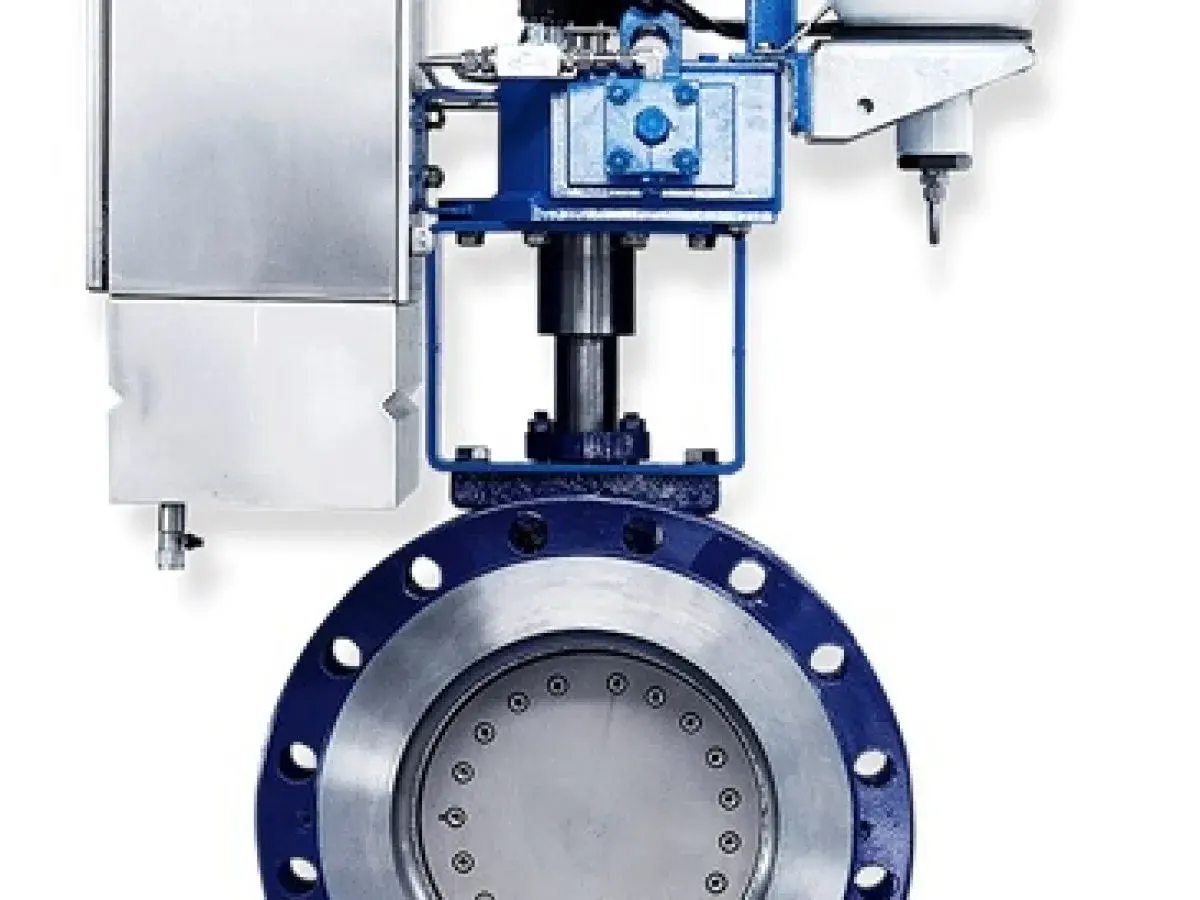
Industrial valve buying gets serious when shutdown reliability, emissions control, and maintenance windows all matter at once. Zwick valves sit in that space: they are not generic catalog items, but engineered products meant for critical isolation, non-return duty, and compact double block and bleed service. In this article I look at what the range is for, how the main series differ, and how I would judge a UK vendor before I trusted them with a plant order.
What matters before you ask for a quote
- Think in duties first: isolation, check, double block and bleed, or control.
- The range is built around triple-offset butterfly, check, and DBB-style valves, not a broad commodity line.
- For UK buying, the best vendor is the one that can prove sizing, certification, lead time, and after-sales support.
- Expect to discuss size, pressure class, materials, leakage class, and actuator package before price.
- These valves make the most sense where downtime and leakage are expensive, not where the cheapest valve is enough.
What these valves are built to do
The core idea is simple: a quarter-turn valve that seals reliably under demanding process conditions. A butterfly valve turns 90 degrees, which makes it fast to automate and easy to pair with gearboxes or actuators. The triple-offset geometry reduces rubbing between disc and seat, which is why the product family is used for shut-off and control rather than as a generic on/off component. I see that distinction as important, because it changes the vendor conversation immediately. You are not only buying metal in a pipe; you are buying service life, leakage performance, and predictable behaviour when temperature, pressure, or media chemistry becomes less forgiving.
The manufacturer says the range has more than 40 years of design and production experience, a production and storage area of more than 16,000 square metres, and coverage from DN50 to DN2200 with pressure classes from PN10 to PN250. That is a broad technical envelope, but it still sits in the heavy-duty process world. The company also states certifications and test references that matter to buyers, including ISO 9001, TA-Luft, API 607, BS 6755, and EN12266/API598 testing. For me, that says the product story is about verifiable performance, not just a polished brochure.
That technical baseline is the reason the next step is not choosing a brand first; it is matching the right valve family to the duty.

The valve families you are really comparing
| Series | What it does | Best fit | Why the vendor needs to explain it well |
|---|---|---|---|
| TRI-CON | Triple-offset butterfly valve for shut-off and control | Critical isolation, high-integrity process lines, severe service | The right seat, offsets, materials, and actuator choice determine whether it performs as expected |
| TRI-CHECK | Non-return valve with controlled closing behaviour | Pump protection, backflow prevention, systems sensitive to water hammer | Counterweight and hydraulic damping need to be matched to the actual installation |
| TRI-BLOCK | Double block and bleed or double isolation and bleed in one body | Tank farms, meter stations, manifolds, critical isolation points | DBB/DIB logic, linkage, and bleed arrangement have to suit the process philosophy |
| TRI-SHARK | Control valve concept built around the TRI-CON platform | Compact skids, tight installation spaces, control duties where a globe valve is not ideal | Vendors should be able to explain rangeability and control behaviour, not just the body size |
I like this kind of table because it stops people from shopping by logo. A good vendor will not simply say “we supply the brand”; they will tell you which series fits the duty, what compromises come with it, and whether the package is designed for isolation, check, or control. That leads directly into how I would judge the supplier itself.
How I would judge a UK vendor
In the UK, the conversation usually runs through a specialist distributor, sales partner, or engineering supplier rather than a casual stockist. The company itself lists representation in England and Scotland, and public UK material points to BM Engineering as one of the names carrying the brand. That matters because the right vendor is not just a reseller; it is the person who can translate process requirements into a correct valve spec.
| What I check | What good looks like | Why it matters |
|---|---|---|
| Technical response time | They ask about duty, media, pressure, size, temperature, and cycle frequency before quoting | Fast pricing is useful, but fast wrong pricing is expensive later |
| Documentation | They can provide datasheets, certificates, and clear test standards | Plant approval usually depends on paperwork as much as hardware |
| Actuation support | They can specify gearbox, pneumatic, electric, or hydraulic actuation as needed | The valve body alone is not the whole solution |
| Lead time and stock | They separate ex-stock items from built-to-order items | Delivery promises are only useful when the stock position is real |
| After-sales support | They can answer spares, service, and commissioning questions | Critical valves should not become disposable assets |
| Data integration | They can share traceability and asset data in a format your team can use | That is increasingly important in digital plant environments |
If a supplier cannot walk through those points, I treat the quote as incomplete. The next question is where these valves actually earn their place in UK industry, because that often explains why the vendor matters so much.
Where they earn their keep
The strongest use cases are the ones where a failure creates real cost: process shutdowns, emissions concerns, reverse flow, or difficult maintenance access. That is why the manufacturer positions the range around oil and gas, chemical and petrochemical plants, energy, offshore work, and steel. In practice, I would also expect demand from terminals, pump stations, and skids where compact installation and tight shut-off matter.
- Energy and steam systems - the valve needs to isolate reliably and survive temperature swings without becoming a maintenance burden.
- Chemical and petrochemical lines - leakage control and material compatibility matter more than a low purchase price.
- Offshore and heavy industry - service conditions are unforgiving, so vendor support and documentation become part of the product.
- Pumping and transfer systems - check-valve behaviour and damping can be the difference between stable operation and water hammer.
- Tank farms and manifolds - DBB or DIB arrangements are useful when isolation has to be more than a single shut-off point.
My rule of thumb is straightforward: if the line can tolerate a generic commodity valve, this family is probably overkill. If downtime, leakage, or maintenance access are expensive, then the extra engineering is often justified. Once that is clear, the final step is asking the vendor the right questions before any order is approved.
What I would request before signing off
I would never approve a critical valve purchase without a small but specific information pack. It does not need to be bureaucratic, but it does need to remove ambiguity. The vendor should be able to answer the following without hedging.
- Which series is being quoted, and why is it the correct duty match?
- What are the exact size, pressure class, end connection, and body material?
- What leakage standard, fire-safe reference, and test regime apply?
- Which actuator, gearbox, or accessory package is included?
- What are the real lead time, stock position, and spare-parts availability?
- Who will support commissioning, maintenance, and future replacement planning in the UK?
I also ask one more question when the site is becoming more digital: how will the supplier deliver tagging, traceability, and asset data to fit the plant register. That is a small detail on paper, but in a smart manufacturing environment it saves time later. If the vendor can answer both the mechanical and digital questions cleanly, the procurement risk drops fast.
What I would do first on a UK project
For a British buyer, the most efficient path is to start with the duty, not the brand. I would define whether the line needs isolation, non-return, DBB, or control; then I would ask the vendor to map that duty to a specific series and certification set. If the supplier comes back with a clear datasheet, a sensible lead time, and a support model that fits the site, that is usually the right channel to keep.
For Zwick valves, the best vendor is the one that removes uncertainty instead of adding to it: correct series selection, clear paperwork, realistic delivery, and support that still exists after installation. That combination matters more than a polished sales pitch, and it is usually what separates a useful supplier from a merely available one.
