
The vendor fit is the real decision
- Fori’s value is integration: mechanical, electrical, software, assembly, and service in one delivery model.
- The portfolio is strongest where transport, joining, testing, and line balancing need to work together.
- The AGV range is built for both light and very heavy loads, which signals a focus on complex plants rather than simple point solutions.
- UK buyers should check local support, commissioning, and spare-parts plans, especially if the project needs fast field response.
- Price alone is a weak comparison; lifecycle ownership and integration risk matter more.

What the portfolio actually covers
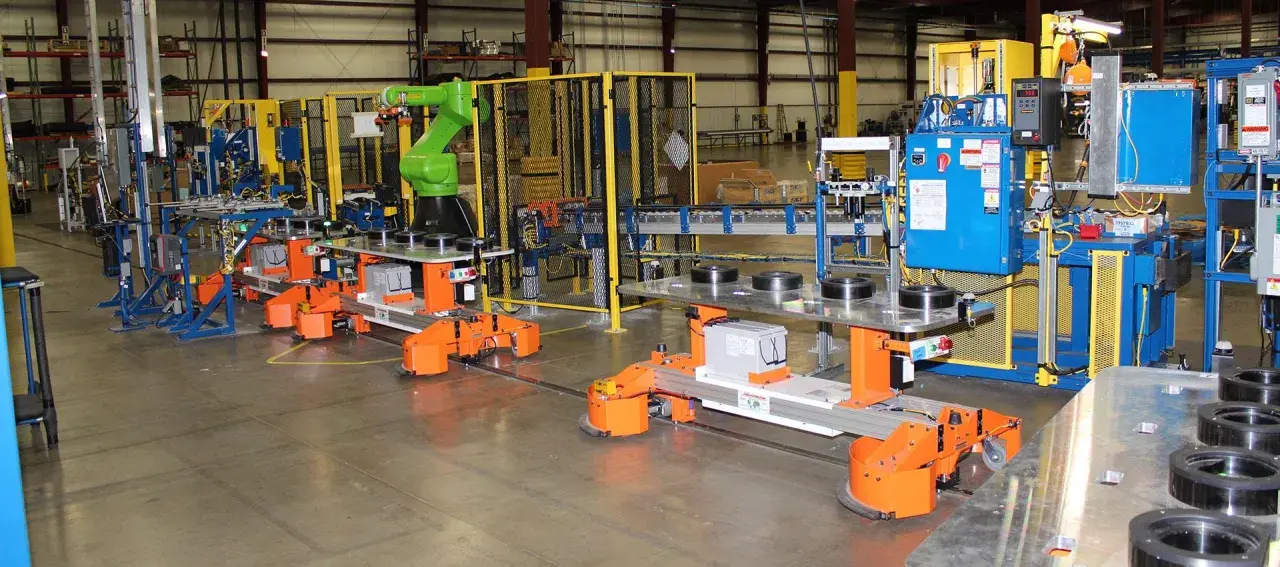
For me, the first step is to stop thinking about Fori as a single product vendor and start thinking in systems. Its public portfolio spans automated material handling, assembly and automation, end-of-line systems, suspension module alignment, module assembly, high-capacity AGVs, chassis marriage, custom automation, and welding systems. That mix tells you the company is built to make several process steps behave as one line, not to sell a standalone machine and walk away.
| Solution area | Where it helps | What to verify |
|---|---|---|
| Automated material handling | Moving parts, tooling, pallets, and heavy assemblies between stations | Payload limits, floor conditions, route control, and traffic management |
| Assembly and automation | Multi-station assembly where sequencing, torque, and traceability matter | Cycle-time assumptions, variant handling, and data capture |
| End-of-line systems | Final inspection, test, and quality-gate work | Test coverage, reject handling, and integration with plant systems |
| Module alignment and chassis marriage | Automotive and EV lines that need precise joining and repeatability | Datum strategy, tolerance stack-up, and rework path |
| Welding systems | Robot-heavy or mixed welding cells that need coordinated flow | Part variation, fixture design, and weld-quality validation |
| High-capacity AGVs | Very heavy or awkward loads that cannot be moved safely by people | Route safety, battery strategy, and maintenance access |
AGV means automated guided vehicle, while chassis marriage is the body-to-chassis joining step used in automotive assembly. Those terms matter because they show how deep the integration goes: this is not just transport, but transport linked to precise manufacturing actions. Once that portfolio is clear, the next question is how this kind of vendor differs from a component supplier or a local builder.
Why system integrators are different from component vendors
This is where procurement teams sometimes talk past each other. A robot OEM, a software vendor, a local machine builder, and a turnkey integrator may all call themselves automation partners, but they do not carry the same risk, or solve the same problem. I would compare them by ownership of the whole process, not by brand recognition.
| Vendor type | Best for | Strength | Trade-off |
|---|---|---|---|
| Turnkey integrator like Fori | Complete production lines and complex material flow | One team owns design, build, software, and start-up | Higher customisation and more dependence on project-scope discipline |
| Robot or equipment OEM | Standard cells or individual machines | Deep product maturity and broad install base | You still own more system-integration risk |
| Local machine builder | Small modifications and fast local service | Close support and easier site access | Less scale for larger cross-plant projects |
| Software-first vendor | Traceability, analytics, and production visibility | Strong data and orchestration capability | Does not solve mechanical flow by itself |
Where UK manufacturers are most likely to see a fit
I do not see a dedicated UK branch in the current public footprint, so I would treat European support as part of the buying decision rather than an afterthought. That does not make the company a poor fit for the UK; it just means the buyer has to ask sharper questions about commissioning, spare parts, remote diagnostics, and on-site support before the project starts. The best-fit sectors are the ones where a line is expensive to stop and expensive to hand off between vendors.
| UK scenario | Why it fits | Main caution |
|---|---|---|
| Automotive and EV assembly | Body, module, and chassis workflows benefit from aligned transport and joining | Volume and variant complexity must justify the custom build |
| Aerospace and defence | Large assemblies often need controlled movement and repeatable process steps | Programme changes can make a bespoke line harder to recover |
| Heavy equipment and industrial machinery | Payloads and awkward geometry make manual handling expensive and risky | Floor space and maintenance access need to be designed early |
| Battery and module handling | Repeatable flow and safe movement are more important than raw speed | Thermal, safety, and traceability requirements can complicate scope |
| End-of-line test and inspection | Quality gates are stronger when they are tied into the whole line | Test coverage has to match real failure modes, not just a checklist |
In other words, the UK fit is strongest where the plant needs a coordinated system, not just a machine purchase. The next filter is commercial rather than technical: how do you compare one vendor's promise against another's proposal?
How I would compare the shortlist before issuing an RFQ
When I review an RFQ package, I try to remove the shiny language and look for the parts that determine whether the line will actually run. RFQ means request for quote, and at this stage the buyer should force clarity on ownership, throughput, data, and support. If a vendor cannot answer these basics cleanly, the proposal is not ready, no matter how polished it looks.
| Check | What good looks like | Red flag |
|---|---|---|
| Scope ownership | Mechanical, electrical, controls, and commissioning are clearly assigned | Too many parties with fuzzy responsibility |
| Throughput proof | Cycle times are backed by simulation or a defensible line model | Marketing speed claims with no bottleneck analysis |
| Safety and documentation | Risk assessment, guarding, and handover documents are part of the quote | Safety treated as an afterthought |
| Controls and data | PLC, HMI, and plant integration are explained, not assumed | Software ownership is unclear |
| Service model | Spare parts, escalation paths, and remote support are written down | Support is described only in general terms |
| Future change | Variant growth and line expansion are considered up front | The line only works for today's mix |
I would push especially hard on controls ownership and service response, because that is where “good project” can turn into “expensive surprise” after handover. Once those details are visible, it becomes much easier to judge whether the vendor is solving your actual production problem or simply offering a capable but mismatched platform.
When the fit is strong and when I would hesitate
Not every automation project deserves the same vendor. I like Fori-style suppliers when the line has enough complexity that the interfaces themselves are the real risk. I am more cautious when the project is narrow, highly standardized, or mostly about software visibility rather than physical flow.
| Strong fit | Why | I would hesitate when |
|---|---|---|
| Complex line with material movement plus assembly or welding | One vendor can coordinate the whole process instead of stitching together separate cells | You only need a single machine or a commodity transfer unit |
| High-payload transport | The published AGV range, from 500 lb to more than 250,000 lb, shows comfort with both light and very heavy loads | The plant only moves small parts and simple tote traffic |
| Body, module, or chassis work | Alignment and joining problems benefit from an engineered flow solution | The process is still experimental and changes every few weeks |
| Test-heavy end-of-line stations | Quality gates work better when they are tied to a broader automation strategy | You only need a standalone tester with minimal integration |
The questions I would ask before I sign off on a vendor
Before I would approve a shortlist, I would make the buyer team answer a few questions in plain language. That is especially important for a UK plant, where the support path may run through a European office rather than a local branch. If the answers are vague now, they usually get worse after the purchase order is signed.
- Who owns the PLC, HMI, and source code after handover?
- What support does the UK site get in the first year?
- What spare parts should be held on site from day one?
- How will FAT and SAT be measured, and what data will be captured?
- What is the plan for variant changes or future expansion?
- How will remote diagnostics work if on-site response takes time?
My rule of thumb is simple: put a vendor like Fori on the shortlist when the problem is truly system-level, not widget-level, and when the plant needs one partner to own material flow, assembly, testing, and welding as a single engineered package. If the project is smaller, simpler, or mostly software-driven, another vendor type may be easier to justify. The best procurement outcome is the one that leaves no ambiguity about who is responsible when the line starts running.
