
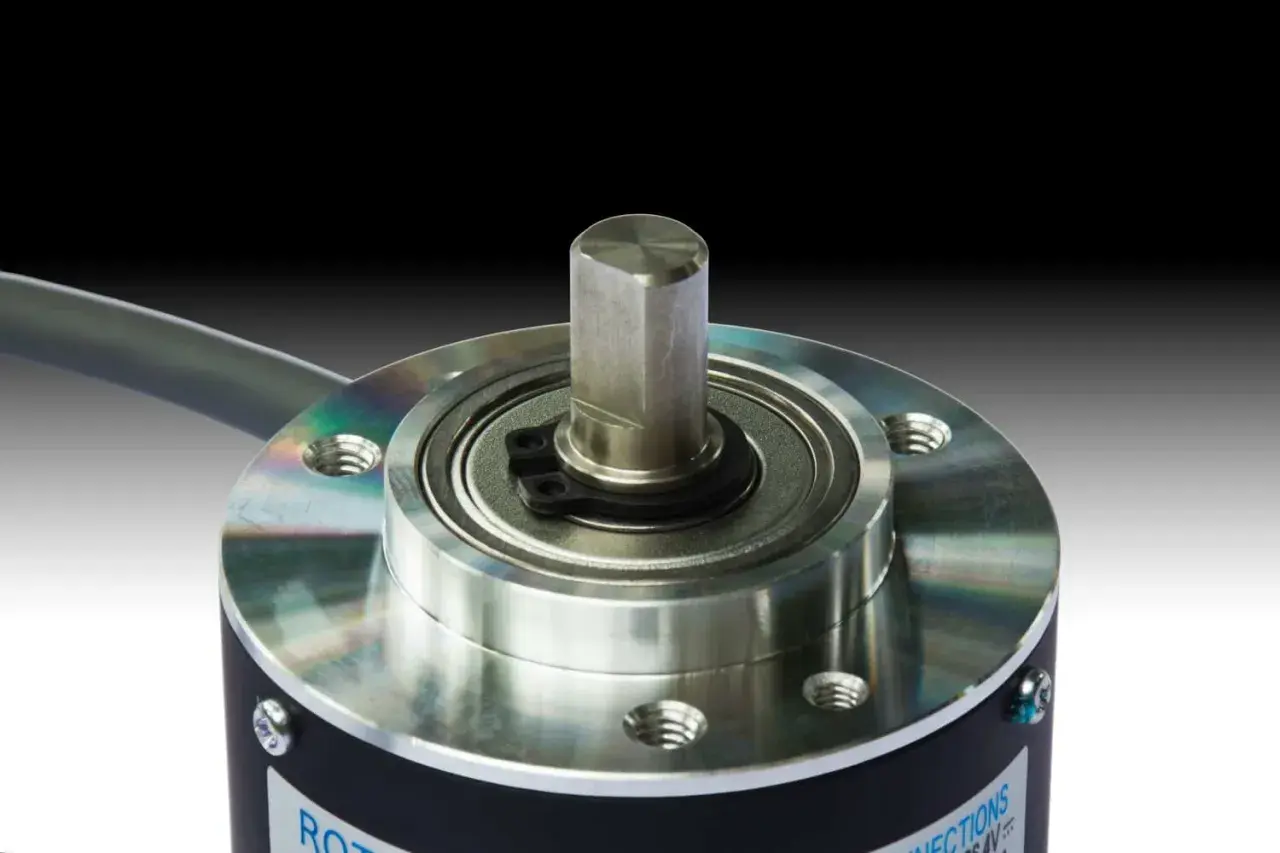
An encoder products company earns trust when it can do more than ship a catalogue line: it has to help match the encoder to the machine, the interface, and the operating environment. That matters especially in UK industrial automation, where lead time, support, and repairability often decide whether a project stays on schedule. In this article, I look at how I would compare vendors, which encoder families matter most, and what practical trade-offs actually show up on the factory floor.
The fastest way to narrow a vendor shortlist
- Start with the application, not the part number, because motion profile and environment decide the right encoder family.
- Incremental, absolute, and linear encoders solve different problems, and the wrong choice usually costs time later.
- In the UK, local stock, repair support, and clear lead times often matter as much as headline price.
- Interfaces such as A/B/Z, SSI, BiSS, CANopen, PROFINET, and IO-Link can shape the whole machine design.
- Resolution is not the same as accuracy, and mechanical fit can matter more than the sensor technology itself.
What matters most when choosing a vendor
I start by separating manufacturer, distributor, and integrator. A manufacturer can usually go deeper on custom options and product knowledge. A distributor is often better when speed, replacement work, or multi-brand sourcing matters. An integrator sits somewhere else again: useful when the encoder is only one part of a larger motion-control package.
| Vendor model | Where it helps | Main advantage | Main risk |
|---|---|---|---|
| Manufacturer-direct | OEM builds, repeat projects, special requirements | Deeper engineering support and more configuration options | Can be slower for urgent replacements if local stock is limited |
| Authorized distributor | Service parts, mixed-brand machines, quick sourcing | Faster cross-referencing and broader availability | Less design ownership on highly custom builds |
| Motion-control integrator | New machine builds and retrofits | Better system-level compatibility across drive, motor, and feedback | Higher overall project cost if the scope is not tightly managed |
That is why I never treat vendor choice as a branding exercise. If the supplier cannot explain installation, signal choice, or replacement strategy in plain English, I assume the project will get harder later. Once the vendor model is clear, the next step is deciding which encoder family actually fits the machine.
The encoder families buyers compare first
The first real decision is usually between incremental, absolute, and linear encoders. Each one solves a different problem, and resolution alone does not tell you which one is right. I have seen projects overbuy precision they did not need, and I have also seen teams underbuy feedback and spend months compensating for it in software.
| Encoder family | Best when | Strength | Trade-off |
|---|---|---|---|
| Incremental | You need speed, counting, or simpler motion feedback | Usually cost-effective and easy to integrate | Loses absolute position after power loss unless the system homes again |
| Absolute | The machine must know position immediately at startup | No homing cycle and stronger restart logic | More interface planning and often a higher unit cost |
| Linear | Axis position matters more than motor rotation | Direct measurement avoids backlash and transmission error | Mechanical installation becomes more sensitive |
Technology matters too. Optical encoders are often chosen for precision, magnetic encoders for robustness, and inductive or capacitive approaches when the environment is rough or the design needs something compact and tolerant of contamination. The point is not that one technology wins everywhere; it is that the machine environment should decide.
Motion Control Products is a good example of the distributor model: it carries encoder lines from multiple brands and technologies rather than only a single house family. That matters because a vendor that can compare options honestly is often more useful than one that tries to force every job into one product range.
Two details are easy to miss here. First, resolution is not the same as accuracy; a high count per revolution does not rescue poor mounting or a sloppy coupling. Second, a very precise encoder can still perform badly if the shaft loading, runout, or contamination level is wrong for the build. That is where good vendors earn their fee, because they ask about the machine instead of jumping straight to the datasheet.
How I evaluate a supplier in the UK
When I assess a UK supplier, I look for practical answers before I look for product breadth. I want to know whether the vendor can keep a machine moving, not just send a quote. The strongest suppliers usually answer quickly, ask better questions than I expected, and flag the hidden constraints before they become engineering rework.
| What I check | What good looks like | Why it matters |
|---|---|---|
| Application support | They ask about speed, load, mounting, temperature, and contamination | Shows they understand real operating conditions |
| Documentation | Clear drawings, pinouts, and interface notes | Reduces integration errors and saves commissioning time |
| Availability | Stock status, alternates, and realistic lead times | Prevents project delays and line stoppages |
| Repair path | Cross-reference support, service options, or replacement guidance | Protects uptime when installed equipment ages |
| Responsiveness | Useful technical reply in about one working day for standard parts | Signals whether the supplier is operationally serious |
| Configuration flexibility | Options for shaft, bore, cable, connector, and sealing | Helps the part fit the machine without redesigning the assembly |
For UK buyers, I would add one more filter: can the supplier support both new builds and replacements? A vendor that is excellent at OEM design but weak on legacy cross-reference can still be the wrong choice for an installed base. If the machine fleet is already in production, the ability to identify a drop-in replacement is often worth more than a marginal price advantage.
That naturally leads to the next issue, because the electrical and mechanical details are where many apparently “good” parts become awkward in practice.
Interfaces and mechanical details that decide the build
People often talk about encoders as if the sensing element is the whole story. It is not. The interface, mounting style, and environmental rating can determine whether the encoder is easy to live with or a constant maintenance headache.
Electrical interface
For incremental systems, I still see A/B/Z outputs used widely because they are familiar and easy to interpret. The problem comes when the controller expects differential line-driver signals and the selected encoder only offers a simpler single-ended output. That choice can create noise issues long before anyone notices in the lab.
For absolute systems, common interfaces include SSI, BiSS, CANopen, PROFINET, and IO-Link. The interface is not a side note; it affects wiring, controller compatibility, diagnostics, and sometimes the maintenance workflow. If a vendor cannot explain the signal path and fault behavior clearly, I treat that as a warning sign.
Mechanical fit
Shaft size, hollow shaft depth, coupling type, connector orientation, cable exit, and housing diameter are all boring until they are wrong. A perfectly specified encoder can still be a poor purchase if the mounting creates stress on bearings or forces awkward cable routing. In my view, that is one of the most common mistakes: people spec the feedback performance first and the mechanical reality second.
Read Also: MTS Sensors UK - Buy the Right Temposonics Sensor Now
Environment
Temperature, shock, vibration, washdown, dust, and oil mist should all be part of the selection discussion. For harsher environments, I often look for stronger sealing, better cable protection, and a realistic IP rating rather than assuming the default enclosure will be enough. A machine that sits in a clean cabinet is one thing; an encoder mounted near chips, coolant, or repetitive shock loads is another.
This is also where a more capable supplier stands out. HEIDENHAIN notes that its encoders can measure linear and angular positions and add operating-data monitoring, which is a good signal of where the market is heading. The best vendors no longer think only about pulses or counts; they think about feedback as part of the machine’s diagnostic layer.
Once those details are in place, the remaining question is usually financial: what should you pay for, and where does the extra spend actually make sense?
Cost, lead time, and service levels
Price matters, but it is a poor metric if it hides the true cost of integration or downtime. I would rather pay slightly more for a part that fits cleanly, ships on time, and can be replaced later than save a small amount upfront and lose days in commissioning.
| Cost driver | Typical effect | My rule of thumb |
|---|---|---|
| Standard shaft or bore | Lowest cost and easiest sourcing | Use it whenever the machine layout allows it |
| Custom cable or connector | Raises price and often lead time | Specify it only when installation or serviceability improves |
| Higher sealing or tougher housing | Moderate price increase | Pay for it when the environment truly needs it |
| Absolute multi-turn or smart interface | Higher unit cost | Worth it when restart logic, diagnostics, or traceability matter |
| Low-volume special build | Highest unit cost | Consolidate demand if you expect repeat use |
In practical planning terms, I usually think in ranges rather than promises. A stocked encoder may arrive in a few working days, while a configured version can take 2 to 6 weeks depending on options and supply chain depth. If the line is critical, a slightly more expensive stocked part is often the better commercial decision.
Service levels matter just as much. A vendor that offers repair, cross-reference, and fast technical response can save an entire shutdown. That is especially true in the UK, where a local stock point or a responsive support team can be the difference between same-week recovery and a very expensive wait.
The market is also changing in a way that is easy to ignore if you only buy replacement parts. The next generation of feedback devices is increasingly about data, not just position.
Where smart feedback is heading in 2026
Encoders are becoming more connected, and I think that trend is already mature enough to influence purchasing decisions in 2026. Smart manufacturing teams are asking for more than a position signal; they want condition clues, easier commissioning, and fewer blind spots in maintenance.
- Diagnostics help maintenance teams spot drift, wiring issues, or installation problems earlier.
- Data interfaces make it easier to plug motion feedback into PLCs, controllers, and plant-wide monitoring.
- Condition monitoring becomes valuable when downtime is expensive or when machines run unattended for long periods.
- Cleaner integration reduces the amount of custom wiring and ad hoc logic needed on the control side.
That does not mean every machine needs a smart encoder. For simple counting, basic speed feedback, or low-cost retrofit work, a simpler unit is still the right choice. But when the machine is expensive, the uptime target is tight, or the maintenance strategy is data-driven, the extra capability stops looking like a luxury and starts looking like a sensible control decision.
In other words, the vendor you choose should be able to support both worlds: the straightforward replacement order and the more demanding connected machine. That is the test I would use before I place the first order.
What I would ask before I place the first order
Before I commit, I want clean answers to a short set of questions. If the supplier handles these well, I usually know the relationship will be easy to work with.
- Can they explain why this encoder family fits the application better than the alternatives?
- Do they have stock, or at least a clear path to the exact configuration I need?
- Will they confirm mechanical fit, signal type, and mounting details before shipment?
- Can they support replacements if the machine is already in the field?
- Do they tell me when I am over-specifying instead of just selling the expensive option?
If the answers are clear, the vendor is probably worth keeping on the shortlist. If the answers are vague, I keep looking, because encoder selection is one of those areas where small mistakes become real downtime. The best suppliers make the choice simpler, not more complicated, and that is the standard I would use for any UK motion-control project.
