
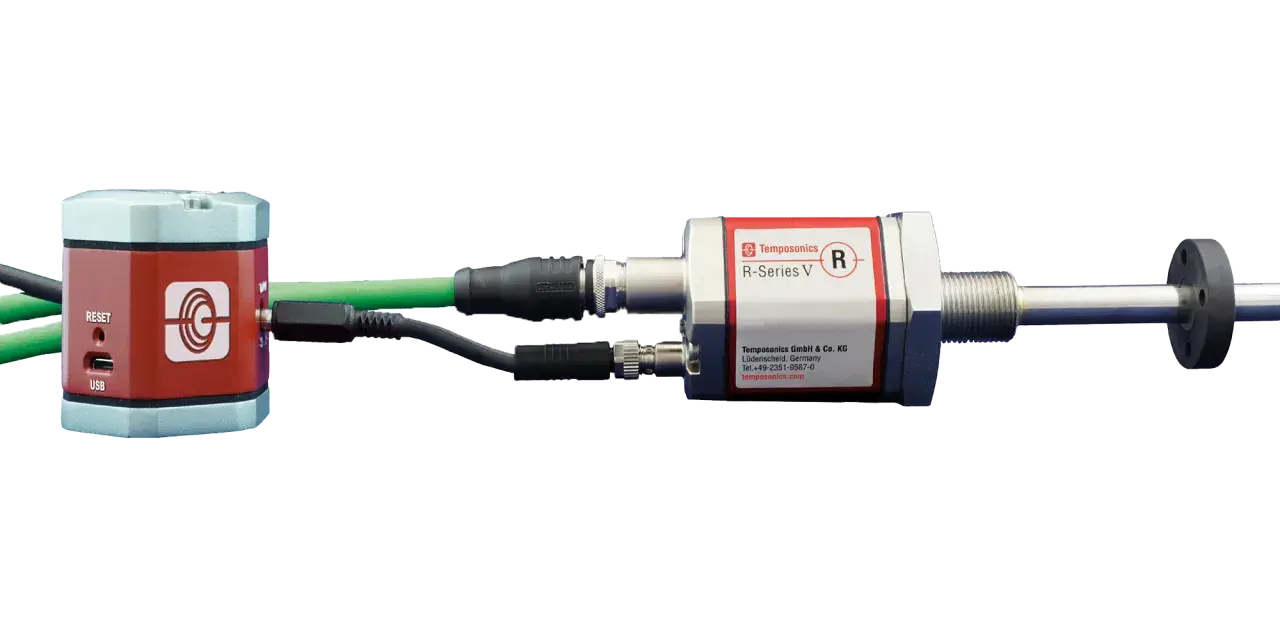
Buying a position sensor is rarely about the sensor alone; it is about compatibility, support, and the vendor who can keep the machine running when the part number becomes a problem. The sensor line historically known as MTS Sensors has a strong place in industrial automation, but the real question for a UK buyer is which route gives the right part, the right paperwork, and the right technical backup. In practice, that means understanding the brand rename, the product families, and the difference between a direct OEM contact and an authorised distributor.
The UK buying decision comes down to support, compatibility, and certification
- Temposonics is the current brand name, while legacy drawings and BOMs may still carry older MTS references.
- For the UK, the practical support paths are the Temposonics branch office and Emolice Ltd as the authorised distributor.
- Product fit matters more than headline price: industrial, mobile hydraulics, hazardous-area, and liquid-level applications need different sensor families.
- For hazardous locations, approvals matter as much as the measuring range, especially when the machine must run in the UK Ex, ATEX, or IECEx framework.
- The fastest quote is the one that specifies stroke, output, mounting style, environment, and replacement target in one message.
Why the branding change matters to buyers
Temposonics is the current name, but procurement teams still run into legacy files, machine drawings, and service notes that use older branding. That matters because the technical conversation is not just “can you supply a sensor?” but “can you supply the current equivalent, with the same output, connector, and installation geometry?” I treat these as version-control problems. If the vendor cannot map an old code to a current configuration cleanly, the project slows down even when the hardware is still available.
These sensors are magnetostrictive, which means they measure position without contact and without the wear you get from traditional mechanical devices. In plain terms, that is why they are attractive in hydraulic cylinders, motion axes, and other systems where accuracy matters and maintenance windows are short. The same vendor family also covers liquid-level transmitters, so buyers should not assume every product conversation is about linear position only.
Which UK vendor route makes sense
In the UK, I would start with the direct Temposonics branch office for unusual specifications, technical escalations, or legacy replacements that need engineering attention. For routine purchasing, Emolice Ltd is the authorised distributor listed for the UK, and that is often the cleaner route when you want local commercial handling without losing official product support. The right choice depends less on “who sells it” and more on who can keep the specification intact from quote to installation.
| Vendor route | Best for | Strength | Watch out for |
|---|---|---|---|
| Direct UK branch office | Complex specs, engineering support, legacy replacements | Direct access to current product knowledge and application guidance | Less convenient if you only need a straightforward reorder |
| Authorised distributor | Routine purchasing, local procurement, standard industrial projects | Commercial handling is usually smoother, with official product coverage | Still confirm the exact series, revision, and certification before ordering |
| Non-authorised supplier | Only when you have no alternative and you can verify everything | Sometimes offers speed or stock access | Higher risk of obsolete stock, wrong outputs, or missing paperwork |
I would not let a distributor choose the family from the budget alone. The better vendor is the one that asks the right follow-up questions before the quote is finalised.

How I would match the sensor family to the job
The product range is broad enough that two sensors can look similar on paper and still be wrong for the job. I start from the machine environment, then the output protocol, then the mounting space. The families below are the ones I would compare first.
| Family | Best fit | What stands out | My read |
|---|---|---|---|
| R-Series V | Demanding industrial motion systems | Smart diagnostics, high performance, reliability, and efficiency | Choose it when uptime and control quality matter more than a low initial price. |
| E-Series | Compact industrial machines | Measuring range from 50 to 3000 mm, up to 8 positions, outputs such as Analog, CANopen, IO-Link, Start/Stop, and SSI | Good when you need a compact package that still integrates cleanly. |
| MH-Series | Mobile hydraulics and off-highway machinery | Range up to 10,500 mm, vibration resistance up to 25 g, shock resistance up to 100 g, outputs including CANbus, CANopen Safety, J1939-76, PWM, and Analog | This is the one I would look at when the machine moves, shakes, and works outdoors. |
| T-Series | Hazardous and explosive environments | ATEX, UK Ex, IECEx, and other regional certificates, plus ingress protection up to IP66, IP67, IP68, and IP69K | Useful only when the certification burden is real, not hypothetical. |
| Liquid level transmitters | Tanks and process vessels | Level, interface, temperature, and volume measurement on selected models | Do not mix this up with a cylinder position job; tank geometry changes the whole spec. |
One practical detail I like here: selected R-Series variants remain available for established machines, including legacy output options such as CANbus and PROFIBUS. That matters in retrofit work, where compatibility beats novelty every time.
What to check before requesting a quote
A good vendor quote depends on the details you give them. If I send only a family name, I expect a slow back-and-forth. If I send the full application picture, I usually get a clean answer faster.
- Stroke or measuring range - state the exact travel needed, not the nominal cylinder size.
- Output protocol - analog, SSI, IO-Link, CANbus, CANopen, J1939-76, Start/Stop, or another defined interface.
- Mounting style - rod, profile, embedded, external mount, or hazardous-area housing.
- Environment - shock, vibration, temperature, EMC, washdown, corrosion, and ingress protection.
- Approvals - ATEX, UK Ex, IECEx, or functional safety requirements if the machine needs them.
- Replacement target - old drawing number, legacy output, and whether the job is a drop-in replacement or a redesign.
The biggest mistake is assuming the cheapest quote is the best one. In sensor sourcing, the wrong output protocol or connector costs more than a modest price premium ever saves.
The mistakes that create delays, returns, and unnecessary downtime
Most sourcing problems are self-inflicted. I see the same patterns repeat: a buyer copies the family name from an old machine, ignores a changed output standard, or orders a hazardous-area part without checking the certificate class first. In the UK, the additional twist is that old project files may still say MTS Sensors even when the current support conversation needs to happen under the Temposonics name.
- Mixing up industrial and mobile-hydraulics sensors just because the measuring range looks similar.
- Assuming a legacy replacement is still a drop-in fit without checking connector, housing, and mounting geometry.
- Ordering by part number alone when the output or certification has changed.
- Leaving hazardous-area approvals until after the purchase order is already raised.
- Forgetting that some older machine platforms need continuity more than a feature upgrade.
That last point is the one I would underline: if the machine is already validated, compatibility usually beats novelty. A “better” sensor that forces a control change is not better at all if the plant needs the line back online quickly.
The cleanest way to buy the right sensor in the UK now
If I were writing the buying brief myself, I would keep it short and specific: current part number, application, stroke, output, mounting style, approvals, and whether the request is for a new build or a legacy replacement. That is enough for a vendor to route the order correctly and enough for procurement to avoid the usual ambiguity.
- Start with the machine condition, not the catalog family.
- Use the direct UK branch for technical edge cases.
- Use the authorised distributor when the order is routine and timing matters.
- Ask for the current equivalent when older documentation is still in circulation.
In practice, the best UK purchase is the one that gets the specification right on the first exchange. That is the difference between a sensor that simply ships and a sensor that actually fits the machine, the paperwork, and the support model around it.
