
The Baker Hughes Bently Nevada line is best understood as a machine-protection and asset-performance stack, not just a set of sensors or a software package. In practice, it helps plants detect developing faults earlier, protect critical rotating equipment, and turn vibration and process data into maintenance decisions that are easier to defend. This article breaks down what the portfolio covers, which vendor model makes sense in the UK, and what to check before you commit budget.
What matters most when you evaluate the Bently Nevada portfolio
- It is strongest on critical rotating assets where a failure would stop production or damage expensive equipment.
- The portfolio spans sensors, protection systems, software, portable diagnostics, and lifecycle services.
- For many buyers, the real question is not the hardware alone but who will support it after commissioning.
- In the UK, local support, integration effort, and spare-part strategy can matter as much as the product name.
- The best fit depends on whether you need continuous protection, periodic condition checks, or a full plantwide monitoring model.
Why this brand matters in a vendor conversation
I treat Bently Nevada as a specialist answer to a specialist problem: protecting high-value rotating machinery and making condition data useful before a fault becomes a shutdown. That is why it shows up so often around turbines, compressors, pumps, generators, and other assets where vibration, shaft position, and bearing health drive reliability outcomes.
In 2026, the biggest mistake I see is to describe this type of vendor as “just instrumentation.” It is more accurate to think in terms of machine protection, condition monitoring, and lifecycle support. The hardware matters, but so does the software layer, the diagnostic model, and the support path when the plant needs help fast.
For a UK buyer, that distinction is practical. If a line is mission-critical, you want a vendor that can support commissioning, configuration, alarm philosophy, training, and troubleshooting without forcing you to stitch together too many third parties. That is the real vendor question, and it leads straight into the product stack itself.
The product stack that usually sits behind a purchase
I find it useful to break the portfolio into five layers. Once you do that, the buying decision becomes much clearer because you can see whether you need full-time protection, route-based diagnostics, or both.
| Layer | Typical offering | What it does | Best fit |
|---|---|---|---|
| Sensing | 3300 XL proximity transducers and related sensor systems | Measures shaft position, vibration, and other machine behaviour without physical contact | Fluid-film bearing machines, turbines, compressors, and other critical rotating assets |
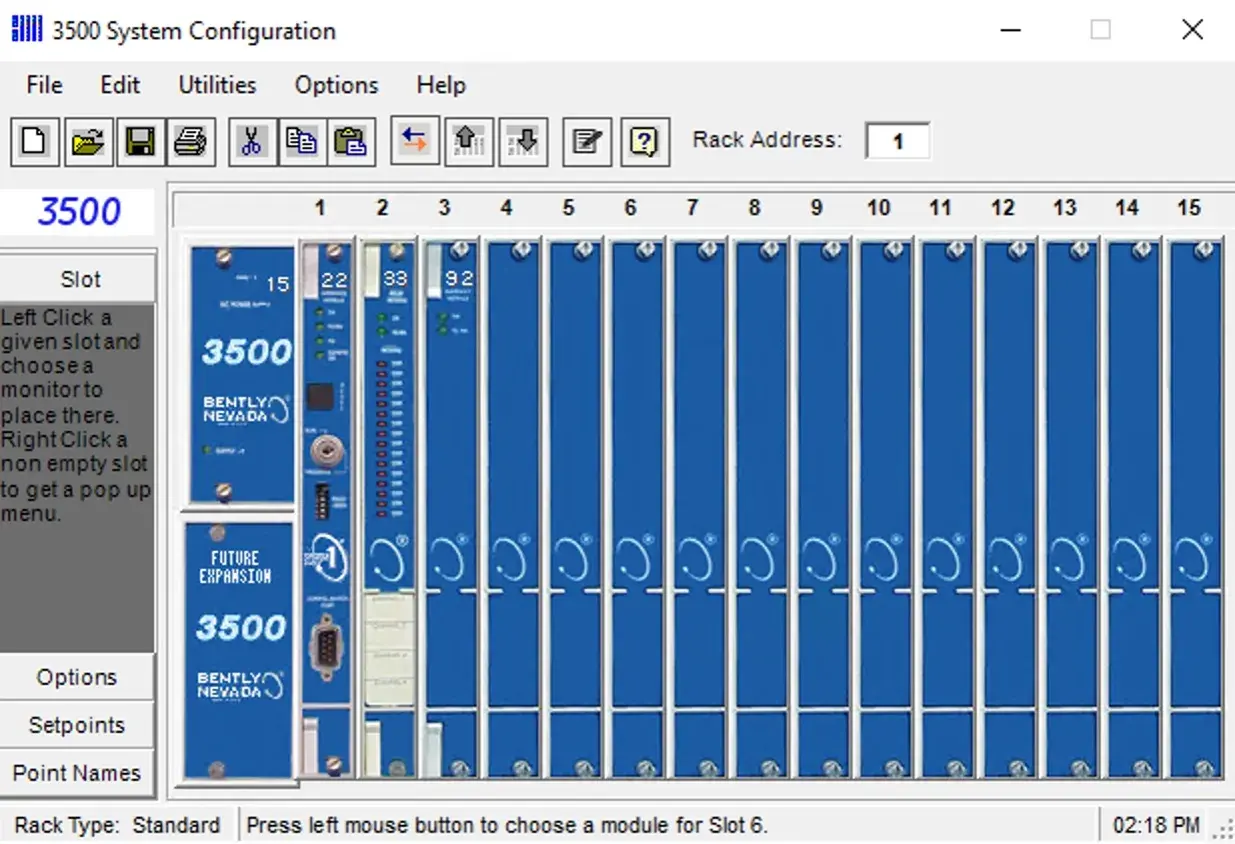
| Protection | 3500 Series and Orbit 60 | Provides continuous online monitoring, alarms, and protection logic for critical equipment | Assets where a trip or latent fault would be costly or dangerous |
| Analytics | System 1 | Pulls machine data into one environment for trends, diagnostics, and plantwide visibility | Teams that want fleet-level analysis instead of isolated point readings |
| Portable diagnostics | SCOUT200 and related portable tools | Supports walk-around inspections, route-based checks, and supplementing fixed systems | Plants with mixed criticality, or where full online monitoring is not justified everywhere |
| Services | Remote monitoring, diagnostics, training, and support | Helps interpret the data and keep the system healthy after installation | Teams with limited in-house expertise or thin reliability coverage |
The important thing is that these layers are meant to work together. A proximity transducer is not just a probe; it is a non-contact sensor that reads the distance to a conductive target, which is why it is so useful on fluid-film bearing machines. Similarly, software like System 1 is only valuable if the team has a process for turning alerts into action. That is where vendor choice starts to matter more than product names alone.
When to buy direct and when a partner makes more sense
For UK projects, I usually compare four routes: direct vendor engagement, a channel partner, a systems integrator, or a service-led arrangement. Each can work. The wrong one is the route that adds too many handoffs for the level of risk on the machine.
| Vendor model | Best when | Strength | Watch-out |
|---|---|---|---|
| Direct Baker Hughes engagement | You have critical assets, a complex retrofit, or a standardisation programme | Deep product knowledge and a clean path to manufacturer support | Local implementation may still need planning if the plant wants fast on-site coverage |
| Channel partner | You want local commercial support or a more regional delivery model | Faster coordination and often easier day-to-day contact | Expertise can vary, so you need to check who actually delivers engineering and commissioning |
| Systems integrator | The project spans multiple OEMs or needs broader plant integration | Good for control-system interfaces and multi-vendor environments | They may not be the deepest source of machine-health diagnostics |
| Service-led / managed arrangement | Your team is short on reliability staff or needs ongoing diagnostic help | Transfers some of the monitoring burden to a specialist team | You need clear ownership of alarms, response times, and escalation |
My rule is simple: if the machine is critical, I prefer the shortest path to expert support. If the project is more about plantwide visibility than immediate trip protection, a partner or integrator can be perfectly sensible. The key is to know who owns the problem when data turns into an alarm at 2 a.m., because that is where vendor promises get tested.
How I would scope the right solution without overbuying
The fastest way to overspend is to treat every asset as if it needs the same architecture. I would start by splitting the fleet into three buckets: critical, important, and monitor-when-practical. That alone usually changes the design.
- Rank the assets by consequence of failure. If a turbine, compressor, or large generator can stop production or damage the train, it deserves continuous attention.
- Separate protection from diagnosis. Some machines need trip logic and high-integrity protection; others only need trend analysis and early warning.
- Map your data flow before you buy hardware. If the plant already uses a historian, CMMS, or control system, decide where Bently data should land and who will act on it.
- Check the installation reality. Sensor mounting, cable routing, cabinet space, and cybersecurity controls often drive effort more than the software licence does.
- Budget for commissioning and training. A good system with poor setup usually underperforms a simpler system that is well implemented.
The common mistake is to assume that a more expensive platform automatically creates better reliability. It does not. What creates value is the match between machine criticality, alarm logic, analyst capability, and response process. In practice, a smaller portable setup can be enough for some assets, while a critical train may justify full online protection plus plantwide analytics.
That line between “enough” and “too much” is where many purchase decisions go wrong, which is why the service layer matters almost as much as the equipment itself.
Support, training, and lifecycle terms that change the ROI
I would never look at this portfolio as a one-off box sale. The long-term cost is shaped by support response, diagnostics access, software upkeep, spare parts, and whether your team can actually use the system six months after go-live. Baker Hughes positions Bently Nevada around support services, training, remote diagnostics, and machine-health advisory work for a reason: those services keep the platform useful after installation.
For a UK plant, the practical questions are straightforward. Who answers technical questions? Who handles order status or replacement parts? Who helps with remote diagnostics if your own reliability team is thin? If those answers are vague, the quote is weaker than it looks.
- Training. I value vendors that can train operators, reliability engineers, and maintenance staff, not just one specialist.
- Remote diagnostics. This is useful when you need extra expertise without waiting for an on-site visit.
- Cyber and software care. Condition monitoring systems are now software-heavy, so patching and update discipline matter.
- Spare parts and repairs. A fast repair loop can be the difference between a controlled outage and a prolonged one.
- Documentation and handover. If the installation pack is weak, future troubleshooting gets expensive very quickly.
I also like the fact that the training side is not treated as an afterthought. For a reliability team, skills decay is real, especially when personnel changes or the plant grows faster than the team. A vendor that supports remote or structured training reduces that gap. That becomes even more valuable when the plant is deciding how to proceed with the final quote.
The checklist I would use before approving a quote
Before I sign off on a Bently Nevada proposal, I want the quote to answer a handful of plain questions. If it does not, I assume the project still needs shaping.
- Which assets are in scope, and why are they in scope?
- Is the proposal for protection, condition monitoring, portable diagnostics, or a combination?
- Who will configure alarms, thresholds, and response logic?
- What is included in commissioning, testing, and site acceptance?
- Who owns training for operators and maintenance staff after handover?
- What is the support model if the plant needs help outside normal hours?
- How will the system integrate with the plant’s existing data and cyber rules?
- What spares, repair paths, and software upkeep are included for the first operating cycle?
That checklist is especially useful in the UK, where plants often need to balance central standards with site-specific realities. The best vendor is not always the one with the longest feature list. It is the one that can prove it will still be useful after commissioning, during the first fault, and during the next maintenance cycle. If you keep that standard in view, the Baker Hughes Bently Nevada portfolio becomes much easier to evaluate, and the buying decision becomes a technical choice instead of a branding exercise.
