
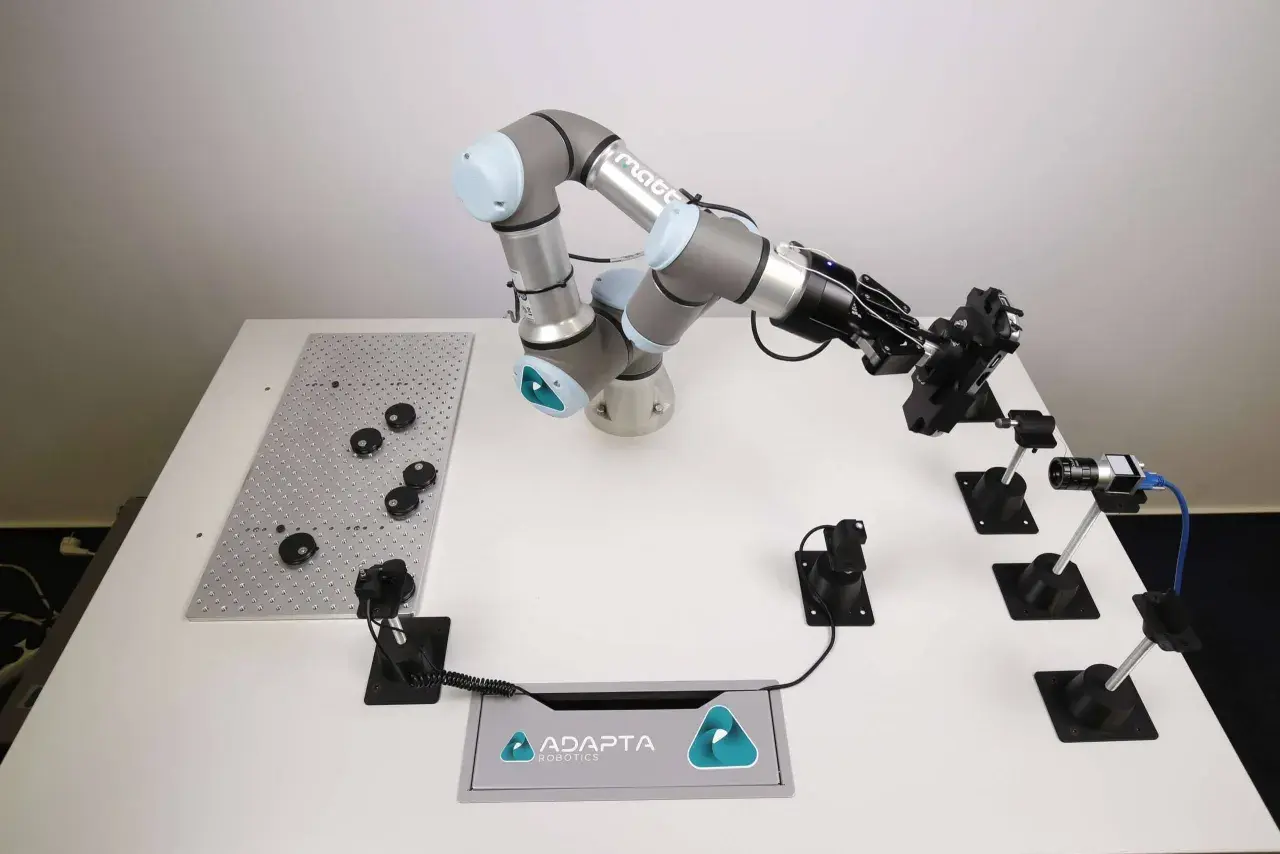
In practical terms, this is about choosing a robotics vendor that can remove a specific bottleneck without adding a heavier support burden elsewhere. The company behind the MATT, ERIS, and SIDD platforms is interesting because it leans into adaptable, built-for-purpose automation rather than generic hardware. For UK buyers, the real test is whether that flexibility translates into uptime, integration quality, and a support model that works across borders.
The practical takeaways for UK buyers
- The vendor is a customisation-first robotics supplier, not a commodity machine builder.
- MATT is the clearest fit for automated device testing, especially where touch, swipe, button, or HMI interaction is repetitive.
- ERIS and SIDD point to retail and inventory use cases, so the company is broader than one niche.
- Public information points to a Bucharest-based operation, so UK teams should plan for cross-border delivery, commissioning, and service handling.
- The buying decision should hinge on pilot criteria, data handling, and support commitments rather than demo polish.

What this vendor actually sells
I would not read this as a company selling one robot and hoping it fits every problem. The public product line is built around a few clearly separated jobs: automated device testing, retail scanning, inventory visibility, and unattended power management. That matters because it tells me the vendor is selling a solution family, not just a machine with a glossy enclosure.
The core value proposition is customisable automation built from the ground up. MATT is aimed at device testing and interaction workflows, ERIS is positioned for retail shelf scanning and price or stock monitoring, and SIDD focuses on barcode scanning and visual inventory tracking. The Lights-Out Kit adds remote power control for facilities that need recovery and start-up automation when no one is on site.
For a UK buyer, the headline is simple: this is a vendor worth shortlisting when the process is awkward, repetitive, and sensitive to small variations in device behaviour or store conditions. That also means I would treat it as a partner-led sale, not a catalogue purchase. From here, the next question is which product family actually matches the job.
Which products matter most for UK buyers
| Product | Best for | What stands out | What to watch |
|---|---|---|---|
| MATT | Device testing, refurbishment, validation, and HMI interaction | It can simulate human input such as taps, swipes, and button presses; public material also states that one robot can test 5 devices simultaneously and one operator can manage up to 9 robots | It still needs a clear test definition, stable fixtures, and a realistic integration plan |
| MATT Ex | Larger devices and extended test scenarios | It broadens the same testing logic to bigger devices | Useful only if your device size or geometry justifies the added complexity |
| ERIS | Retail shelf scanning, price checks, and stock visibility | Built for in-store use where shelf state changes frequently | It is more relevant to retail operations than to factory automation teams |
| SIDD | Inventory tracking and monitoring | Focuses on barcode scanning and visualisation | It will only pay off if your inventory process is disciplined enough to act on the data |
| Lights-Out Kit | Unattended facilities and remote recovery | Handles remote start-up, shutdown, and power recovery when nobody is on site | It is an ecosystem add-on, not a universal control layer for every plant |
The throughput detail on MATT is especially useful because it hints at the operating model: this is designed for batching, supervision, and repeatability rather than one robot per tiny task. If I were comparing vendors, I would start with MATT for device validation and with ERIS or SIDD only if the operational pain lives in retail or inventory visibility. That product map leads directly to the more important question: where does this supplier make sense, and where does it not?
When it makes sense to choose this vendor
This is a good fit when the automation problem is tightly tied to physical interaction and variation. Think of smartphone repair flows, consumer electronics testing, automotive infotainment validation, or store-shelf scanning where the environment keeps changing. In those cases, a rigid off-the-shelf robot often fails because the real difficulty is not motion alone; it is recognising what is in front of it and reacting consistently.
I would also consider this vendor when the process is sensitive to software and hardware together. That is the point where computer vision, control logic, and fixture design all matter at once. A standard OEM arm can move accurately, but it may not solve the broader problem if the device interface, screen behaviour, or test sequence keeps changing.
Where it is less convincing is in very ordinary automation jobs. If you only need palletising, simple pick-and-place, or a well-known industrial workflow, a large OEM or local integrator may be easier to buy, easier to support, and cheaper to standardise. For UK teams, the public footprint also suggests a Bucharest-based company rather than a UK-based service network, so I would not assume same-day field support or local spares without asking for it explicitly. The useful next step is to pressure-test the purchase, not the brochure.
What I would check before buying
The real risk in robotics procurement is confusing a strong demo with a dependable deployment. I would push for written answers to a small number of practical questions before any purchase order moves forward.
- What is the acceptance test? Define throughput, error rate, downtime, and pass/fail criteria before the pilot begins.
- How will it integrate? Ask for the interfaces to your PLC, MES, WMS, API stack, or test software, and make the handoff points explicit.
- What data is stored? If the system captures images, logs, or device interactions, clarify retention, access, and GDPR responsibilities.
- What is the service model? Confirm remote support hours, escalation paths, spare parts lead times, and training scope.
- What happens when the device changes? Firmware updates, UI changes, new SKUs, and fixture drift are where automation projects usually break.
- How does the vendor document safety? You want risk assessment, guarding logic, and machine safety documentation that your team can actually use.
If a vendor cannot answer those points clearly, I treat that as a procurement warning sign, no matter how polished the demo looks. Once those basics are visible, the more useful comparison is between this kind of vendor and the other supplier models on the market.
How it compares with other robotics vendor models
| Vendor model | Strength | Weakness | Best when |
|---|---|---|---|
| Custom robotics supplier | High adaptability and tighter fit to awkward processes | More discovery work and more dependence on the supplier’s engineering quality | Your workflow is unusual, software-heavy, or device-specific |
| Large industrial OEM | Broad support, familiar hardware, and predictable product lines | Less flexibility for niche interactions and edge-case workflows | You need standard automation with a proven service footprint |
| Local systems integrator | Closer site knowledge and easier plant-level coordination | May rely on third-party hardware and may not own the underlying robotics IP | Your main issue is integration rather than robot design |
For me, the decision is not about which model is “best” in the abstract. It is about whether the problem is fundamentally unique or fundamentally standard. This vendor sits in the first camp, which is why it becomes interesting for electronics, retail, and mixed hardware-software environments. That naturally leads to the buying process itself, because good robotics deals are usually won or lost there.
A realistic UK procurement flow
- Write down one workflow and one failure mode. Do not start with a wish list of features; start with the step that costs you the most time or creates the most defects.
- Run a demo against your own devices or data. A generic show-and-tell proves very little if your product geometry, labels, or interface behaviour is different.
- Pilot with fixed success criteria. Decide in advance what “good enough” means for throughput, repeatability, and operator load.
- Lock the support model before rollout. If you need remote commissioning, UK spare-part planning, or training for multiple shifts, that must be in scope from the start.
I would also recommend a short internal review after the pilot: operations, quality, IT, and procurement should all sign off on the same facts, not different assumptions. That keeps the vendor conversation from drifting into “it worked in the demo” territory. The last thing I would verify is the stuff that only becomes visible when the pilot is about to scale.
The checks that separate a serious pilot from a shiny demo
- Ask who owns updates when device firmware or packaging changes.
- Ask what the robot does when vision confidence drops below the acceptable threshold.
- Ask for the smallest useful deployment, not the biggest impressive one.
- Ask how the system behaves during outage recovery and whether the recovery path is documented.
- Ask what the vendor will not support, because the boundary matters as much as the feature list.
That final question is the one I value most, because it exposes whether the supplier understands product limits or is simply trying to close a sale. For UK buyers considering Adapta Robotics, I would only move forward when the answers are concrete, the pilot criteria are measurable, and the support path is realistic for the way your site actually operates.
