
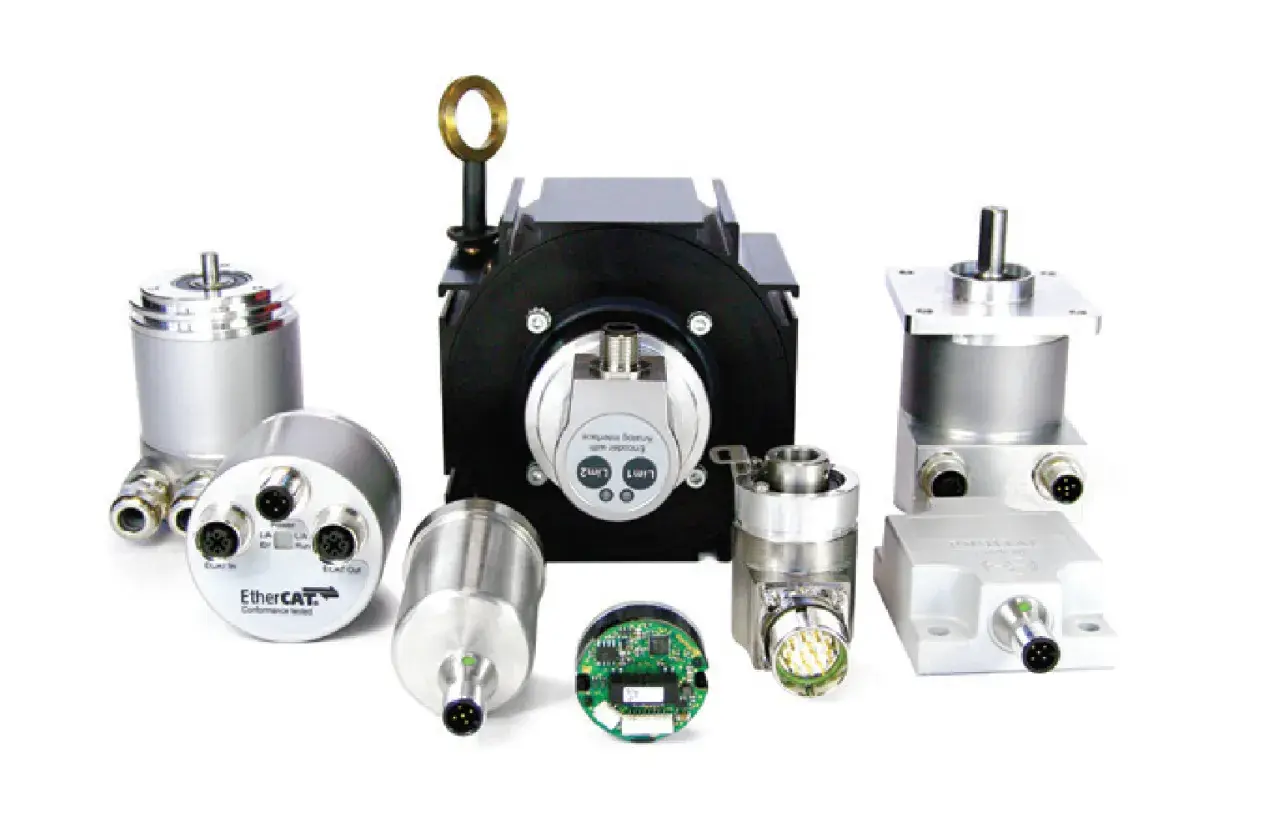
This guide looks at POSITAL Fraba as a vendor choice for UK automation projects, with a practical eye on encoders, inclinometers, and the distributor decisions around them. I focus on what the brand actually sells, where it fits best, and which buying mistakes usually cost time rather than money. If you are comparing suppliers for motion feedback, the details here matter more than the logo on the housing.
What matters most when evaluating the brand and its vendor path
- POSITAL is FRABA’s motion-sensing brand, covering absolute and incremental encoders, inclinometers, linear sensors, and accessories.
- The line is built around configurability, with more than a million possible product combinations and a broad choice of interfaces.
- For UK procurement, the real decision is often the vendor route: direct support, authorised distributor, or systems integrator.
- Battery-free multiturn designs and rugged environmental ratings are major reasons buyers shortlist these products.
- The main risks are interface mismatch, over-specifying protection, and choosing the wrong feedback type for the control system.
What the brand actually covers
POSITAL sits inside the FRABA group as a specialist in motion feedback and safety-related sensing. The range is not limited to one encoder family; it spans rotary encoders, inclinometers, linear position sensors, and the accessories that make installation and integration less painful.
On POSITAL’s own site, the company says it offers over a million possible product configurations and backs the line with a 36-month warranty. That combination matters because it tells me the brand is aimed at engineers who need a close fit to the machine, not a one-size-fits-all part that forces compromises downstream.
| Product family | Best fit | Why I shortlist it | Main trade-off |
|---|---|---|---|
| Absolute encoders | Servo axes, positioning tasks, any machine that must know its position after power loss | They retain position information and come in many mechanical and communication variants | More specification work than a basic incremental unit |
| Incremental encoders | Speed feedback and relative position control | Simple, familiar, and available with pulse counts up to 32,768 PPR | Usually needs homing after power interruptions |
| Kit encoders | Motor integration and compact drive designs | No battery, compact form factor, and a good fit for servo or BLDC motor packages | Mechanical integration has to be right first time |
| Inclinometers | Boom angle, levelling, tilt monitoring, mobile equipment | Useful where angle stability matters more than rotary counting | Static and dynamic behaviour must match the motion profile |
| Linear sensors | Stroke measurement and displacement tracking | Practical for draw-wire style displacement measurement | Mechanical routing and mounting become part of the spec |
| Accessories | Installation support and system completion | Can simplify mounting, wiring, and protection | They do not fix a bad sensor choice |
That spread is useful, but it also means the vendor has to ask the right questions early. If they do not, the order can still look correct on paper while being awkward in the machine.
How I match the sensor to the job
I usually reduce the choice to four questions: does the system need absolute position, which control interface does it already speak, how harsh is the environment, and can the mechanics actually accept the form factor? That is the fastest way to separate a sensible purchase from a spec that only works in a brochure.
Absolute encoders when power loss cannot mean lost position
Absolute encoders make sense when the machine must know its position the moment it wakes up. That matters in servo axes, lifts, cranes, packaging lines, and any axis where re-homing costs time or creates risk. POSITAL’s absolute line also covers single-turn and multi-turn options, with many mechanical and connection variants, so you are not locked into a narrow hardware path.
Incremental encoders when simplicity and speed feedback are enough
Incremental units are still the cleaner commercial choice for many machines. They are straightforward to integrate, and they suit applications where the controller can home after power-up without drama. The practical ceiling is not just resolution; it is whether the PLC or drive already expects incremental pulses, because forcing protocol conversion into a simple loop is often where cost and reliability both start to erode.
Read Also: UK Van Spares - How to Choose a Supplier & Avoid Downtime
Inclinometers and linear sensors for motion that is not purely rotary
When the machine cares about tilt, slope, or displacement rather than shaft angle, I would move away from rotary thinking altogether. Inclinometers are a better fit for booms, platforms, and levelling systems, while linear sensors are more natural for stroke and extension measurement. POSITAL also distinguishes between static and dynamic tilt sensing, which is important because a sensor that behaves well on a parked machine can become noisy once vibration and shock enter the picture.
- Check the interface first. POSITAL’s absolute encoder family includes Ethernet, fieldbus, analog, parallel, SSI, and IO-Link options, so the control system should guide the selection rather than the other way around.
- Match the environment honestly. IP69K, stainless steel, ATEX, shock resistance, and humidity tolerance only matter if the machine actually faces those conditions.
- Do not ignore the mechanical envelope. Shaft diameter, hollow-shaft style, connector position, and installation access can be more important than resolution.
- Separate static from dynamic motion. A tilt sensor chosen for a slow, stable installation may be the wrong tool on a machine with rapid movement or vibration.
Once those points are clear, the buying conversation gets a lot more focused, which is exactly where a good vendor should start adding value.
Where the product line earns its place in automation projects
POSITAL groups its own use cases around factory automation, food and beverage, water and wastewater, oil and gas, and mobile equipment. That is a strong signal about where the line tends to justify itself: places where downtime, contamination, vibration, or environmental exposure make a low-spec sensor expensive in the long run.
| Application area | Why the brand can fit | What I would still check |
|---|---|---|
| Factory automation | Absolute feedback helps avoid re-homing and supports cleaner control of servo-driven axes | Interface compatibility, resolution, and connector layout |
| Mobile machinery | Inclinometers and rugged encoders suit cranes, excavators, and lifting equipment | Shock, vibration, and whether the machine needs static or dynamic tilt sensing |
| Food and beverage | Stainless and sealed variants help in washdown-oriented environments | Chemical resistance, mounting hygiene, and cable protection |
| Water and wastewater | High protection ratings and robust housings reduce maintenance interruptions | Corrosion exposure and connector sealing |
| Oil and gas | ATEX-rated options and tough housings support hazardous-area workflows | Exactly which zone and certification scope applies to the installation |
| Motor integration | Kit encoders are useful when the feedback element must live inside the motor design | Assembly precision and available space inside the drive package |
The common pattern is simple: the tougher the environment and the more painful a re-homing step would be, the more this product line starts to make sense. If the job is inexpensive and generic, the extra configurability may not be worth paying for.
What a good vendor arrangement looks like in the UK
FRABA says it operates through subsidiaries in Europe, North America, and Asia, with sales and distribution partners around the world. For UK buyers, I would read that as a signal to use an authorised channel partner or a technically competent integrator for routine sourcing, then escalate to the manufacturer when the configuration becomes unusual.
| Buying route | Best when | Strength | Trade-off |
|---|---|---|---|
| Direct manufacturer contact | The spec is unusual, critical, or deeply customised | Deep application support and exact configuration control | Commercial cycles can be slower |
| Authorised distributor | You need standard parts, replacements, or faster local buying | Faster quotation, easier invoicing, and often better day-to-day responsiveness | Less scope for deep custom work |
| Systems integrator | The sensor is being selected as part of a full machine build | The feedback device is matched to the control architecture | Less transparency if several parties touch the spec |
In practice, I would expect most UK teams to get the smoothest result from a good distributor that can translate a typekey into a deliverable part number, then call on manufacturer support when the project moves beyond standard catalogue selection. That is not a slight on the brand; it is just the fastest way to avoid costly specification drift.
- Ask for the exact typekey and revision before you approve the purchase order.
- Request a mechanical drawing and confirm the mounting details against the machine.
- Verify the electrical output, signal level, and communication protocol in writing.
- Check lead time, stock position, and the route for warranty or replacement support.
- Confirm whether the supplier can support UK invoicing, VAT handling, and after-sales contact.
If a vendor cannot answer those points clearly, I treat that as a warning sign even when the price looks attractive. The cheapest quote is not cheap if it creates a commissioning delay.
The details that stop a good spec from becoming a bad purchase
When I look at a motion-feedback order, I am less interested in the headline brand than in the small decisions that make the part usable for the next five years. The wrong interface, the wrong shaft style, or the wrong environmental rating can quietly turn a strong product into an operational nuisance.
- Confirm whether the machine needs absolute or incremental feedback before anything else.
- Check whether the controller expects SSI, Profinet, EtherCAT, Ethernet/IP, IO-Link, Modbus RTU, Modbus/TCP, CANopen, Profibus, J1939, or a simple analogue or pulse output.
- Validate the enclosure against real conditions: dust, washdown, humidity, vibration, shock, and chemical exposure.
- Make sure the mechanical package fits the available space, including shaft or hollow-shaft style, connector direction, and cable exit.
- Ask for a sample, spare, or compatibility check if the machine is critical and downtime is expensive.
My rule of thumb is to buy the simplest configuration that still survives the machine’s real operating conditions. That keeps the vendor conversation honest, protects the control design, and usually produces a better result than chasing the lowest line item price.
