
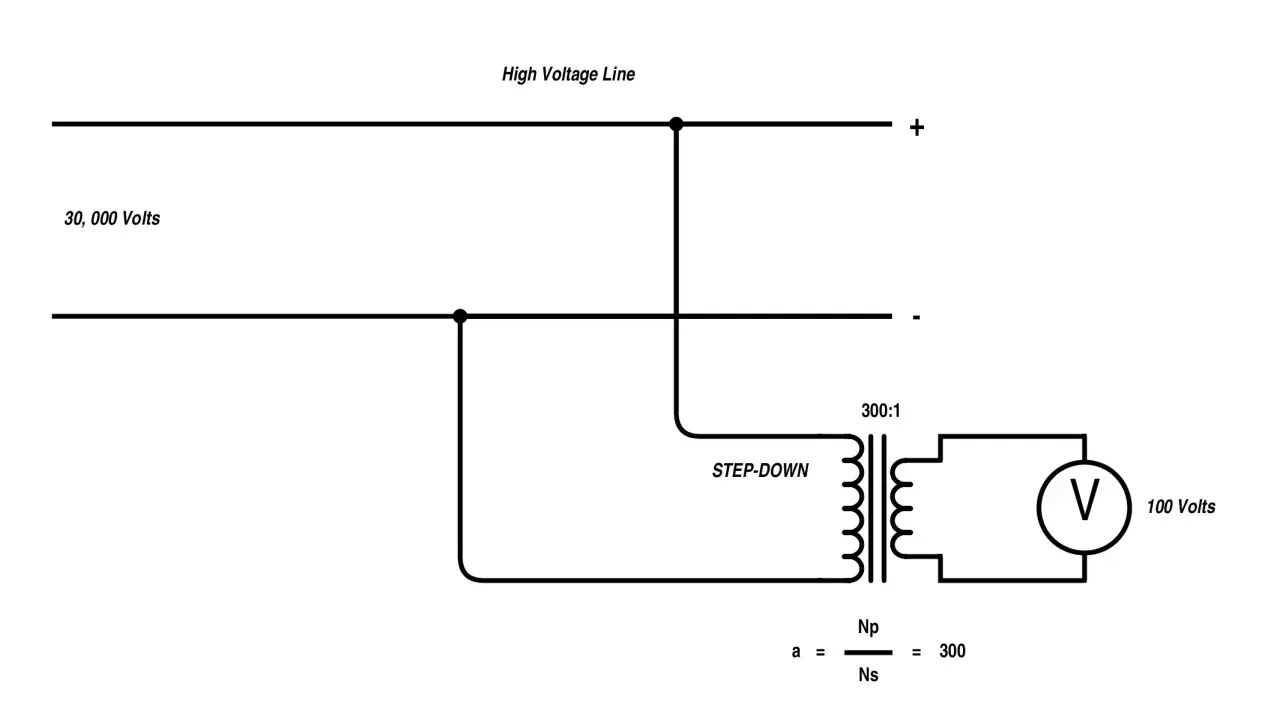
An isolation transformer keeps AC power moving while keeping the source and the load electrically separate. That separation is useful for safety, noise control, and grounding discipline, especially in control panels, test benches, and other industrial setups where sensitive electronics sit close to heavier power equipment. This article explains how an isolation transformer works in practical terms, what it actually solves, and where it can disappoint if it is specified badly.
The core idea is simple: power crosses magnetically while the circuits stay separate
- An isolation transformer transfers energy through magnetic induction, not through a direct conductive path.
- A 1:1 ratio is common, but the defining feature is galvanic isolation, not voltage change.
- It helps break ground loops, tame some noise problems, and create a more controlled earthing arrangement.
- It does not remove every kind of interference, and it does not replace proper protection or bonding.
- In UK installations, 230 V at 50 Hz is the usual starting point, but load type and earthing strategy matter more than the label on the case.
What an isolation transformer actually does
An isolation transformer transfers AC power from one winding to another through a shared magnetic core. The primary and secondary windings are physically close enough to couple magnetically, but they are not directly wired together. That is the whole point: the energy gets across, while the conductive path stays broken.
In practice, I think of it as a boundary device. It does not make power “clean” by itself, and it does not magically make a circuit safe, but it gives you a controlled electrical separation that a normal direct connection cannot provide. Many units are built as 1:1 transformers, so the output voltage matches the input, yet the separation is still there.
The phrase that matters here is galvanic isolation, which simply means there is no direct metal-to-metal current path between primary and secondary. Once that is clear, the rest of the operating principle becomes much easier to follow.
How the magnetic coupling works step by step

The process is simple, but it helps to break it down. AC on the primary winding creates a changing magnetic flux in the core, that changing flux induces a voltage in the secondary winding, and the secondary then supplies the load without sharing a conductor with the source.
- Alternating current enters the primary winding.
- The current creates a changing magnetic field in the laminated core.
- That field induces a voltage in the secondary winding by electromagnetic induction.
- The load draws current from the secondary while the two circuits remain electrically separate.
It is still not perfect isolation, because tiny stray capacitances remain between windings and core parts. That is why high-frequency interference can still leak through in some designs, and why the internal construction matters more than most people expect. From there, the obvious question is where this separation is actually worth paying for.
Where it earns its keep in industrial systems
In UK industrial automation and smart manufacturing environments, I see isolation transformers used where one part of the system needs to stay quieter, safer, or easier to reference than the rest. They show up in PLC panels, instrumentation racks, commissioning benches, laboratory equipment, and mixed-power cabinets that contain drives, sensors, and low-level control electronics side by side.
| Typical problem | What the transformer changes | Why that matters |
|---|---|---|
| Ground loops between cabinets | Breaks the direct conductive path | Reduces circulating currents that can upset analogue signals and communication links |
| Noisy power electronics near control gear | Gives the control side its own electrical reference | Helps PLCs, HMIs, and instrumentation stay more stable |
| Temporary test or service setups | Provides a floating output if that is how the secondary is configured | Makes it easier to isolate a bench from the site supply and manage fault paths deliberately |
| Retrofits with mixed earthing practices | Creates a cleaner boundary between legacy and new equipment | Reduces the chance that one awkward earth connection contaminates the whole panel |
That is why the device is so common in industrial settings: it solves a real integration problem, not just a theoretical one. The next step is to be honest about what it does not solve, because that is where bad assumptions usually start.
What it can and cannot solve
I usually push back when an isolation transformer is treated like a universal cure. It is useful, but it is not a replacement for proper design. It helps with separation, reference control, and some noise issues, yet it does not turn poor wiring, bad grounding, or an overloaded supply into a good installation.
| Expectation | Reality |
|---|---|
| “It will eliminate ground loops.” | Often, yes, if the loop depended on a direct conductive path. |
| “It will remove all electrical noise.” | No. It reduces some coupling paths, but not every source of interference. |
| “It will make the output safe to touch.” | No. A floating secondary can still deliver a dangerous shock if both conductors are contacted. |
| “It replaces protection devices.” | No. You still need correct overcurrent and thermal protection. |
| “It is the same as an autotransformer.” | No. An autotransformer shares part of the winding and does not provide the same isolation. |
The autotransformer comparison is important. If you only need voltage conversion and isolation is irrelevant, an autotransformer can be smaller and cheaper. If you need the circuits to stay separate, that trade-off stops working in your favour very quickly. That leads straight into the practical question of how to specify the right unit for a UK installation.
How I would specify one for a UK installation
If I were specifying an isolation transformer for a UK panel today, I would start with the actual supply and load, not with the catalogue headline. UK low-voltage systems are typically 230 V at 50 Hz, but the important part is whether the load is a resistive heater, a switch-mode power supply bank, a control circuit, a drive, or a mixed cabinet with all of them together.
| Spec item | What I look for | Why it matters |
|---|---|---|
| Primary and secondary voltage | Correct nominal match, often 1:1 for isolation-only use | Confirms the transformer fits the site supply and the load’s expected voltage |
| kVA rating | Enough continuous capacity for the real load, not just the average load | Prevents overheating and nuisance trips during peaks or inrush |
| Earthing strategy | Floating secondary or a deliberate single-point bond | Determines whether the output stays isolated or becomes a derived reference system |
| Shielding | Faraday shield if noise control is a priority | Improves common-mode noise suppression in sensitive systems |
| Thermal and enclosure design | Ventilation, temperature rise, and cabinet or floor mounting suitability | Drives reliability in crowded industrial spaces |
| Protection coordination | Compatible fusing, MCB, or other upstream protection | Keeps faults local and predictable |
| Applicable standards | Correct transformer safety and installation requirements for the application | Prevents compliance problems later, especially in specialist environments |
I also pay attention to the load profile. A transformer that looks fine on paper can still struggle if the cabinet is full of switch-mode supplies, rectifiers, or equipment with ugly inrush behaviour. The nameplate may be right, but the dynamic behaviour may still be wrong. That is why the final layer of judgement is usually about installation mistakes, not product labels.
Mistakes that turn a useful transformer into an expensive box
The most common mistake I see is treating the transformer as the solution rather than one part of the solution. If the grounding is wrong, the routing is noisy, or the load is badly sized, the transformer cannot rescue the design on its own.
- Bonding the secondary in more than one place and accidentally recreating a ground loop.
- Choosing a kVA rating that ignores inrush from drives, power supplies, or control gear.
- Expecting it to solve harmonic distortion when the real issue sits in the converter or load topology.
- Installing it in a cramped cabinet with poor ventilation and no thermal margin.
- Using it as a substitute for proper protective devices and coordination.
I also see people underestimate cable layout. If noisy conductors share routes with low-level signals, the transformer may help a little, but it will not undo bad segregation. Once you start looking at the whole system instead of the single component, its role becomes much clearer.
What I would check before handing one over
Before I sign off an installation, I want three answers: what problem the transformer is actually solving, how the secondary is referenced to earth, and whether the load stays within thermal limits under real operating conditions. If those three are clear, the transformer usually behaves exactly as intended.
That is the practical takeaway for modern industrial systems in 2026: an isolation transformer is best seen as a deliberate boundary between noisy supply and sensitive equipment. Used well, it gives you cleaner referencing, better separation, and fewer surprises in the panel. Used loosely, it becomes a heavy, costly component that hides the real issue instead of fixing it.
