
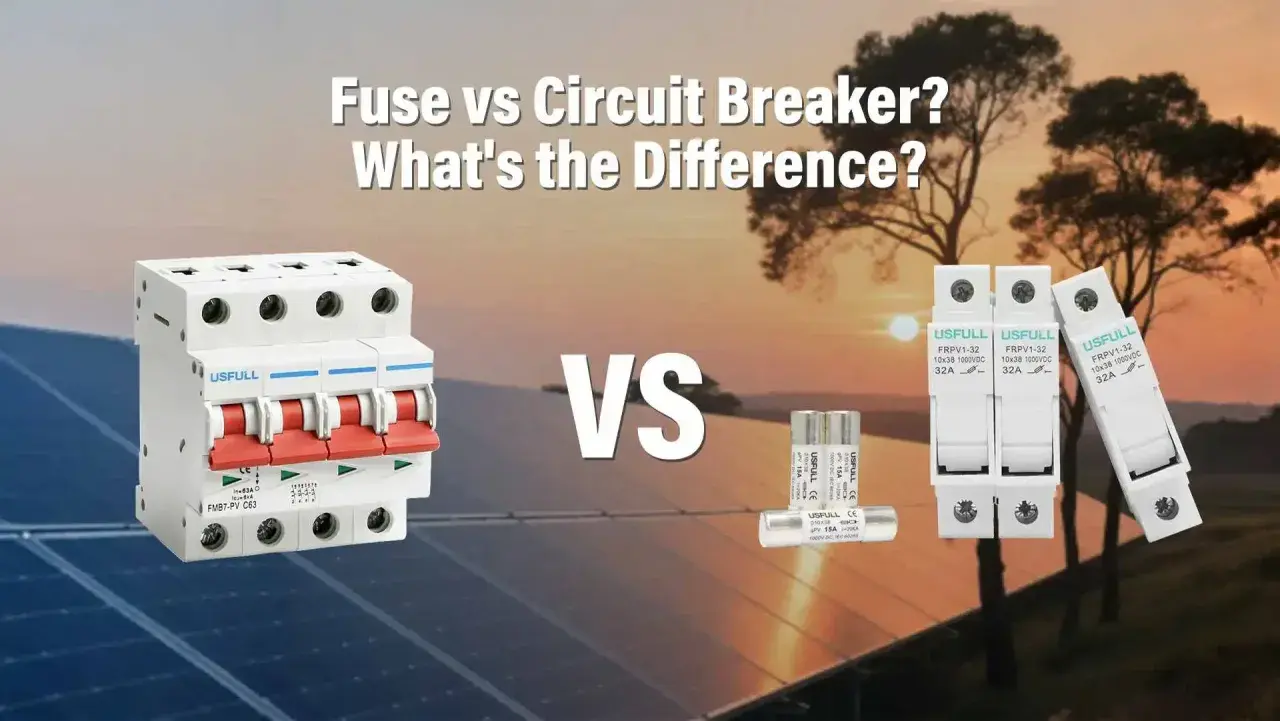
Circuit breakers and fuses both protect wiring, but they do it in different ways. The practical answer is that a standard breaker does not contain a fuse; it uses an internal trip mechanism that opens the circuit when current is too high or a fault is detected. In UK homes, the confusion usually comes from the old term “fuse box”, which people still use even when the board is fitted with breakers and RCD protection.
The short answer for a UK consumer unit
- Standard MCBs and RCBOs do not have replaceable fuses inside them.
- A fuse melts once; a breaker trips and can be reset after the fault is cleared.
- Older consumer units may still use rewireable or cartridge fuses.
- The supplier cut-out fuse near the meter is separate from the breaker board.
- Repeated tripping usually points to a fault, overload, or failing device.
Why a circuit breaker is not a fuse
An MCB, or miniature circuit breaker, is built to switch itself off when it senses overload or short-circuit current. The trip unit is part of the device, so there is no replaceable fuse element hidden inside it. An RCBO works on the same basic idea, but it also includes earth-leakage protection, which is why it can cover both overcurrent and shock-risk faults in a single module.
That is the real difference: a fuse sacrifices itself, while a breaker opens and can be reset once the underlying problem is cleared. I find that distinction useful because it tells you how the device is supposed to behave, not just what it looks like from the front. Once you separate those two functions, the old British naming starts to make more sense.
Why the term fuse box still sticks around
The term fuse box survived because the consumer unit evolved faster than the language around it. Electrical Safety First describes the consumer unit as the box that controls and distributes electricity in the home, and notes that it can contain the main switch, fuses and/or circuit breakers, plus RCDs. That means two houses can both be called “fuse box” homes even if one contains old rewireable fuses and the other is fitted with modern breakers.
| Device | What it does | Resettable? | Typical location |
|---|---|---|---|
| MCB | Trips on overload or short circuit | Yes | Modern consumer unit |
| RCBO | Trips on overload, short circuit, and earth leakage | Yes | Individual circuit in a modern consumer unit |
| Rewirable fuse | Fuse wire melts under fault current | No | Older fuse boards and older consumer units |
| Cartridge fuse | Fuse element opens once | No | Fused spurs, some appliance connections, older boards |
| RCD | Trips on earth leakage to reduce shock risk | Yes | Consumer units and plug-in protection |
| Service cut-out fuse | Protects the incoming supply before the consumer unit | No | Sealed meter or service head |
RCDs are worth separating from the rest because they are not overcurrent devices. They are there to disconnect the supply when current leaks to earth, which is why they sit alongside breakers rather than replacing them. The naming overlap is what makes many people assume the breaker and the fuse are one and the same.
Where fuses still appear in a modern electrical system
Fuses are still common, just in different places. In a UK installation I would expect them mainly in plug tops, fused connection units, older boards, and the sealed service cut-out before the consumer unit. In industrial and automation panels, they are also used to protect control transformers, PLC power supplies, drives, and other sensitive loads where fault-limiting matters.
- Plug tops usually contain BS 1362 fuses, commonly 3A or 13A, sized to protect the flex and appliance.
- Fused connection units often use 3A or 13A cartridge fuses for local appliance protection.
- Older consumer units may still use rewirable or cartridge fuses instead of breakers.
- Industrial cabinets often mix breakers and fuses on purpose, so coordination is built into the protection scheme.
That mix is deliberate. It gives designers more control over fault energy and selectivity, which is the simple idea that the nearest protective device should clear the fault first. The important point is that the fuse is still a separate part of the system, not something hidden inside the breaker.

How to tell what you are looking at in a consumer unit
If you are standing in front of a board, start with the hardware rather than the label. A breaker usually has a lever and a printed current rating on the front; a fuse usually has some kind of carrier, cap, or pull-out section. A device with a Test button is an RCD or an RCBO, not a plain breaker.
- A lever with no replaceable carrier is usually an MCB.
- A lever plus a test button is usually an RCD or RCBO.
- A screw cap or pull-out carrier usually means a fuse.
- Written circuit labels help, but older boards are often mislabelled or only partially labelled.
The HSE guidance is blunt on the part that matters: fuses, circuit-breakers, and other devices must be correctly rated for the circuit they protect. I would not treat a visual match as proof that a device is safe to swap or upgrade. If you need to remove covers or guess at the internal layout, stop there and bring in a qualified electrician.
What to do when a breaker trips or a fuse blows
A one-off trip is often just a sign of overload or a faulty appliance. Repeated trips are different: they usually point to a real fault, a damaged cable, a loose connection, or a device that is beginning to fail. I would not keep resetting the same breaker and hoping it settles down.
- Switch off and unplug the appliances on the affected circuit.
- Reset the breaker once.
- If it trips again, leave it off and check for the appliance or load causing the problem.
- If you notice burning smells, scorch marks, buzzing, or heat from the board, stop using the circuit immediately.
- If the sealed supply fuse has blown, contact the electricity supplier or network operator rather than trying to replace it yourself.
That routine is simple, but it prevents a lot of unnecessary damage. Resettable protection is meant to be used once the fault is cleared, not as a way to push a problem deeper into the installation.
Why the distinction matters in UK maintenance and industrial panels
For a house, the distinction is straightforward: a breaker is a resettable protective switch, and a fuse is a sacrificial link. For a panel in automation or manufacturing, the picture is more layered because engineers often combine both devices to improve selectivity and limit fault energy around sensitive controls. That is normal design practice, but it does not turn a breaker into a fuse.
If I am checking a site, I care more about device type, rating, labels, and signs of heat than I do about the old nickname on the cover. The safest mental shortcut is simple: if it resets, it is behaving like a breaker; if the protective element has to be replaced, it is a fuse. When in doubt, confirm the device rather than assuming the board tells the whole story.
