
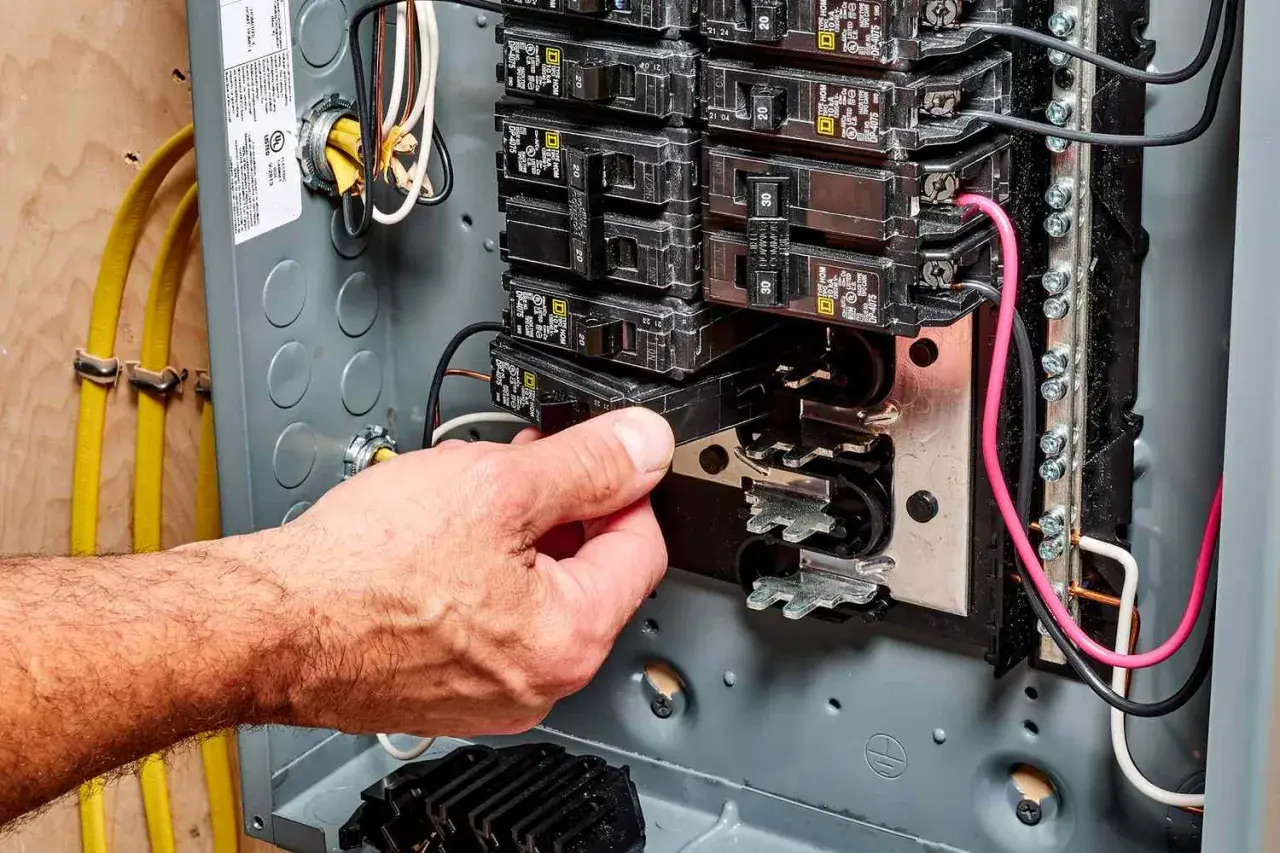
Breaker fuse replacement is one of those jobs that looks simple until you have to decide whether the fault is in the device, the circuit, or the appliance itself. In UK homes and small workplaces, the right answer depends on the type of protection device, the load on the circuit, and whether you are dealing with a plug fuse, an MCB, an RCBO, or an older rewireable fuse. This article walks through the practical process, the safety checks I would not skip, the common rating mistakes, and the point where the job should move from DIY territory to a qualified electrician.
Key points to keep in mind before you replace anything
- A tripped breaker usually needs resetting or fault-finding, not immediate replacement.
- A blown fuse should always be replaced with the same rating, not a bigger one.
- UK plug fuses are commonly 3A or 13A, with 3A used for lower-power appliances.
- Fixed wiring and consumer unit work need proper isolation and testing, not guesswork.
- If the protection device keeps failing, the real problem is often overload, damage, or a wiring fault.
What you are actually dealing with
Before I touch a screwdriver, I separate the problem into three very different cases: a plug fuse, a circuit breaker, or the circuit itself. That distinction matters, because each one fails for a different reason and comes back into service in a different way.| Device | Where you find it | What it protects | What usually happens when it fails |
|---|---|---|---|
| Plug fuse | Inside a UK BS 1363 plug | The appliance flex and the appliance itself | The fuse blows and must be replaced with the correct rating |
| MCB | In the consumer unit | A fixed circuit such as lighting or sockets | The breaker trips and is usually reset after the fault is cleared |
| RCBO | In a modern consumer unit | Overcurrent and earth-leakage protection on one circuit | It trips when it sees an overload, short, or leakage fault |
| Rewireable or cartridge fuse | Older fuse boards or equipment | A fixed circuit or legacy installation | The fuse wire or cartridge is replaced, but the cause still needs checking |
In practice, a breaker that keeps tripping is trying to tell you something. A fuse that keeps blowing is doing the same. I treat repeated failures as a symptom, not a part-selection problem, and that mindset saves a lot of bad repairs. Once you know what failed, the next step is to replace it safely rather than just forcing power back on.

The safe replacement process step by step
There is a big difference between replacing a plug fuse and replacing a breaker in a consumer unit. I am comfortable describing both, but I would only treat the plug-fuse version as routine homeowner maintenance. The consumer-unit version belongs to someone who can isolate correctly, prove the circuit is dead, and test the installation afterwards.
Replacing a UK plug fuse
- Unplug the appliance and check for visible damage, scorch marks, or a burned smell.
- Open the plug and inspect the flex, terminals, and fuse carrier.
- Fit the same fuse rating, typically 3A or 13A in UK plugs.
- Reassemble the plug securely so the cord grip holds the cable properly.
- Test the appliance only after you have corrected the original cause of the failure.
This is the only version of the job that I would describe as genuinely simple, and even here the rating matters. A 3A fuse is common for lower-power appliances, while 13A is used where the appliance draw is higher. Up-rating the fuse to stop it blowing is the wrong move; it removes protection instead of solving the fault.
Read Also: Circuit vs. Breaker - What's the Real Difference?
Replacing a breaker in a consumer unit
- Isolate the supply properly and lock off where the setup allows it.
- Prove the circuit is dead with suitable test equipment.
- Remove the cover only when you are sure the dead state has been verified.
- Identify the exact device type, current rating, and manufacturer compatibility.
- Replace like for like, then torque terminals to the manufacturer’s specification.
- Restore power and test the circuit under real load, not just with a quick glance.
That sequence sounds cautious because it is. In low-voltage work, the problem is rarely the screw you can see; it is the assumption you make before you touch it. The HSE-style rule set is still the right one here: isolate, verify, and only then work on the equipment. Once the process is clear, the next decision is choosing the right rating and type, which is where many repairs go wrong.
How to choose the right rating and avoid making the fault worse
The easiest way to create a repeat fault is to fit the wrong protective device and call it a repair. I see three common mistakes over and over: people fit a fuse that is too large, they swap in a breaker that does not match the circuit, or they ignore why the device operated in the first place.
- Same amperage matters because the cable size and circuit design depend on it.
- Device type matters because an MCB, RCBO, and older fuse do not behave the same way.
- Breaking capacity matters because the device must be able to interrupt fault current safely.
- Curve or trip characteristic matters on circuits with motors, transformers, or higher inrush currents.
- Manufacturer compatibility matters in some consumer units, especially older or mixed boards.
If a breaker trips when a vacuum cleaner, heater, or compressor starts, the first question is not “Can I fit a bigger breaker?” It is “Is this circuit overloaded, is the appliance faulty, or is the protection device mis-specified?” In workshops and light industrial panels, the same logic applies. A recurrent trip can point to a failing contactor, a motor with high starting current, or an overloaded branch circuit, and changing the breaker alone usually just hides the evidence.
| What I would not change casually | Why it matters |
|---|---|
| Fuse rating | Increasing it can leave the cable unprotected |
| Breaker type | Different trip curves behave differently under load |
| Breaker size | The circuit was designed around a specific current rating |
| Earth-leakage protection | Removing RCBO or RCD protection can create a shock risk |
Once the correct rating is clear, the question becomes whether the job is even appropriate for a DIY approach in the UK, which is where regulation and competence matter.
When UK rules turn this into a job for a qualified electrician
Swapping a plug fuse is one thing. Working inside a consumer unit is another. In the UK, fixed electrical work is not treated like changing a battery, and consumer unit replacement or major breaker work usually sits in the territory of a competent electrician with the right test equipment and certification process.
I would stop and hand the job over when any of these apply:
- The breaker keeps tripping after the obvious appliance is unplugged.
- The consumer unit shows heat damage, corrosion, or signs of water ingress.
- You do not have the equipment to prove the circuit is dead.
- The board is old, crowded, or built from mixed device types that are not clearly compatible.
- The issue affects a fixed circuit rather than a single plug-in appliance.
- You are dealing with a rental property, a shared installation, or a workplace panel.
There is also a practical reason not to push beyond your competence: a breaker fault can be the visible end of a longer problem. Loose terminations, damaged insulation, an overloaded socket circuit, or an ageing consumer unit all need proper diagnosis. Electrical Safety First and HSE guidance both lean hard on safe isolation for a reason: live-work assumptions are where avoidable injuries happen.
That is why I do not treat “replace the breaker” as a complete instruction. It is only the final step after testing, isolation, and fault-finding.
What it usually costs and how long it takes
Cost depends on whether you are changing a small consumable part or calling in a fault-finding job. In the UK, the difference between a plug fuse and a consumer-unit breaker replacement is large enough that it is worth setting expectations early.| Job | Typical time | Typical UK cost | Notes |
|---|---|---|---|
| Replace a plug fuse | 5 to 10 minutes | About £1 to £5 for a small pack | Cheap part, but only safe if the appliance fault is already understood |
| Reset and investigate a tripped breaker | 10 to 30 minutes | No part cost, just time | Often the right first step before any replacement |
| Replace a single breaker in a consumer unit | 30 to 90 minutes | Roughly £80 to £180 in a straightforward case | Testing and access can move this higher |
| Replace an entire consumer unit | Half a day or more | Usually several hundred pounds, often £500+ | This is a different job entirely and normally includes testing and certification |
My own rule of thumb is simple: the cheaper the part, the more important the diagnosis. A blown plug fuse can cost pennies, but the problem behind it can cost far more if it keeps coming back. A consumer-unit breaker swap is the opposite: the device itself is not usually the expensive part, but the safe isolation, testing, and sign-off are what you are paying for.
In 2026, that is especially true on modern RCBO-based boards, where a single protective device may combine overcurrent and residual-current protection. The part may be modest; the competence and verification are what carry the real value.
The checks I would make before I close the panel again
Whether I am dealing with a fuse, an MCB, or an RCBO, I always want the same three things before I call the job done: the original cause addressed, the correct rating fitted, and the circuit tested under normal load. If any one of those is missing, the repair is incomplete.
- Confirm the appliance or circuit is not overloaded.
- Check for heat damage, loose terminals, or discoloured insulation.
- Make sure the replacement part matches the original specification.
- Label the circuit if the fault revealed a confusing or incorrect board layout.
- Watch for repeat trips in the first few days, especially when the same appliance is used.
The most useful habit I can recommend is to pay attention to patterns. If the problem appears only when a heater and a kettle are on together, that is an overload story. If it appears only when rain is heavy or a motor starts, that points somewhere else. The more clearly you can describe the trigger, the faster the next diagnosis will be, and the less likely you are to treat a symptom as a solution.
