
An electrical circuit is the path current follows; a breaker is the device that opens that path when conditions turn unsafe. The circuit vs breaker distinction is simple once you see that one is the route and the other is the guard. I’m going to separate the two, show how they work together, and explain what matters when a breaker trips in a UK home or control panel.
The short version is that one carries power and the other protects it
- A circuit is the complete electrical path from source to load and back again.
- A circuit breaker is a protective switch that interrupts that path when current becomes unsafe.
- In UK consumer units, MCBs usually handle overloads and short circuits, while RCBOs add earth-leakage protection.
- An RCD is not the same as a plain breaker; it reacts to leakage to earth, not just excess current.
- Repeated tripping usually means there is still a fault, not that the device simply needs another reset.
- The same logic applies in homes, workshops, and industrial automation panels.
What a circuit really is
A circuit is not a box on a wall or a protective device in a panel. It is the complete loop that allows electricity to flow: source, conductors, load, and return path. If that loop is open anywhere, current stops. That is why a blown lamp, a broken cable, or an open switch all create an open circuit even though the rest of the wiring may still be intact.
I find it useful to think of circuits as routes rather than objects. In practice, that route might feed a lighting run, a socket ring, a heater, a motor starter, a PLC input rail, or a sensor supply in an automation cabinet. The exact load changes, but the principle does not: the circuit is the path current uses to do work.
- A lighting circuit carries current to luminaires and controls.
- A socket circuit feeds plug-in loads such as tools, computers, or chargers.
- A motor circuit may include a starter, contactor, overload relay, and the motor itself.
- A control circuit may power low-voltage devices such as relays, sensors, and I/O modules.
That distinction matters because a circuit can fail without any protective device being bad at all. Once that is clear, the breaker becomes much easier to place in the picture.

What a circuit breaker actually does
A circuit breaker is a protective switch. Its job is to stay closed during normal operation, carry the expected current, and open quickly when the current becomes unsafe. That unsafe condition may be an overload, a short circuit, or, depending on the device type, a leakage fault to earth.The important point is that the breaker is not the circuit itself. It sits in the circuit and watches over it. In a well-designed installation, the breaker is sized to protect the cable and the connected equipment, not to act as a generic on-off switch for the whole system. In a UK consumer unit, the device you reset after a trip is often an MCB or an RCBO, and in industrial panels you may also see more specialised protection devices built around the same basic idea.
There is also a practical detail that people miss: a breaker can be perfectly healthy and still trip because the downstream circuit is drawing too much current or has a fault. The breaker is doing its job when that happens. The real question is why it opened.
The difference side by side
When I want to remove confusion fast, I put the two concepts in the same frame. That usually shows the answer immediately.
| Aspect | Circuit | Circuit breaker |
|---|---|---|
| What it is | The electrical path that allows current to flow | A protective switching device installed in that path |
| Main purpose | Deliver power to a load or system | Interrupt current when conditions become unsafe |
| Normal state | Complete and continuous | Closed and carrying current |
| When something goes wrong | The path becomes open or damaged and the load stops working | The device trips or opens to protect wiring and equipment |
| Resettable | No, because it is not a single device | Usually yes, once the fault is cleared |
| Typical location | Throughout the wiring, loads, terminals, and controls | Consumer unit, distribution board, or control panel |
That table is the simplest way to read a fault report too. If the load is dead, the circuit may be open. If the protective device has tripped, the breaker or related protection has decided the current is no longer acceptable. The next question is what usually makes that happen.
Why breakers trip in homes and industrial systems
Most trips are not random. They are the result of one of a small number of conditions, and the type of device tells you a lot about which one is likely.
- Overload means too much current for too long. A socket circuit can be overloaded by several high-draw appliances at once, while a motor circuit may be pushed too hard by repeated starts or an undersized supply.
- Short circuit means current has taken an unintended low-resistance path, usually between live and neutral or live and earth. This is the kind of fault that causes a breaker to open very quickly.
- Earth leakage or residual current means electricity is leaving the intended path. A plain breaker does not normally detect this, but an RCD or RCBO does.
- Faulty equipment can create all three conditions indirectly. Damaged heaters, wet tools, crushed cables, loose terminals, and aging motors are all common suspects.
In automation work, I pay attention to the pattern. A breaker that trips the moment a machine starts points me toward inrush current, a motor issue, or a short. A device that trips only when someone plugs in a particular tool points me toward the tool or its lead. A trip that happens after rain or washdown often points to leakage or moisture ingress rather than pure overload. That is why the label on the device matters just as much as the fault itself.
Which devices you will see in a UK consumer unit
In the UK, people often call the whole board a fuse box, but modern boards are usually consumer units with several different protection devices inside. They may look similar at a glance, yet they do different jobs.
| Device | What it protects against | Resets after a trip | Typical use | What to notice |
|---|---|---|---|---|
| MCB | Overload and short circuit | Yes | Lighting, sockets, fixed appliances | Usually no test button |
| RCBO | Overload, short circuit, and earth leakage | Yes | Individual circuits that need full protection | Often has a test button |
| RCD | Earth leakage only | Yes | Groups of circuits or whole-board protection | Has a test button and does not replace overcurrent protection |
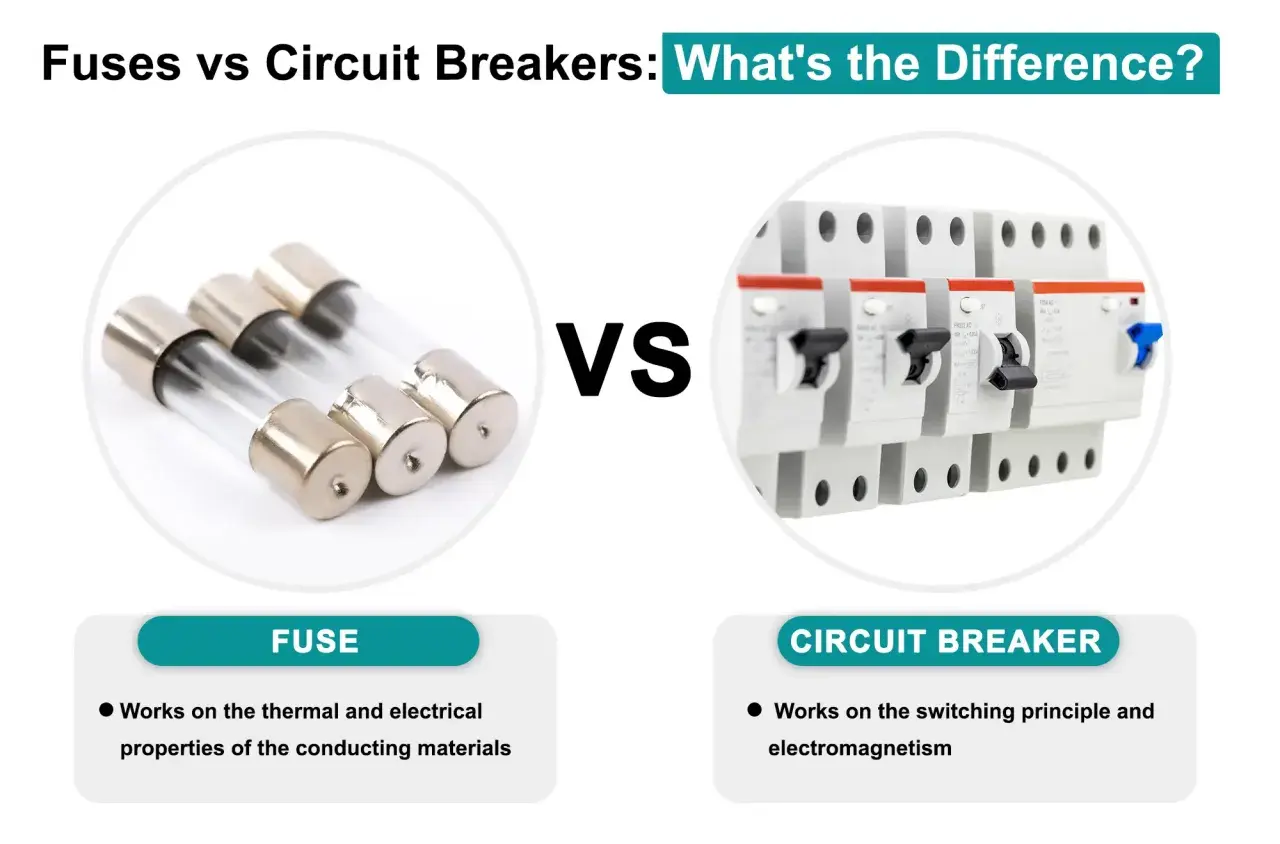
| Fuse | Overcurrent, but once only | No | Older boards, plug tops, fused connection units | Must be replaced after it operates |
For a UK reader, this is where the terminology gets messy. A tripped MCB is a breaker problem in the literal sense. An RCD trip is a different protection event, even though people often lump it in with “the breaker went.” In many modern installations, especially where sockets or outdoor circuits are involved, you may see RCBOs because they combine both overcurrent and leakage protection in one device.
I also see trip curves matter more than people expect in industrial panels. A Type B device reacts quickly to lower inrush, Type C is more tolerant of startup surges, and Type D is used where motors or transformers create heavier inrush current. That choice is not cosmetic; it affects whether a machine starts cleanly or nuisance-trips on every first pulse of load.
What I check before resetting a tripped breaker
The safest habit is simple: do not keep resetting a breaker and hoping for the best. One reset is a diagnosis step; repeated resets are usually just repetition.
- Switch off or unplug the load on the affected circuit if you can do that safely.
- Look and listen for obvious signs of trouble: heat, buzzing, scorch marks, burning smell, moisture, or a damaged lead.
- Reset the device once.
- If it trips again immediately, leave it off and isolate connected loads one by one.
- If the device has a test button, treat it as RCD or RCBO protection and think leakage rather than pure overload.
- If the same circuit keeps tripping, or the panel feels warm, stop and get a qualified electrician involved.
There is one practical rule I rely on: if the fault only appears when a specific machine, heater, charger, or tool is connected, assume the load or its cable is part of the problem until proven otherwise. If the trip happens with everything unplugged, the wiring or protective device deserves more attention. That kind of sorting saves time and keeps you from chasing the wrong side of the installation.
The rule I use when I am looking at a panel
When I am staring at an electrical panel, I separate function from protection. The circuit is the route that delivers power; the breaker or protective device is the gatekeeper that opens that route when the current is no longer acceptable. That mindset makes troubleshooting faster, because it stops me from treating every loss of power as the same problem.
For homes, workshops, and industrial control cabinets, the practical takeaway is the same: read the device label, know whether you are dealing with an MCB, RCBO, or RCD, and treat repeated tripping as a symptom that still needs an explanation. If a breaker trips once and then holds after you remove the likely cause, the system has probably told you the truth. If it trips again, the fault is still there.
