
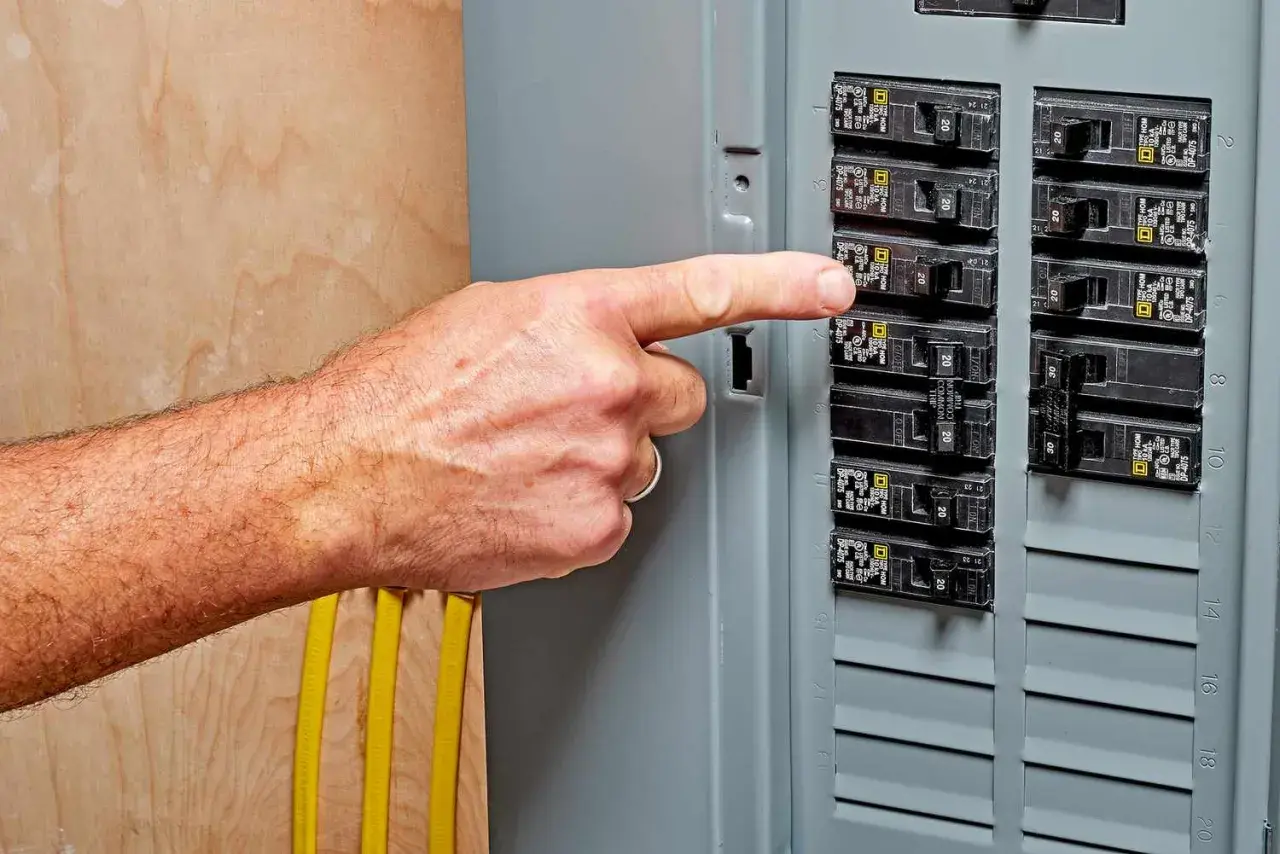
A breaker switch is one of those components that looks simple until it starts protecting a circuit in real time. This breaker switch breakdown focuses on how the device actually senses trouble, opens the circuit, and helps prevent heat damage, fire, or equipment failure in both UK consumer units and industrial panels. I’ll also show how to read a trip correctly, reset it safely, and spot the point where a breaker is no longer just inconvenient but genuinely telling you something is wrong.
The essentials that matter before you reset anything
- A breaker is a reusable protection device, not just an on-off lever.
- MCBs usually protect against overloads and short circuits, while RCDs watch for earth leakage.
- RCBOs combine overcurrent and residual-current protection in one device.
- The trip mechanism is usually thermal, magnetic, or both, depending on the breaker type.
- When a breaker trips, the contacts open quickly and the arc is extinguished inside the device.
- If it trips again straight away, the fault is still present and should be traced before you try again.

How a breaker switch actually works
I like to explain a breaker as three things working together: a switch, a sensor, and a fast mechanical release. In normal use, the contacts stay closed and current flows through the circuit. Inside the device, that current passes through a trip element designed to watch for abnormal conditions, while a latch holds the contacts shut until the breaker decides the circuit is no longer safe.
The front lever is only the user interface. It lets you turn the circuit on, isolate it manually, or see that the device has tripped. The actual protection happens inside. For an overload, a bimetal strip warms up and bends; for a short circuit, a magnetic coil reacts almost instantly to the sudden surge. In both cases, the latch releases and a spring snaps the contacts open.
That opening creates an arc, which is why a breaker is built to do more than separate metal parts. The arc has to be cooled and stretched until it dies out, usually in an arc chute or similar chamber. In AC systems, the current naturally crosses zero many times a second, which makes arc extinction easier. That is one of the reasons a breaker can clear a fault quickly and be reused afterwards, unlike a fuse.
Read Also: THHN Conduit Explained - Choosing the Right Wiring System
The parts that do the real work
- Contacts carry current when the circuit is healthy and separate when a fault is detected.
- Trip unit senses overload, short circuit, or residual current depending on the device.
- Latch and spring mechanism release the contacts quickly enough to limit damage.
- Arc chute helps cool and extinguish the electrical arc created as the contacts open.
- Handle gives you a manual way to isolate the circuit and shows the trip status.
That basic mechanism explains why a breaker can act in milliseconds, and it leads directly to the next question: what exactly is it reacting to when it trips?
Why breakers trip for different faults
Not every trip means the same thing. In practice, a breaker is usually responding to one of three problems: overload, short circuit, or earth leakage. The distinction matters because the fault tells you where to look next, and it also tells you whether the device doing the protection is the right one for the job.
An overload is usually a circuit being asked to carry more current than it was designed for over time. A kettle, heater, motor, or group of appliances can push the current high enough to heat the cable and the breaker’s thermal element. A short circuit is more violent: live conductors touch in a way that creates a very low-resistance path, and the current rises almost instantly. Earth leakage is different again. That is current escaping where it should not, often through damaged insulation or a faulty appliance, and it is the kind of fault an RCD is designed to notice.
| Device | What it detects | What it protects | Typical use |
|---|---|---|---|
| MCB | Overload and short circuit | Cables and connected equipment | Lighting, sockets, small dedicated circuits |
| RCD | Current imbalance between live and neutral | People, by reducing electric shock risk | Whole banks of circuits or additional protection |
| RCBO | Overload, short circuit, and earth leakage | One circuit at a time | Modern consumer units and more selective protection |
| Main switch | None | No automatic protection; manual isolation only | Whole installation shutdown |
In the UK, this is why people often find a consumer unit easier to live with when each circuit has its own RCBO: one bad appliance does not have to take out half the property. And once you can read the type of trip, the sequence inside the panel becomes much easier to understand.
What happens inside the panel when it trips
The trip process is quick, but it is not random. I usually break it down like this:
- The circuit starts drawing too much current or leaking current to earth.
- The breaker’s sensing element detects that the current has moved outside safe limits.
- The internal latch releases, either after a thermal delay or almost instantly through magnetic action.
- A spring mechanism forces the contacts apart.
- An arc appears as the current tries to keep flowing across the opening gap.
- The arc is cooled, split, or stretched until it goes out.
- The handle moves to the trip position, showing that the device has operated.
That is the main reason a breaker is reusable. Nothing has been melted in the way a fuse wire is sacrificed. The breaker has simply done the job of interrupting the fault and waiting for you to clear the cause before restoring power.
The important practical point is this: a breaker trips because it is seeing stress, not because it is being awkward. If it trips repeatedly, the circuit is telling you there is still a fault, an overload, or a device that is drawing more current than it should. That leads naturally to the safest way to reset it.
How to reset a tripped breaker safely
In a UK home or workshop, the safest reset process is simple, but I would not rush it. If you notice burning smells, visible scorching, moisture, buzzing, or a hot panel cover, stop there and get the circuit checked before you do anything else. Those signs suggest a real fault, not just a temporary nuisance trip.
- Turn off or unplug the loads on the affected circuit if you can do so safely.
- Check whether the breaker is an MCB, RCD, or RCBO so you know what likely caused the trip.
- Move the breaker fully to the off position first, then switch it back on.
- If it holds, reconnect appliances one at a time to see what caused the problem.
- If it trips again immediately, leave it off and investigate further or call a qualified electrician.
There are two common mistakes here. The first is repeatedly forcing the breaker back on without removing the load. The second is assuming the breaker itself is faulty when the real issue is a damaged appliance or a cable problem downstream. A good reset process sorts those two cases apart quickly.
For RCDs, the test button matters as well. In normal UK domestic practice, that test is commonly done every six months, because a device that protects people has to prove it can still trip mechanically. Once you know how to handle a trip safely, the next question is where breakers fit in the larger electrical system.Where breaker switches fit in UK consumer units and industrial panels
In a UK house, the modern consumer unit usually combines a main switch, circuit breakers, and one or more RCDs or RCBOs. The main switch isolates the whole installation, but it does not protect anything by itself. The protective devices do the real work. They are selected to match the cable, the expected load, and the way the circuit is used.In industrial panels, the same principle scales up. You may still see miniature circuit breakers for control circuits, but larger feeders often use MCCBs or other higher-rated devices. On machine lines, I think the most important idea is selectivity, sometimes called discrimination: only the protective device closest to the fault should trip, not the entire plant or distribution board. That keeps downtime local instead of turning one fault into a production stop.
Breaker choice also changes with the load type. A B-curve breaker reacts quickly and suits more straightforward resistive loads. A C-curve allows more inrush current, which is useful where motors, transformers, or mixed loads start up. D-curve devices tolerate even higher inrush and are used more often in heavier industrial settings. That does not make one curve better than another; it just means the breaker has to match the load profile, not the appliance label alone.
- Domestic circuits usually prioritise simple fault protection and easy reset behaviour.
- Industrial feeders often need higher breaking capacity and better coordination.
- Motor control usually needs both a breaker and an overload relay, because they protect against different problems.
- Smart panels can use auxiliary contacts to report a trip to a PLC, BMS, or SCADA system.
That is especially useful in automation, where a fault can be visible in software long before someone opens the cabinet door. It also shows why a breaker is part of a protection strategy, not the whole strategy. From there, the biggest mistake is thinking every trip means the breaker has failed.
What a breaker cannot do and the warning signs that matter
A breaker cannot repair a faulty appliance, fix damaged insulation, or compensate for a badly designed circuit. It also cannot protect you if the device is the wrong type for the job. A breaker that is too large for the cable can leave the wiring underprotected; one that is too sensitive can trip every time a motor or transformer starts. In other words, the rating has to be matched to the installation, not guessed.
These are the signs I would take seriously:
- Repeated tripping after appliances have been unplugged.
- A breaker or consumer unit that feels hot to the touch.
- Burning smell, discolouration, or visible soot around the device.
- Buzzing, crackling, or intermittent loss of power.
- A breaker that will not stay reset even with the circuit unloaded.
In those cases, the breaker is probably doing its job correctly by refusing to stay on. The real issue is further down the circuit or in the panel itself, and that is where a proper inspection matters more than another reset attempt.
What I would keep in mind after checking a breaker switch
The useful way to read a breaker is simple: it is a fast, reusable safety device that protects wiring and equipment by interrupting current when conditions move outside the safe range. Once you know whether you are dealing with an overload, a short circuit, or earth leakage, the trip stops looking mysterious and starts looking informative.
If I had to leave you with one practical habit, it would be this: treat the trip as a message, not an annoyance. Reset only after you have reduced the load or removed the likely fault, and keep an eye on recurring trips, heat, smell, or damage. In a home, that might mean a single appliance needs attention. In a factory or automation panel, it might mean the breaker is protecting you from a fault that would otherwise take out a larger part of the system.
When the device is understood properly, the breaker switch breakdown is not really about the lever at all. It is about how the panel decides when power is safe to keep flowing, and when it is better to stop the circuit before the fault becomes something expensive or dangerous.
