
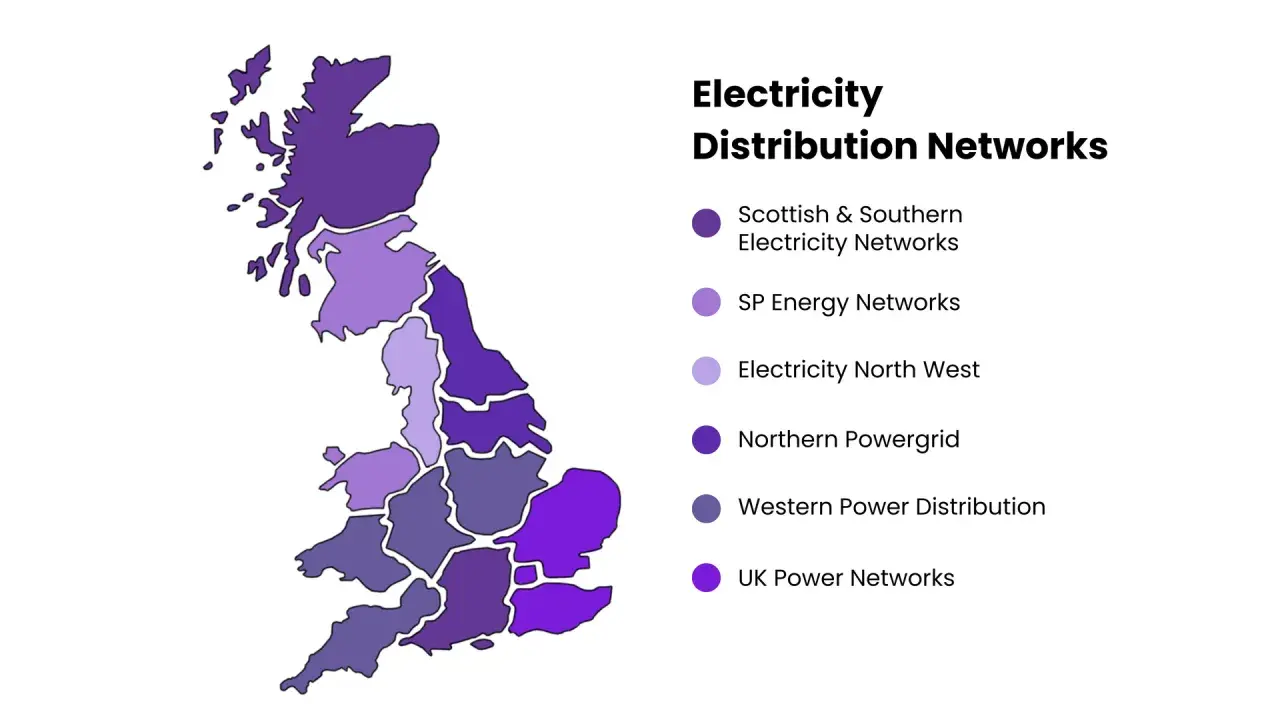
In a UK power system, distribution testing is where design intent meets reality: I want to know whether switchboards, feeders, protection devices, transformers, and earthing will carry load, clear faults, and stay stable under real operating conditions. This article explains what that testing actually covers, which checks matter most, how UK compliance fits in, and how to build a schedule that works in practice rather than just on paper.
Key points at a glance
- For low-voltage installations in the UK, I work to BS 7671:2018+A4:2026 alongside the Electricity at Work Regulations 1989.
- The real job is to prove safety, fault clearance, and performance under load, not just to collect readings.
- Core checks usually include continuity, insulation resistance, polarity, earth fault loop impedance, RCD operation, phase balance, and thermography.
- HSE treats testing frequency as a risk-based decision, so harsh environments and critical processes need tighter intervals.
- Smart sensors and IoT monitoring help between shutdowns, but they do not replace hands-on inspection and live verification.
- The most useful reports do not just say “pass” or “fail”; they tell you where heat, imbalance, contamination, or ageing is starting to build.
What distribution testing actually covers in a power system
When I talk about distribution-system testing, I am not talking about a single meter reading or a quick visual check. I am talking about a structured verification of the equipment that moves electrical energy from the point of supply to the loads: incoming service gear, switchboards, submains, final distribution boards, transformers, protective devices, metering, earthing, and the interfaces with standby generation, UPSs, and variable-speed drives.
The scope changes with the asset. On a small commercial installation, it may be mostly low-voltage inspection, insulation testing, and protective-device verification. On an industrial site, it quickly expands into breaker timing, relay settings, thermal imaging, load studies, and sometimes transformer condition tests. I usually split the work into three layers: commissioning tests before handover, periodic inspections during service, and post-event checks after faults, flooding, overloads, or major modifications.
That distinction matters because a system can look tidy and still be unsafe under fault. A cable can be neatly dressed and still have poor insulation. A breaker can operate manually and still trip too slowly. A neutral bar can sit quietly for months and then overheat once harmonics and unbalanced loads rise. Once you see testing that way, the next question is not “did we test it?” but “what failure are we trying to prevent?”
Why it matters for safety, uptime, and compliance
The obvious reason is safety. Poorly maintained distribution equipment can create electric shock risk, fire risk, arc-flash exposure, and unpredictable tripping. The less obvious reason is uptime. In manufacturing and process environments, a single failed feeder or nuisance trip can stop production lines, corrupt batches, damage drives, or force a whole shift into recovery mode. I have seen more money lost to avoidable interruptions than to the test programme itself.
In the UK, low-voltage installations are generally assessed against BS 7671, which covers circuits up to 1000 V AC or 1500 V DC. The current edition in 2026 is BS 7671:2018+A4:2026, and HSE treats compliance with the latest wiring standard as a strong route toward meeting the relevant duties under the Electricity at Work Regulations 1989. That does not mean every site needs the same interval or the same test depth. HSE’s position is closer to a risk-based one: the environment, loading, history of faults, and competence of the person doing the work all matter.
For rented premises in England and Wales, the fixed installation must be inspected and tested at least every 5 years. For industrial or mission-critical sites, I would normally expect a shorter internal cycle, because heat, vibration, dust, moisture, and frequent switching all accelerate wear. The point is simple: compliance is the floor, not the finish line. That leads directly to the checks that give the most useful evidence.

The tests I would prioritise on low-voltage boards
On low-voltage boards and switchboards, I focus on tests that answer a practical question: will this installation remain safe and disconnect correctly if something goes wrong?
| Test | What it tells me | Why it matters | Common mistake |
|---|---|---|---|
| Continuity of protective conductors and bonding | Whether earth paths and bonding links are complete and sound | Fault current needs a low-impedance path back to the source | Assuming a visual check is enough when terminations are loose or corroded |
| Insulation resistance | Whether insulation is breaking down, damp, damaged, or contaminated | It helps catch leakage paths before they become trips or fires | Leaving surge devices or sensitive electronics connected when they should be isolated |
| Polarity | Whether line, neutral, and switched conductors are correctly arranged | Reversed polarity can make a circuit look healthy while remaining unsafe | Skipping it because other readings look normal |
| Earth fault loop impedance | Whether the fault path is low enough to let protection operate quickly | It is one of the clearest checks that a protective device will actually clear a fault | Taking a value without checking whether the protective device and cable run still match the design |
| RCD and RCBO tests | Whether residual-current devices trip within their intended operating band | They are often the last line of defence against shock and earth leakage | Only pressing the test button and assuming that proves the device under load |
| Phase sequence and phase balance | Whether rotating plant and three-phase loads are connected correctly and evenly | Wrong sequence can damage motors; imbalance creates heat and inefficiency | Ignoring imbalance until motors run hot or drives complain |
| Functional and mechanical checks | Whether isolators, breakers, interlocks, and auxiliary contacts operate properly | A device that is mechanically sticky can fail at the exact moment you need it | Trusting the nameplate rating without exercising the mechanism |
| Thermography and load logging | Where heat, overload, harmonics, or poor connections are developing | These checks reveal issues that a dead test cannot see | Scanning when the board is lightly loaded, which hides the problem |
For residual-current devices, I do not stop at the test button. I want a measured response under the relevant residual current, because that is what separates “it clicked once” from “it really protects people.” The same principle applies to thermography: a hot spot on an outgoing cable or neutral bar means nothing if it was scanned under a light load. I want load, temperature, and time to line up before I trust the result.
That logic holds even more strongly once the installation moves beyond basic low-voltage boards and into transformers, medium-voltage gear, and protection systems.
What changes when transformers, MV gear, and protection relays are involved
Once I move into transformers, medium-voltage switchgear, or more complex protection schemes, the testing becomes less about a single pass/fail reading and more about proving coordination between assets. A fault on a high-value industrial feeder can cost far more than the test itself, so the work needs better planning, more isolation, and a clearer outage window.
For transformers, I usually think in terms of four questions. Is the winding healthy? Is the insulation still behaving? Is the cooling system doing its job? And is the transformer still matching the load profile it was designed for? Depending on the asset, that can involve turns-ratio checks, winding resistance, insulation power-factor or tan-delta testing, oil sampling, dissolved gas analysis, tap-changer inspection, and temperature monitoring. Dissolved gas analysis means looking for gases formed by overheating or arcing inside the oil, which gives early warning before failure becomes obvious.
For switchgear and breakers, the practical checks are different. I look at contact resistance, breaker timing, interlocks, condition of arc chutes, and relay settings. Primary injection means pushing test current through the actual power path to prove the trip chain under real electrical conditions. Secondary injection tests the relay logic and trip unit without forcing full fault current through the equipment. In the real world, both matter: the protection relay might be correct while the breaker mechanism is sluggish, and that gap is exactly where hidden risk lives.
Protective relays deserve particular respect because they are often trusted to make decisions in milliseconds. If settings have drifted, if CT polarity is wrong, or if coordination was never reviewed after a plant expansion, then a fault can cascade farther than it should. I have seen sites add drives, solar, UPS capacity, or generator back-up and then keep the old protection assumptions. That is a mistake. Any substantial change to the network should trigger a fresh discrimination review and, in many cases, a fresh set of tests.
Once that higher-level equipment is in scope, the next problem is not what to test but how often to test it without creating unnecessary downtime.
How I set a testing schedule that fits the site
HSE does not give one universal timetable for every installation, and that is the right approach. The schedule should reflect environment, duty, and consequence. In practice, I start with risk, then work backward to the minimum interval that still gives me confidence.
| Site condition | Practical approach | Why I would choose it |
|---|---|---|
| Office or light commercial environment | Visual checks more often, full inspection and testing on a multi-year cycle, with thermal scans during normal load periods | Lower mechanical stress, but faults still build slowly through loose terminations and ageing insulation |
| Industrial site with drives, compressors, or frequent switching | More frequent thermography, load logging, and targeted shutdown tests after major changes | Heat, harmonics, vibration, and start-stop duty accelerate wear |
| Harsh or critical environment | Shorter review cycle, live condition monitoring where practical, and inspection after any abnormal event | Moisture, dust, contamination, or production loss make early warning more valuable than a long interval |
| Rented residential property in England and Wales | Fixed installation inspection and testing at least every 5 years | This is a legal baseline, not a luxury add-on |
My rule of thumb is to combine three triggers rather than rely on one. First, a calendar trigger, because nothing should be left indefinitely. Second, an operating trigger, such as a load increase, new process line, EV charger, solar inverter, or UPS upgrade. Third, an event trigger, such as a flood, nuisance trip, breaker failure, overheating smell, or unexplained voltage dip. If any one of those happens, I want the testing plan reviewed immediately.
I also watch the calibration status of the instruments themselves. A test report is only as good as the meter, clamp, relay tester, or thermal camera behind it. That sounds obvious, but in practice, poor instrumentation discipline causes more confusion than people admit. A well-run schedule is really a reliability system in miniature: it tells you what to inspect, when to inspect it, and what event should force an earlier visit.
That same reliability mindset is why smart monitoring has become so useful on modern sites, especially in industrial automation and connected manufacturing environments.
Where smart monitoring adds value without replacing field tests
In a modern plant, I would not rely on periodic shutdown tests alone if the site already has the infrastructure for monitoring. IoT-connected meters, temperature sensors, breaker counters, power-quality analysers, and SCADA-linked alarms can show me what is changing between inspections. That is especially helpful where uptime matters and an outage window is expensive to create.
The strongest use cases are trends rather than single events. Rising neutral current can point to harmonic loading from non-linear equipment. Gradually increasing temperature on one phase can point to a loose termination or imbalance. Frequent breaker operations can show a process problem before it becomes an electrical one. Power-quality logging can also reveal voltage dips, flicker, or distortion that would otherwise be blamed on “bad luck” when the actual cause is the site itself.
What smart monitoring does not do is replace isolation-based testing. It can show me that a cable is getting hotter, but not whether its insulation will hold when the system is de-energised and stressed. It can show me that a relay is tripping too often, but not whether the cause is nuisance setting, inrush, or a genuine fault path. I see monitoring as a second pair of eyes, not a substitute for the first one.
For industrial automation and smart manufacturing sites, that is exactly the right balance. You use data to narrow the problem, then you use proper electrical testing to prove it. That combination usually saves more time than either approach on its own.
The faults that usually show up first and what they mean
When I review a distribution report, I am looking for patterns more than isolated numbers. A single borderline reading can be a measurement artefact. A repeated pattern across several circuits is a real story.
- Loose terminations usually show up as local heating, discoloration, or drifting resistance. They are one of the most common causes of avoidable downtime.
- Low insulation resistance often points to moisture, contamination, ageing cable insulation, or damage at a gland, tray edge, or enclosure entry point.
- Repeated RCD trips can come from cumulative leakage, damaged equipment, EMC filters, or a circuit that was never designed with the real load mix in mind.
- Phase imbalance often means loading has shifted over time. It may be a design issue, or it may simply mean one production line now carries far more than the others.
- Hot neutral conductors can indicate harmonics from non-linear loads, especially where drives, IT loads, and switched-mode supplies dominate.
- Breaker nuisance trips are often blamed on the breaker first, but in my experience the root cause is just as often inrush, coordination, or a changed load profile.
The important thing is not to overreact to the symptom. A hot point in thermography is a clue, not a verdict. A poor insulation result may require drying, cleaning, re-termination, or replacement depending on the cause. A trip log should be read alongside load conditions, start-up sequences, and recent changes to the installation. I want a fix that matches the fault, not a generic repair that happens to be convenient.
If I were setting up a UK distribution testing programme from scratch, I would start with the asset list, rank the circuits by consequence, test under realistic load, and document every change that could alter the fault level or protection settings. That approach does more than satisfy compliance. It gives you a living picture of how the system is ageing, which is the real reason this work pays for itself.
