
The short answer is that kilovolts describe voltage, not current or power
- kV stands for kilovolt, and the prefix means 1,000.
- A kilovolt measures electrical potential difference, which is the same quantity most people call voltage.
- It does not describe current, energy, or power.
- In UK electrical systems, kilovolts commonly appear in distribution and transmission networks, not in ordinary household sockets.
- If a multiple-choice answer says "a thousand volts" or "a unit of voltage," that is the right direction.
What a kilovolt actually measures
In SI terms, the volt is the unit of electric potential difference, and the kilovolt is simply its larger decimal multiple. The prefix kilo means 1,000, so a kilovolt is 1,000 volts and the symbol is written as kV. That matters because voltage is the "push" that drives electric charge through a circuit; it is not the same thing as how much charge is flowing at a given moment.
I find this distinction useful when people are learning electrical systems: voltage is the pressure, current is the flow, and power is the rate at which work is being done. Once those three are separated in your head, kilovolts stop looking mysterious and start looking like a normal scale choice for larger systems. That also leads naturally into where you actually see kV values in the field.
How kilovolts fit into real electrical systems
In the UK, most everyday domestic wiring is supplied at 230 V, so kilovolts are not a household-level concern. They show up when electricity has to travel farther, feed heavier loads, or move through equipment that would be inefficient at low voltage. Energy Networks Association materials regularly use levels such as 11 kV, 33 kV, 132 kV, 275 kV, and 400 kV to describe common network ranges.
| Typical level | What it is used for | Why it matters |
|---|---|---|
| 230 V | Homes and small office circuits | Low-voltage supply for everyday appliances |
| 400 V | Three-phase low-voltage systems | Common in commercial panels and lighter industrial loads |
| 11 kV | Local distribution networks | Moves power around towns and industrial estates efficiently |
| 33 kV | Sub-transmission and larger distribution links | Bridges the gap between local networks and higher-voltage transmission |
| 132 kV, 275 kV, 400 kV | Regional and national transmission | Reduces losses over long distances and supports bulk power transfer |
That voltage ladder explains why kilovolts matter in engineering: the higher the voltage, the easier it is to move power with lower losses, but the stricter the insulation, spacing, and safety requirements become. I always tell people to read a kV figure as a system-design clue, not just a number on a label. It tells you something about scale, risk, and the equipment class you are dealing with.

Why kilovolts matter in industrial automation and smart manufacturing
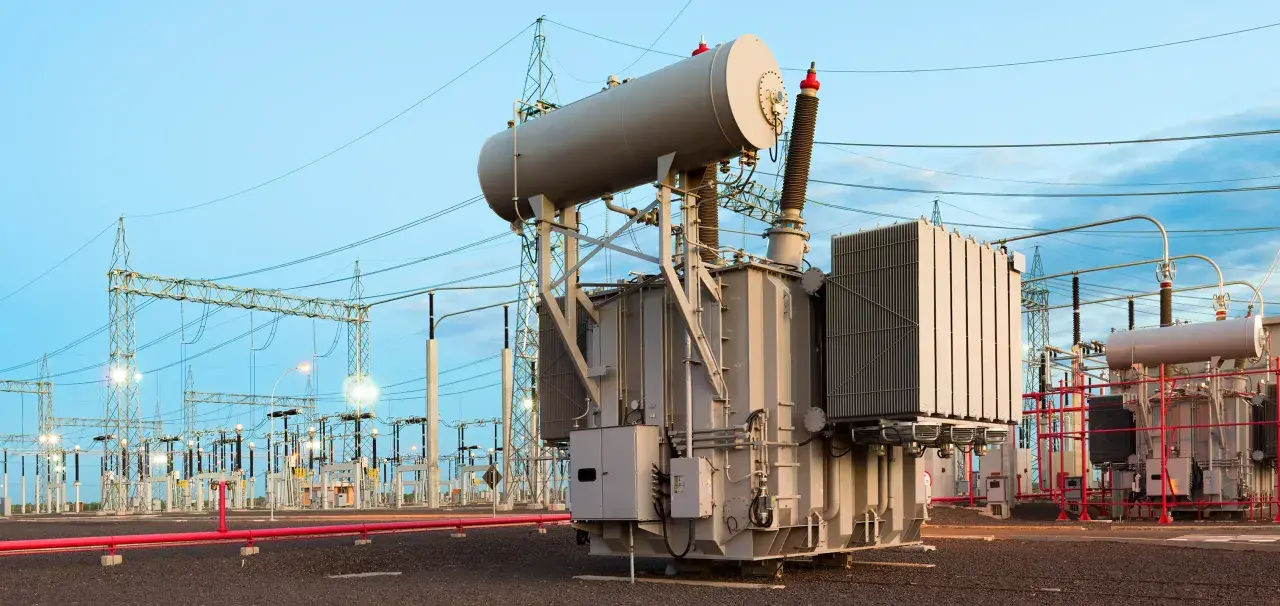
Industrial automation is usually associated with control panels, sensors, PLCs, and drives, but kilovolts still matter around the edges of that world. Large plants often bring in power at medium voltage, then step it down through transformers before feeding production lines, compressors, HVAC systems, or heavy process equipment. That makes kV ratings relevant when you are specifying incoming supplies, switchgear, cable insulation, or protection devices.
In practice, I watch for three scenarios:
- Transformer interfaces, where voltage is stepped up or down between network levels.
- Motor and drive systems, especially where large loads need higher voltage to keep current and cable sizes under control.
- Safety and maintenance work, where the voltage level determines clearances, lockout procedures, and the type of PPE required.
This is where the technical meaning becomes practical. A plant might not have kilovolt-rated sensors on the shop floor, but the site's electrical backbone often depends on kV-level infrastructure. From there, the next thing to clarify is how kV compares with the other units people confuse most often.
Kilovolts versus kilowatts, kilovolt-amperes, and volts
Most confusion comes from the fact that the abbreviations look similar. I see this all the time in quotes, datasheets, and quick conversations: someone says kV when they mean kW, or they assume kVA is just another way to state voltage. It is not. Each unit describes a different part of the electrical picture.
| Unit | What it measures | Plain-English meaning |
|---|---|---|
| V | Voltage | The electrical potential difference across two points |
| kV | Voltage | 1,000 volts, used for larger electrical systems |
| A | Current | The amount of electric charge flowing |
| kW | Real power | The useful rate of energy transfer doing actual work |
| kVA | Apparent power | Voltage multiplied by current before power factor is considered |
The distinction matters because equipment selection changes depending on which unit is being discussed. A transformer might be rated in kVA, a cable might be rated for current, and a supply network might be described in kV. If you blur those together, you can end up choosing the wrong cable size, the wrong protection settings, or the wrong machine interface. The safer habit is to ask, "Is this a voltage figure, a current figure, or a power figure?"
How to read a kV specification without making a costly mistake
When I read a kV specification, I check the context before anything else. The number alone is not enough; the surrounding equipment tells you whether it is describing a transmission line, a transformer winding, an insulation level, or a test condition. A specification like 11 kV on a feeder is very different from 11 kV on an insulation test label or a product brochure.
- Check whether the value is AC or DC, because the application can change how the system behaves.
- Read line-to-line versus line-to-neutral carefully in three-phase systems, where the same installation can be described in more than one way.
- Look for the rated and maximum values, not just the nominal number.
- Match the voltage class to the insulation and clearance requirements, especially in switchgear and outdoor equipment.
- Do not assume kV tells you power output; it only tells you the voltage level.
The biggest mistake is to treat a kV figure as if it were a complete performance spec. It is not. It is one part of the electrical picture, and in real projects it has to be read alongside current, duty cycle, insulation class, and operating environment. That brings the whole question back to the simple answer you need in order to choose correctly.
What to remember when the wording is awkward
If a multiple-choice question asks what describes kilovolts, the correct idea is the one that names them as a unit of voltage or electrical potential difference. If the answer choices include something about current, power, resistance, or energy, those are different concepts and should not be selected for kV. That is the clean mental shortcut I use: kilovolts tell you how high the voltage level is, not how much electricity is flowing or how much work is being done.
For practical work, that definition is enough to read specifications correctly and avoid the most common unit mistakes. In UK electrical systems, the label becomes especially useful once you move beyond domestic wiring and into distribution, transmission, and industrial plant. Keep that separation in mind and the rest of the electrical vocabulary becomes much easier to parse.
