
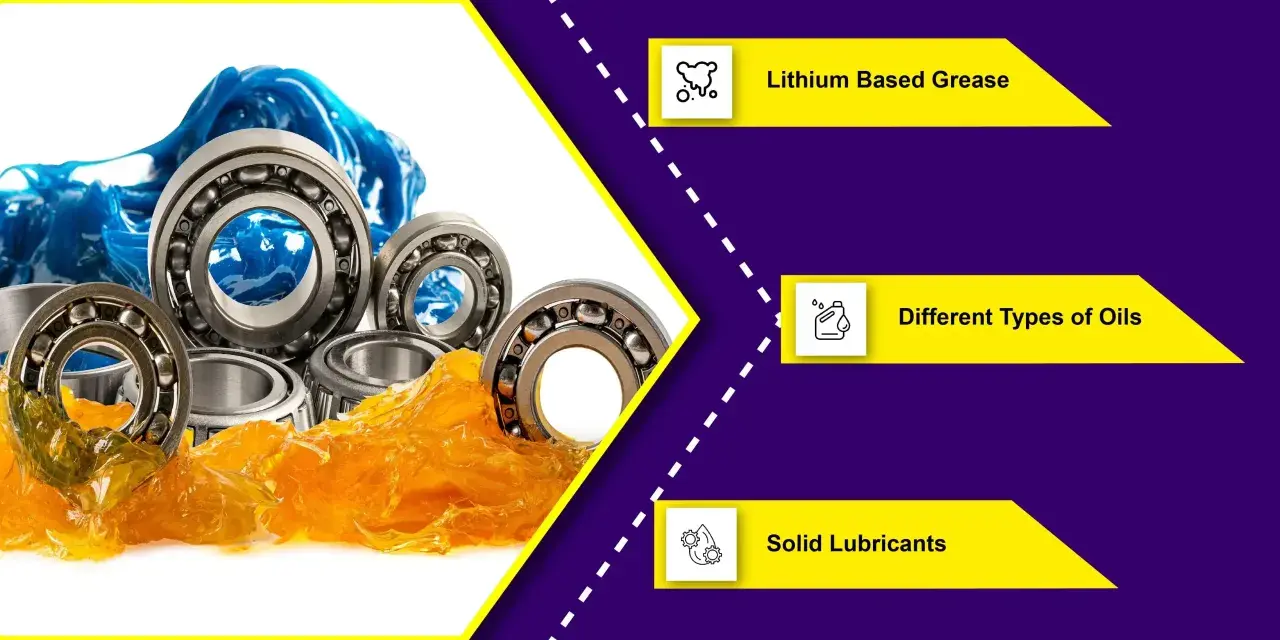
Bearings in a motor are not a background detail; they are the parts that keep the rotor centred, reduce friction, and stop a rotating machine from turning into a noisy, inefficient problem. In motion control, that matters directly because bearing choice affects speed stability, vibration, noise, heat, and positioning accuracy at the same time.
This article breaks down what motor bearings do, which types are used most often, where failures usually start, and how I would choose the right design for a real industrial application. It is written for anyone who needs the practical version, not just the textbook definition.
The bearing decision shapes efficiency, noise, and control quality
- Most general-purpose motors use deep groove ball bearings, while larger or more demanding systems often need cylindrical roller or angular contact designs.
- Stiffness, clearance, preload, and lubrication matter as much as the nominal size of the bearing.
- Noise, vibration, and temperature rise are the first signs that the bearing system is drifting out of spec.
- Inverter-fed and high-speed motors need extra attention because stray electrical currents can damage the raceways.
- A replacement bearing should match the motor’s load path, thermal growth, sealing, and electrical environment, not just the bore diameter.
What motor bearings actually do
A motor bearing does more than let a shaft spin. It defines where the rotor sits inside the stator, how much the shaft can move under load, and how the machine handles heat expansion over time. In practice, that means the bearing system is part of the motor’s accuracy, not just its mechanics.
I usually think about three jobs:
- Radial support keeps the rotor from sagging or wandering under its own weight and the load it drives.
- Axial location holds the shaft in the right position so the air gap stays consistent.
- Thermal freedom at the non-locating end allows shaft growth without creating unwanted thrust loads.
That is why a motor is rarely just “two bearings and a shaft.” The arrangement has to manage movement in a controlled way. Once that part is wrong, the effects show up quickly in heat, vibration, and wear, which leads straight into the question of bearing type.
Which bearing types show up most often in electric motors
There is no single best bearing for every motor. The right choice depends on speed, load direction, stiffness, environment, and whether the motor sits in a general-purpose machine or a precision axis.
| Type | Best fit | Main strength | Trade-off |
|---|---|---|---|
| Deep groove ball bearing | Small to medium motors, general-purpose drives | Low friction, quiet running, handles radial load and some axial load | Less stiffness than precision angular contact solutions |
| Cylindrical roller bearing | Larger motors, heavier radial loads | High radial capacity and good shaft guidance | Limited axial load handling unless the design is arranged for it |
| Angular contact ball bearing | Servo motors, precision motion axes, combined loads | Higher stiffness and better control of combined radial and axial load | More sensitive to preload, fit, and heat management |
| Insulated or hybrid bearing | Inverter-fed motors, high-voltage drives, EV drive units | Helps protect against electrical erosion | Higher cost, and it must be matched to the actual current path |
For many motors, sealed or shielded versions are used when the environment is clean and the application suits a greased-for-life design. In harsher service, or where the run hours are long, relubricatable bearings make more sense. I treat sealing as part of the bearing decision, not an afterthought. Once the type is chosen, the real question becomes how that choice changes the motion itself.
Why bearing choice changes motion control behaviour
Motion control is unforgiving. A motor can be electrically healthy and still perform badly if the bearing system allows too much deflection, too much friction, or too much vibration. That is especially true on servo axes, packaging machinery, robotics, and any drive where repeatability matters more than raw horsepower.
Stiffness affects positioning
Stiffer bearings reduce shaft deflection under load, which helps the rotor stay where the control system expects it to be. In plain English, that means better positional stability and less wandering under changing torque. A little compliance is normal; too much becomes visible as lost crispness in the move profile.
Clearance and preload are not minor details
Clearance is the internal space the bearing has before it starts to load. Preload removes that play and increases stiffness. Used properly, preload improves shaft guidance and reduces noise; used badly, it increases friction, heat, and wear. That is one of the quiet mistakes I see most often: people chase rigidity and accidentally buy themselves a hotter, shorter-lived motor.
Read Also: VFD DC Bus Voltage - Master Stability & Prevent Trips
Noise and vibration leak into the control loop
Noise is not only an acoustic issue. Vibration can disturb encoder feedback, couplings, and nearby components, especially in compact automation cells. If a motor becomes noisier as the machine warms up, or if the vibration spectrum changes under load, the bearing system deserves attention before the control engineer starts tuning around a mechanical fault.
That mechanical sensitivity is exactly why bearing problems rarely stay isolated for long. The next step is understanding the failure modes that usually start the chain reaction.
What usually wears them out first
Most premature bearing failures are avoidable, and the root cause is usually not mysterious. The recurring pattern is contamination, lubrication trouble, mounting errors, misalignment, or an operating condition the bearing was never really designed to absorb.
- Contamination scratches raceways and accelerates fatigue. Dust, metal particles, and moisture all shorten life.
- Insufficient lubrication raises friction and temperature, which can lead to discoloration, scoring, and early spalling.
- Improper mounting can bruise the races or introduce internal damage before the motor even goes into service.
- Misalignment pushes the load unevenly through the rolling elements and often shows up as vibration and uneven wear.
- Excess axial or radial load can overload a bearing that looks correct on paper but is wrong for the actual duty cycle.
- Electrical erosion appears in inverter-fed and high-voltage systems when current uses the bearing as a path.
The warning signs are usually visible before failure becomes catastrophic: rising temperature, increasing noise, and a vibration pattern that keeps getting worse. If a bearing keeps failing in the same application, I do not start by blaming the brand. I start by checking installation, lubrication, load path, and the surrounding electrical environment. That practical filter leads directly to the selection checklist.
How I would choose the right bearing for a motor
When I specify or replace a motor bearing, I do not stop at the bore size and outer diameter. That is the shortcut that creates repeat failures. I want the full operating picture first, because the bearing is responding to the system around it.
| Selection question | Why it matters | What it usually points to |
|---|---|---|
| What loads are present? | Radial and axial load paths determine the bearing family | Deep groove for general use, angular contact for combined loads, cylindrical roller for heavier radial duty |
| How fast does it run? | High speed increases heat and lubrication sensitivity | Low-friction designs, good grease selection, and correct clearance |
| How much stiffness is needed? | Precision motion needs a stable shaft and tight runout control | Preload or a stiffer bearing arrangement |
| What is the thermal environment? | Shaft growth changes the internal fit during operation | Locating and non-locating arrangement, often with C3 clearance in suitable designs |
| Is the motor inverter-fed? | Stray currents can damage the raceways | Insulated, hybrid, or grounded protection strategy |
| Can it be relubricated? | Access and contamination risk determine serviceability | Sealed-for-life or relubricatable design depending on duty cycle |
One detail I would never ignore is the fit between clearance, preload, and temperature. A bearing that is perfect cold can become too tight hot if the housing, shaft, or mounting strategy is wrong. That is why the replacement bearing has to match the motor design, not just the old part number. Once the bearing is chosen correctly, maintenance becomes the difference between long life and avoidable downtime.
The maintenance routine that prevents most failures
Maintenance does not need to be complicated to be effective. It needs to be consistent, clean, and based on the actual failure modes the motor is exposed to.
- Check noise, vibration, and temperature together, not in isolation.
- Keep mounting clean so contamination does not enter during installation.
- Use the right tools and fits so the bearing is not damaged before start-up.
- Respect lubrication intervals and do not over-grease a bearing that does not need it.
- Protect idle motors from vibration because stationary shafts can suffer false brinelling.
- Trend condition data if the asset is critical; a simple vibration or temperature trend is often enough to catch a problem early.
In connected plants, I see condition monitoring as especially valuable because it turns bearing health into a measurable signal instead of a guess. Even a basic sensor setup can tell you when a motor is drifting, which is much cheaper than waiting for the shaft to complain loudly. The stakes rise again in inverter-driven and high-speed systems, where the bearing faces a second kind of stress.
Why inverter-fed and high-speed motors need a different lens
Modern drives have changed the bearing conversation. Higher switching frequencies, variable speed profiles, and elevated system voltages can create electrical conditions that ordinary bearings were never meant to absorb for long periods. In that environment, the problem is not only mechanical friction; it is also current flow through the bearing.
When that happens, the raceway can develop a roughened, fluted surface that looks almost like a washboard. Once that damage begins, it tends to keep growing. In practice, I look at the whole path: grounding, cable layout, inverter setup, shaft potential, and the bearing’s insulation strategy. A coated or hybrid bearing may be the right answer, but only if it matches the actual current route. Otherwise you risk moving the damage somewhere else instead of removing it.
That is why I treat electrical protection as a system issue, not a part-number tweak. The better the drive gets, the more important it becomes to specify the bearing arrangement with the electrical reality in mind. With that in place, a few simple rules are usually enough to keep the motor healthy.
The few details that tell you whether the setup will last
- Match the bearing to the motor’s real loads, not to a generic catalogue assumption.
- Keep the locating and non-locating roles clear so thermal growth has somewhere safe to go.
- Balance clearance, preload, and temperature instead of optimising one at the expense of the others.
- Use sealing and lubrication to suit the environment, not just to make the assembly look complete.
- Assume inverter-fed or high-voltage duty introduces electrical risk until proven otherwise.
When those points are handled properly, the bearing stops being the weak link and becomes what it should be: a quiet, reliable part of the motion system that lets the motor do its job without drawing attention to itself.
