
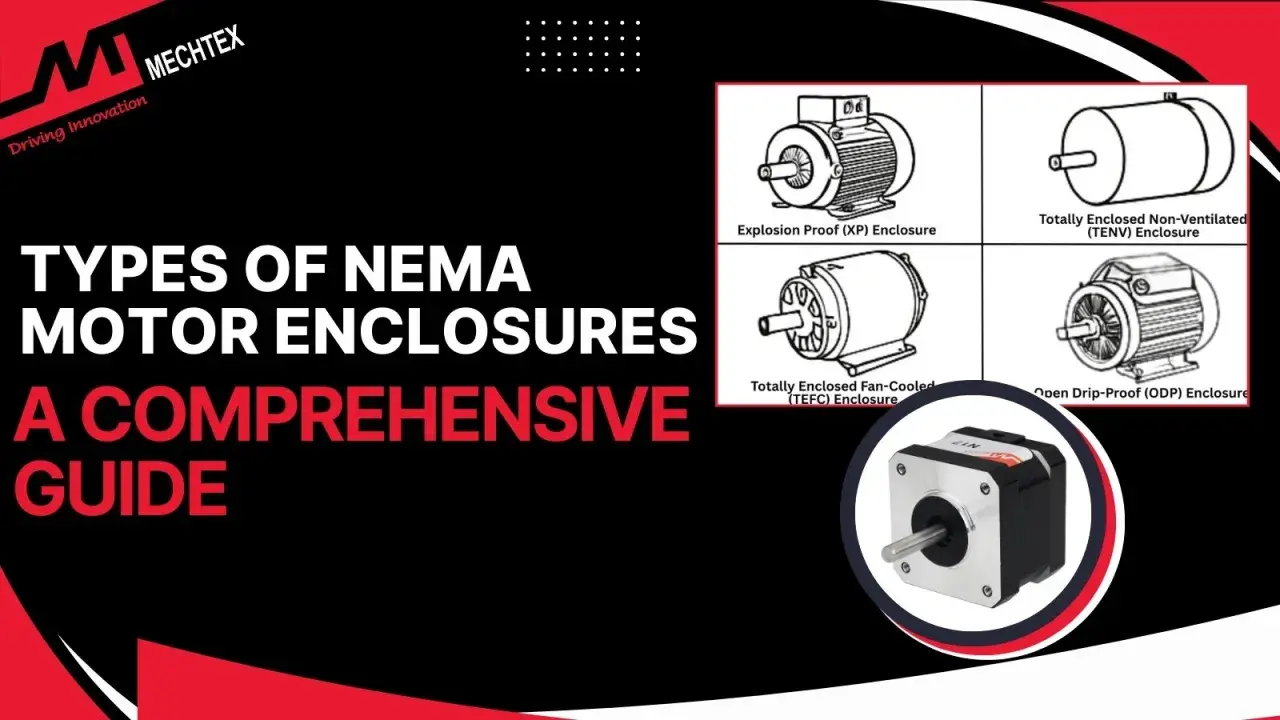
What matters most before you specify one
- The housing prevents free exchange of air, but it is not airtight.
- Protection against dust and moisture is the main benefit, while heat rejection is the main trade-off.
- Cooling method matters as much as the enclosure label, especially on variable-speed systems.
- In the UK, IP ratings are often the first reference point, but they do not tell the full thermal story.
- On a drive, low-speed operation, harmonic losses, and braking can all push temperature up fast.
- The best choice is the simplest design that still has enough thermal margin for the real workload.

What the enclosure actually means
From a standards point of view, the key idea is straightforward: the case prevents the free exchange of air between the inside and outside of the motor. That means dust, lint, fibres, light moisture, oil mist, and general workshop contamination are much less likely to reach the windings, bearings, or terminals. It does not mean the motor is airtight, and that distinction matters when people assume sealed automatically means perfect protection.
In practice, I would treat this kind of motor as a thermal compromise. You gain environmental resistance, but you lose the easy air path that open motors rely on for cooling. Depending on the build, heat may be removed by an integral fan, a separate blower, air-to-air exchange, air-to-water exchange, or simply the surface of the frame. The housing is part of the protection system, but the cooling path is what decides whether the motor can keep its torque without running too hot.
One more point is easy to miss: the enclosure is not the same thing as sealed windings. A motor can have a protected housing and still use different winding treatments, so it is worth checking the nameplate and datasheet instead of assuming every “sealed” motor is built the same way. Once that distinction is clear, the next question is how the enclosure changes real machine behaviour.
Why motion control systems care so much about enclosure choice
Motion control loads are rarely gentle. Conveyors start and stop repeatedly, axes reverse direction, indexers brake hard, and servo systems often hold torque at low speed for longer than a general-purpose motor ever would. That is exactly where enclosure choice starts to matter, because the motor has to survive both the environment around it and the thermal stress created by the control profile.
In a dusty packaging line, a woodworking machine, a metalworking cell, or a food area with washdown nearby, the enclosure helps keep contamination out of the motor internals. That reduces the risk of bearing wear, corrosion at terminals, clogged vents, and erratic feedback devices. If you have ever seen a clean-looking machine fail because the encoder or connection box was slowly contaminated, you already know why this is not a minor detail.
The trade-off is that enclosure choice can make the motor more sensitive to heat at exactly the point where motion control already asks a lot from it. In an adjustable-speed application, the cooling fan slows down with the shaft unless there is an independent cooling system, so thermal headroom drops just when low-speed torque becomes important. That is why the enclosure decision should be made together with the cooling method, which leads directly to the practical comparison below.
Choosing the right enclosure for the job
For UK buyers, the conversation often starts with IP ratings, while NEMA-style enclosure names still show up on imported equipment and datasheets. The useful lesson is that the label alone is not enough. IEC 60034-5 defines the IP code for rotating electrical machines, but the IP number does not replace a proper review of thermal duty, contamination, and mounting conditions.
| Type | Cooling path | Best fit | Main trade-off |
|---|---|---|---|
| Open motor | Ambient air passes through the machine | Clean, controlled rooms with low contamination risk | Weak protection against dust and moisture |
| Totally enclosed non-ventilated | Surface cooling only | Compact or lightly loaded systems where the ambient stays clean | Lowest heat headroom |
| Totally enclosed fan cooled | Integral fan blows over the frame | General-purpose automation, conveyors, pumps, and packaging lines | Cooling falls as speed falls |
| Air-over | External airflow from the machine or process | Installations with guaranteed outside air movement | Only works properly in the intended mounting arrangement |
| Air-to-air or water-cooled | Heat exchanger removes internal heat | Sealed cabinets, hot rooms, and heavy-duty cycles | More cost, more complexity, more things to maintain |
When I spec a motor, I look at four things first: ambient contamination, operating speed, duty cycle, and how much air the machine can really move across the frame. NEMA's enclosure guidance makes a useful practical point here: the enclosure type may protect against dust, rain, oil, coolant, and even hosedown conditions, but each rating has a different boundary. That is why the same motor family can be suitable in one line and a bad choice in another, even if the power rating is identical.
The other trap is assuming NEMA and IEC ratings can be converted one-for-one. NEMA explicitly notes that the two systems are not identical, even when a Type rating may meet or exceed a corresponding IP designation. In day-to-day procurement, that means I treat the enclosure code as a starting point, not the final answer. The next layer is the control system, because speed control can turn a good enclosure choice into a weak one if you ignore thermals.
What to check before you put it on a VFD or servo axis
Once a motor is run from a drive, thermal behaviour changes. NEMA's adjustable-speed guidance is clear that induction motors should be derated because cooling drops as speed drops, and extra losses from harmonic content can add more heat. In the same guidance, the available continuous torque reduction at rated frequency can vary depending on the motor's thermal reserve, and the derating factor can range from 0 to 20 percent. That is not a small footnote; it is the difference between a machine that runs all shift and one that trips after warm-up.
If you need constant torque below base speed, I would pay attention to the low-speed region first. Below roughly 30 Hz, boost voltage may be needed to maintain the air-gap flux that supports torque, but the thermal picture still gets worse because the fan is moving less air. If the application spends long periods creeping, indexing, or holding position with load, consider independent cooling, a larger frame, or a motor specifically intended for that duty. Do not assume the enclosure alone will save the thermal margin.For servo and motion-axis work, I also check the parts that are not on the headline line of the datasheet: encoder protection, brake wiring, shaft seal design, cable entry, and any coupling loads that may stress the bearings. Frequent reversing, electric braking, and repeated starts all add heat and mechanical stress. If the system is multi-axis, the motor interaction can matter as well, especially when load sharing is uneven. That is where a “sealed” motor that looks fine on paper can still become a maintenance problem.
And if the machine is operating in an area with special hazardous-location rules, enclosure choice is only one part of the compliance picture. The drive, the motor, and the installation method all need to match the application, so this is not the place to make assumptions.
Common mistakes that show up after commissioning
The most common mistake is treating sealed construction as maintenance-free. It is not. Fans clog, external fins collect dust, terminal-box gaskets age, and cable glands loosen. I see plenty of machines where the initial installation looked clean, but the cooling path degraded slowly enough that no one noticed until the motor ran hotter than expected.
A second mistake is buying for protection and forgetting the duty cycle. A motor that is perfectly suitable in a clean, dry cabinet can be the wrong choice on a slow-running axis with high torque demand. NEMA’s thermal tables are built around a 40°C ambient assumption, and they also note that regular operation above 40°C can accelerate insulation deterioration. Add altitude above 1000 metres and the safety margin gets thinner again.
The third mistake is choosing the wrong kind of enclosure for the wrong kind of contamination. Dust is not the same as washdown. Oil mist is not the same as fibres. Corrosive vapour is not the same as a clean room. Once you start separating those conditions, the picture gets much clearer: the best enclosure is the one that matches the actual contaminant and still leaves enough thermal margin for the drive profile. The final step is turning that into a practical specification.
A specification checklist I would use on a UK automation project
Before I approve a motor for motion control work, I run through a short checklist. It is simple, but it prevents most of the expensive mistakes:
- Define the real environment, not the ideal one: dust, mist, washdown, oil vapour, fibres, and ambient temperature all matter.
- Confirm the slowest continuous speed, not just the nominal speed.
- Check whether the load needs constant torque, variable torque, or intermittent torque.
- Decide how heat will leave the motor: integral fan, independent blower, air-to-air exchanger, or water cooling.
- Match the enclosure code to the site requirement, including the IP rating expected by the UK project team.
- Verify drive compatibility, including inverter duty, braking, and any derating requirement.
- Check the feedback device, shaft seal, cable entry, and terminal box protection separately from the frame.
- Confirm service access, because a sealed design that is hard to inspect will still cost downtime later.
If one of those answers is vague, I do not assume the motor is fine. I ask for a better fit or a clearer thermal calculation. That approach is slower at the specification stage, but it is faster than replacing a motor after the first production run.
The decision that saves the most machines from early failure
The simplest rule I use is this: treat the motor, the drive, and the environment as one thermal system. If the housing is well protected but the cooling path is weak, heat will win. If the cooling is strong but the enclosure is wrong for the site, contamination will win. The right answer is usually the least complicated design that can survive the worst realistic operating point with enough margin left over for ageing and dirty conditions.
For many motion control applications, that means a fan-cooled enclosed machine is the practical default, with independent cooling reserved for slow, hot, or heavily loaded axes. If the application is especially clean, simple, and stable, a lighter solution may be enough. If it is dusty, wet, or difficult to access, I would spend more time on sealing, cooling, and serviceability than on chasing a slightly smaller frame. The enclosure is there to protect the motor, but the real job is to protect uptime.
That is the lens I would use on any specification in 2026: start with the actual duty cycle, then choose the enclosure and cooling method that can handle it without forcing the motor to run near its thermal limit all day.
