
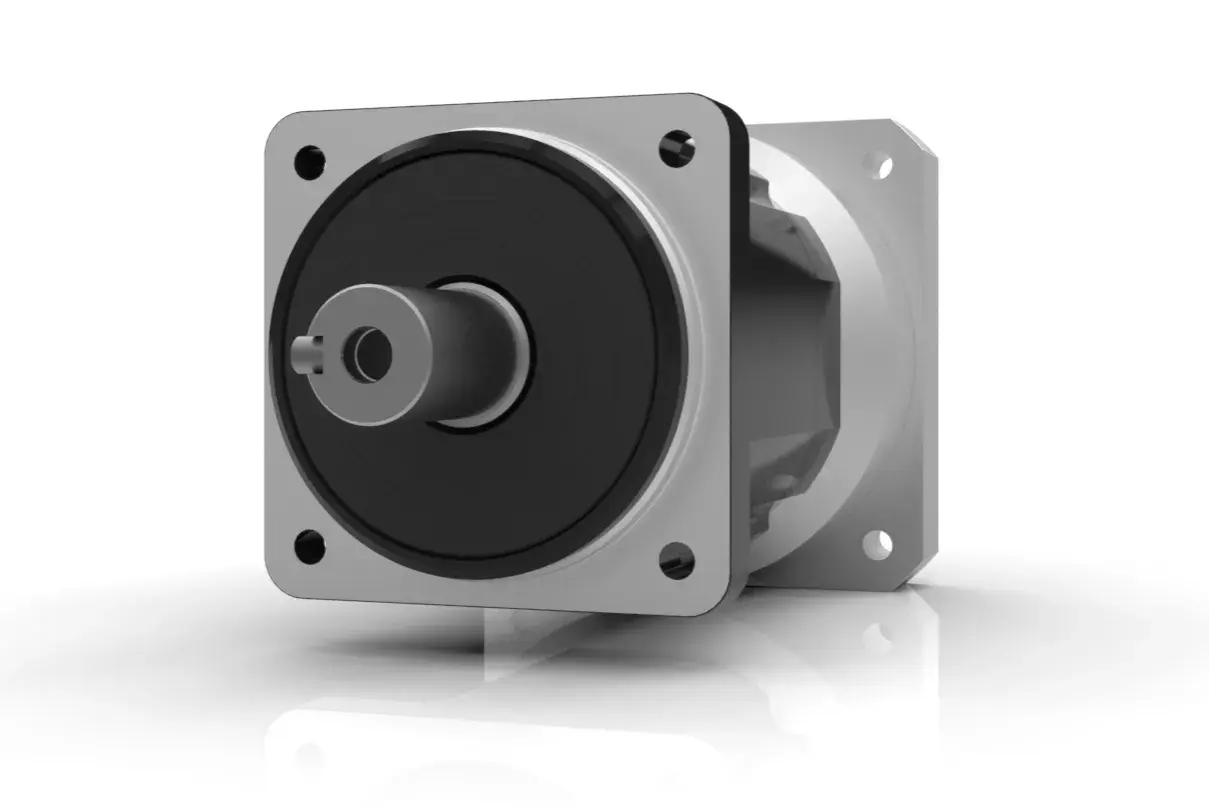
Gearhead motors are still one of the most practical ways to turn a fast motor into usable, controllable motion. The real question is not whether to use reduction at all, but how much reduction, which gearbox style, and how the choice affects torque, backlash, heat, and commissioning. I am focusing here on the decisions that matter in motion control, with a UK perspective on supply, mounting, and compliance.
The practical decisions that make or break a geared drive
- Torque goes up, speed goes down in proportion to the gear ratio, but efficiency losses mean the trade is never perfect.
- Backlash matters as soon as you care about repeatable positioning, not just turning a shaft.
- Planetary and strain-wave gearheads usually suit servo axes; spur and worm styles fit simpler or right-angle layouts.
- Duty cycle and heat often decide life expectancy more than the headline torque number.
- In Great Britain, check the actual supply, enclosure, mounting orientation, and UKCA/CE obligations before release.
What a gear-reduced motor actually changes in a motion axis
The gearbox is not just a torque booster. It changes the way the motor "sees" the load, which is why a smaller rotor can control a larger inertia more comfortably. In a simple reduction, output speed drops by the ratio, output torque rises by roughly the ratio times efficiency, and reflected inertia at the motor shaft drops with the square of the ratio. That last point is the one I care about most in servo work, because it often decides whether the axis feels stable or twitchy.
At a 4:1 ratio with about 90% efficiency, 1.0 Nm at the motor becomes about 3.6 Nm at the output, while speed falls to one quarter. If the ratio is 4:1, the load inertia seen by the motor is roughly 1/16 of the original load inertia, which is a very real advantage when you are trying to tame a heavy axis. For small ratios like that, 90% efficiency is realistic; once you move into multi-stage high reductions, efficiency can fall below 50%.
The practical takeaway is simple: choose gearing to solve a load problem, not to hide a weak motor. That leads naturally to the next question, which gearbox style matches the job.
Which gearbox style fits which job
When I compare gearbox families, I look first at layout, then at precision, then at efficiency. The same ratio can behave very differently depending on whether the output is in-line, right-angle, low-backlash, or built for extreme torque density.
| Type | Best fit | Main strengths | Watch-outs |
|---|---|---|---|
| Spur | Compact, cost-conscious axes with modest torque | High efficiency, simple construction, good for low-speed work | More noise and wear than premium precision styles |
| Planetary | Servo axes, conveyors, packaging, indexing | High torque density, low backlash, compact footprint | Needs careful sizing if shock loads or very high positioning precision matter |
| Worm | Right-angle layouts and space-constrained machines | Simple 90-degree output and quiet operation | Lower efficiency and poorer back-drivability; heat can become the limiter |
| Strain-wave / harmonic | Precision robotics and compact high-ratio axes | Very low backlash and very high reduction in a small package | Premium choice; verify stiffness, wear expectations, and duty cycle |
| Cycloidal | High-ratio, rugged industrial motion | High torque capacity and robustness | Can introduce vibration and is not the first choice for every servo axis |
For most precision-positioning jobs, I would start with a low-backlash planetary unit and move to strain-wave gearing only when the axis needs tighter compactness or lower lash than the planetary can deliver. That comparison only becomes useful once you know how to size the drive properly.
How I size one without guessing
I start with the load, not the motor. Define the required output speed, continuous torque, peak torque, acceleration, and duty cycle first, because those numbers tell you whether the gearbox is doing steady work or absorbing shock loads. Then I back-calculate the motor-side requirements using the ratio and efficiency, and I check the motor's maximum power and speed limits before I trust the combination.
- Work out the motion profile. Note speed, acceleration, deceleration, dwell time, and how often the move repeats.
- Convert torque through the ratio. A gearbox only multiplies output torque by ratio times efficiency, so losses matter.
- Check thermal load. Use RMS torque or RMS power for repetitive moves, because heat, not peak torque, usually kills the unit first.
- Leave room for shock and overload. A machine can stay under average torque and still damage the gearbox if the load hits hard.
- Confirm motor-side limits. The motor must still stay inside its safe speed, current, and power window.
For example, if an axis needs 3 Nm at 60 rpm and you choose a 10:1 reducer at around 85% efficiency, the motor-side torque target is roughly 0.35 Nm and the motor speed target is about 600 rpm. That kind of quick check is enough to spot obviously wrong pairings before you spend time on catalogue detail. If the motor must spin much faster than that to achieve the output you want, the reduction is probably too aggressive for the chosen motor family.
One useful sanity check is that a gearbox is helping when it lets you use a smaller, faster motor without making the axis unstable. If the ratio is so high that efficiency drops sharply or the machine feels sluggish, I would question the choice and not just the catalogue optimism. From here, the hidden compromises matter more than the arithmetic.
The trade-offs that decide positioning quality
Backlash is the small amount of play between meshing gears. In a simple conveyor that never needs to reverse precisely, a little play may be acceptable. In indexing, robotics, and servo positioning, it shows up as lost motion, overshoot, and inconsistent settling, which is why low-backlash or zero-backlash options often earn their keep quickly.
Efficiency and stiffness are the other two trade-offs I watch. Efficiency affects heat and power draw; stiffness affects how firmly the output shaft resists twist when the load changes direction. A 4:1 reducer can deliver around 90% efficiency in favourable cases, but multi-stage reductions can fall below 50%, and that loss turns into heat you must remove somehow. If the application is heavy on start-stop cycles, I would worry about temperature rise before I worry about the catalog torque rating.
There is also a practical limit to how much lash you can design away with software. Control tuning can hide a little slack, but it cannot remove the mechanical delay that appears when a load reverses. That is why the cleanest motion systems use the gearbox style that fits the accuracy target instead of trying to compensate for the wrong one.
Once those trade-offs are clear, the last filter is usually the installation environment, which is where UK projects often lose time if the paperwork comes too late.
What matters for UK installations in 2026
For a UK line, I always check the mechanical choice against the actual site conditions before I sign off the electrical side. That means matching voltage and frequency to the plant supply, confirming enclosure and ingress protection, checking whether the unit is meant to run in a horizontal or vertical position, and making sure lubrication will still behave correctly in the installed orientation. Horizontal mounting is often the safest default; vertical mounting needs manufacturer approval more often than teams expect.
Compliance is not just paperwork at the end. GOV.UK's current Great Britain guidance still treats UKCA and CE as the relevant product-marking routes for many manufactured products, so the gearbox, motor, brake, and drive documentation need to line up with the market you are placing the machine into. In practice, I treat that as part of the specification, not a release note.
I also pay attention to ambient temperature, dust, washdown, corrosion risk, and service access. A gearbox that looks fine on a drawing can become the wrong choice if maintenance has to strip half the cell just to inspect a seal. In a smart factory, I would also prefer units and drives that expose useful condition data, because temperature and current trends are often the earliest sign that the reduction stage is being pushed too hard.
With the UK details settled, the final step is the release checklist that stops the common mistakes from slipping through.
The checks I would make before releasing the machine
- Load profile matches the chosen ratio, including acceleration and repeated starts.
- Continuous and peak torque both sit inside the gearbox and motor limits.
- Backlash tolerance is acceptable for the position accuracy you need.
- Mounting orientation is supported by the lubrication design.
- Thermal margin still looks healthy after duty cycle and shock loads are included.
- Documentation covers the actual supply, marking, brake, encoder, and controller used on site.
If I had to compress the whole topic into one rule, it would be this: choose the smallest reduction that still gives you the required torque and control margin, then verify backlash, heat, and installation constraints before you build the panel. That is the difference between a geared drive that merely works and one that stays predictable after months of production.
