
Ethernet-APL brings Ethernet to field devices in process plants without asking the plant to behave like an office network. The real value is not raw speed; it is long reach, two-wire power, and intrinsic safety in places where cabling, hazardous zones, and maintenance effort matter more than bandwidth. In practice, that makes it a strong fit for process automation, smart manufacturing, and IIoT projects that need better data at the edge.
Ethernet-APL makes field-level Ethernet practical in process plants
- It is a physical layer, not a new automation protocol, so PROFINET, EtherNet/IP, OPC UA, or HART-IP can run above it.
- The standard is built around 10 Mbit/s full-duplex communication over a two-wire cable with power.
- Trunk runs can reach up to 1,000 m, while spurs are typically limited to 200 m.
- It is designed for process plants, especially where intrinsic safety and hazardous-area rules apply.
- It can reduce protocol conversion and simplify field-device diagnostics, but it is not the right choice for bandwidth-heavy machine networks.
What Ethernet-APL changes at the edge of a process plant
The biggest shift is simple: Ethernet can now reach field instruments without the usual compromises of standard copper Ethernet. Ethernet-APL is a physical layer, so it sits below the application protocol and focuses on two things process plants care about most: long reach and safe power delivery.
I would not sell it as a bandwidth upgrade. I treat it as a reach-and-safety upgrade that happens to ride on Ethernet. The technology is based on 10BASE-T1L and is designed for the demanding conditions of process automation, where field devices may sit far from the control room and close to hazardous environments.
That distinction matters because a lot of people still think of Ethernet as something that belongs in cabinets, skids, and short runs. Ethernet-APL pushes it to the instrument level, which means better diagnostics, cleaner OT and IT convergence, and fewer protocol conversions in the middle of the plant. Once that is clear, the next question is how the network is actually wired.
Physical layer first, protocol second
That separation is what makes the technology useful. The same APL link can carry PROFINET, EtherNet/IP, OPC UA, HART-IP, or another higher-level Ethernet protocol, depending on what the control system and asset layer require.
In my view, that is one of its most practical strengths: the plant can standardise the field layer without freezing every project into a single automation stack. From there, the design question moves from “which protocol?” to “what kind of network structure do we need?”

How the network is built on the plant floor
Ethernet-APL uses a trunk-and-spur layout that will feel familiar if you have worked in process automation before. The trunk carries power and data over long distances, while the spur feeds the individual device or instrument.
The official guidance places trunk runs at up to 1,000 m and spur runs at up to 200 m. That split is not cosmetic. It is how the standard balances reach, power budget, and intrinsic safety without turning every change into a custom engineering exercise.
Read Also: Configure a Network Switch - The Practical Guide
Why the switch matters
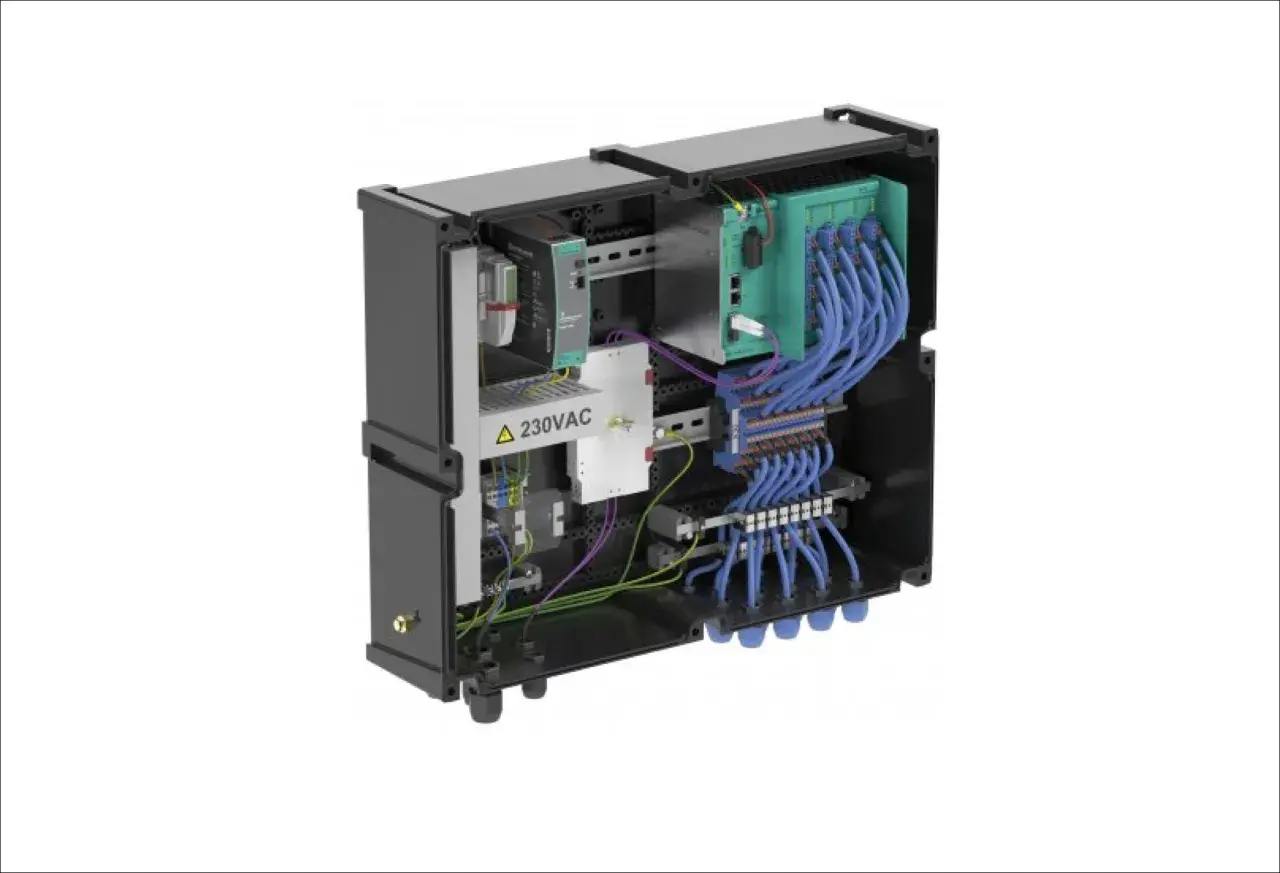
Two switch types define the architecture. A power switch feeds the trunk, while a field switch bridges the trunk to one or more spurs and may be powered from the trunk or from an auxiliary supply. In practice, that means you can place connectivity closer to the instruments without dragging cabinet-style Ethernet into the field.
I also like the switched model because it creates a cleaner failure domain than older shared-medium field networks. Devices are easier to segment, troubleshoot, and extend, which becomes more valuable as plants add richer diagnostics and asset-health data. That leads directly to the safety and cabling rules that make APL workable outside a controlled cabinet.
Why it matters for hazardous areas and cable planning
This is usually where the project succeeds or fails. Ethernet-APL was designed for process plants where hazardous-area rules, EMC pressure, and long cable routes are everyday constraints rather than exceptions. The standard supports intrinsic safety through the 2-WISE approach, which is meant to simplify verification instead of forcing teams into complex custom calculations for every segment.
That matters because many plants do not want Ethernet unless it can live in the same physical reality as the rest of the instrumentation. APL makes that possible by combining communication and power on the same two wires, with port profiles that define how power levels, device roles, and explosion protection are handled.
There is also a migration angle that is easy to miss. In some cases, existing cabling can be reused, but only after it is re-qualified against the APL limits. I would not assume reuse automatically; I would test it, document it, and only then count the savings. That discipline keeps the project honest and avoids unpleasant surprises after commissioning.
So the safety story is not just about compliance. It is about whether a plant can modernise without ripping out every metre of installed copper. From there, the next question is how much of the system sits in the network layer above the wire.
Which protocol runs on it and why that distinction matters
One mistake I see often is treating APL as if it were the automation protocol. It is not. It is the physical layer that lets existing or future Ethernet protocols reach the field.
That means the project still has to decide what belongs above the wire. In process automation, the usual answers are PROFINET, EtherNet/IP, OPC UA, or HART-IP, depending on the control system, diagnostics model, and vendor ecosystem. The cable does not solve protocol governance for you.
Once the field layer becomes Ethernet-native, segmentation and switch configuration also become part of the security model, not just the wiring model. That is helpful, but it also means OT security cannot be left until the end.
For integrators, this is good news. It keeps the network architecture modular: the same physical infrastructure can support different higher-level communication strategies, as long as the devices and switches are engineered to the same APL requirements. In other words, you standardise the field layer without freezing the automation roadmap.
That distinction also explains why APL is more interesting for process plants than for every Ethernet project under the sun. To see that clearly, it helps to compare it with the two alternatives people most often consider.
How it compares with classic industrial Ethernet and fieldbus
When I evaluate APL, I compare it with what the plant already has, not with an ideal lab network. The table below is the practical version of that comparison.
| Option | What it does well | Main limitation | Best fit |
|---|---|---|---|
| Classic industrial Ethernet | High bandwidth, broad tool support, familiar IT and OT integration | Usually limited to short copper runs and separate power; not built for intrinsic safety in the field | Control cabinets, skids, machines, and short-distance networks |
| Ethernet-APL | Ethernet at the field edge, 2-wire power and data, long reach, hazardous-area support | Only 10 Mbit/s, so it is not the answer for bandwidth-heavy applications | Process instruments, long runs, hazardous zones, brownfield modernisation |
| Legacy fieldbus or current loop | Large installed base, predictable behaviour, low device power requirements | Needs protocol conversion and does not give native Ethernet diagnostics end to end | Stable legacy plants where replacement cost is the main constraint |
The conclusion is not that one option wins every time. It is that each layer solves a different problem. If the site needs cameras, motion control, or very high data rates, I would not push APL. If the site needs direct field connectivity, long distances, and hazardous-area discipline, APL starts to look like the right tool. That brings me to the practical checks I would make before approving a rollout.
The decisions I would lock down before buying the first switch
Before I spec a project, I want five answers in writing:
- Which field devices actually need Ethernet, and which can stay on a lower layer for now?
- What are the real distances between the control system, field switches, and instruments?
- Which hazardous zones or divisions apply, and where does intrinsic safety need to be verified?
- Which protocol will run above APL, and who owns that decision?
- Can the existing cable plant be qualified, or is a new run cheaper once labour and shutdown time are counted?
I also watch for a few familiar mistakes: designing only for device cost and ignoring installation time, assuming every switch is interchangeable, and skipping the pilot phase because the architecture looks familiar. Those shortcuts usually show up later as commissioning delays, not as line items in the original budget.
In 2026, the strongest Ethernet-APL projects are the ones that treat the technology as an engineered field layer, not as a branding exercise. When the distances are long, the area is hazardous, and the plant wants more intelligence at the instrument level, it is one of the few options that makes Ethernet feel native in process automation rather than forced into it.
