
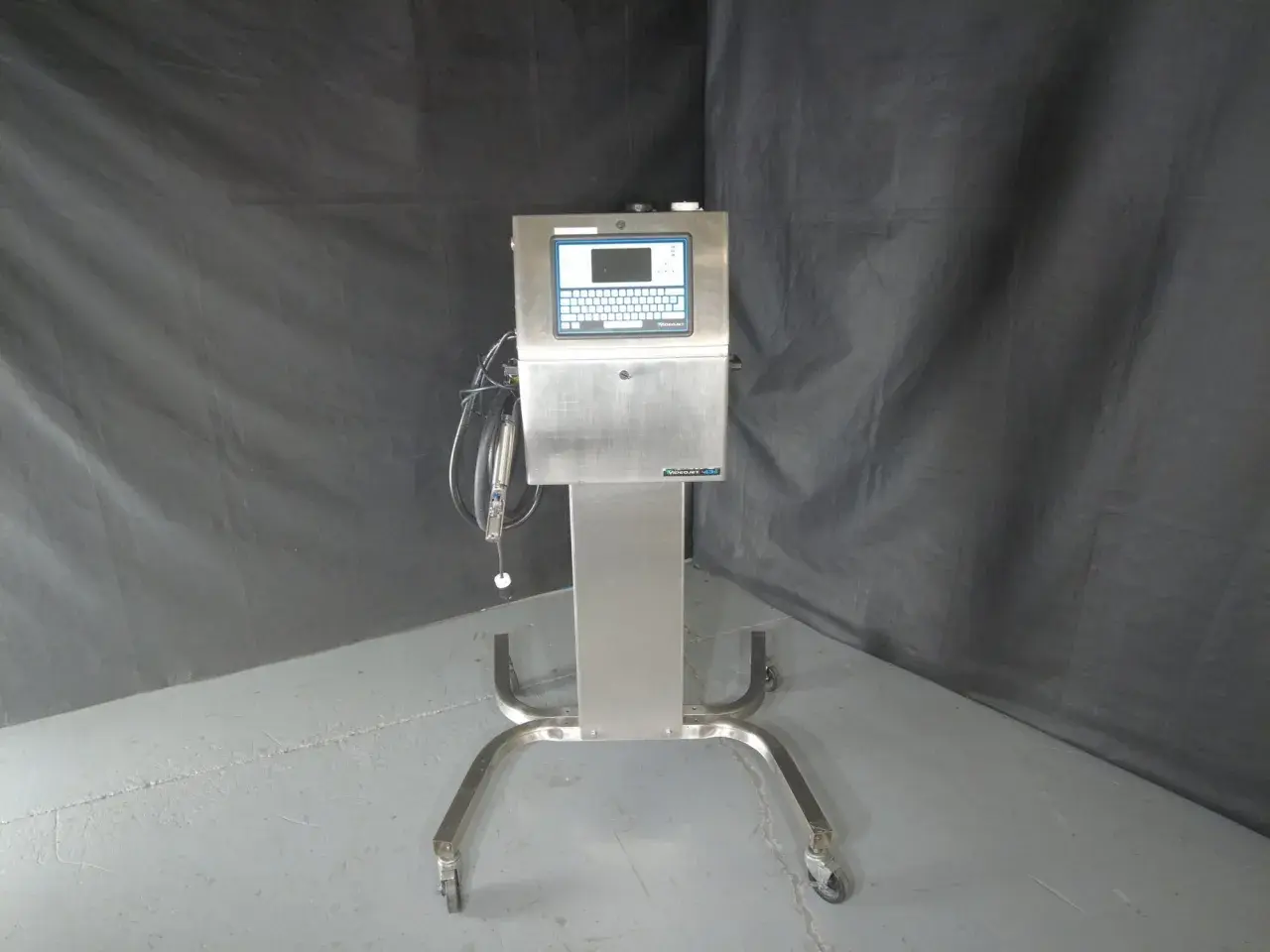
Industrial coding and marking is one of those procurement decisions that looks small until it starts affecting uptime, traceability, and waste. This article breaks down what Videojet does as a vendor, how its main technologies differ, and what a UK buyer should check before making a shortlist. I’m keeping it practical, because the real question is usually not brand recognition but whether the equipment, support, and consumables model fit the line you actually run.
What matters most before you shortlist Videojet
- Videojet is a coding and marking vendor, not a general-purpose factory automation supplier.
- Its core lineup covers continuous inkjet, laser marking, thermal inkjet, thermal transfer overprinting, and case coding and labeling.
- The strongest fit is usually food, beverage, pharma, personal care, and industrial packaging.
- For UK teams, service coverage, integration, and consumables cost matter as much as printer price.
- Laser reduces consumables; CIJ offers flexibility and is often easier to deploy across mixed substrates.
- The UK entity is active and based in Huntingdon, Cambridgeshire, which matters when response time becomes part of the buying decision.
What Videojet actually supplies on the factory floor
Videojet Technologies, Inc. is best understood as a product identification specialist. In plain terms, the company helps manufacturers print or mark batch codes, expiry dates, barcodes, 2D codes, logos, and case labels directly onto packaging. That sounds narrow, but in production it is a critical layer of control: if the code is wrong, unreadable, or missing, the problem shows up in distribution, retail compliance, or a customer complaint.
I think that is why Videojet tends to be evaluated as a vendor ecosystem rather than a single machine supplier. The printer is only part of the picture. Consumables, software, code verification, application support, and service response all shape the real cost of ownership.
Videojet positions itself as a global leader in coding and marking, and its scale is substantial. Veralto reports more than 400,000 installed units worldwide, while Videojet says it supports customers through 4,000 associates in 26 countries and a network of more than 400 distributors and OEMs serving 135 countries. For a buyer, that scale matters because it usually translates into better documentation, more application knowledge, and a larger support footprint.
In the UK, the company’s local presence is also relevant. Companies House lists the UK entity as active and registered in Huntingdon, Cambridgeshire, which is the kind of detail I look for when vendor service needs to be part of the operational plan. Once that role is clear, the next question is which technology actually fits the pack and the line.

How its main technologies differ in real use
Videojet’s range is broad enough that buyers can make the wrong assumption if they treat all coding systems as interchangeable. I would not do that. The right choice depends on substrate, speed, code length, cleanliness requirements, and how much downtime your line can tolerate during changeovers.
| Technology | Best fit | Main strengths | Trade-offs |
|---|---|---|---|
| Continuous inkjet (CIJ) | Flat or curved packs, high-speed lines, date and batch coding | Non-contact printing, wide substrate flexibility, fast deployment | Needs fluids and regular maintenance, codes are less permanent than laser |
| Laser marking | Permanent marks on suitable packs, traceability-heavy applications | Excellent mark quality, fewer consumables, strong durability | Higher upfront cost, substrate testing is essential |
| Thermal inkjet (TIJ) | Cartons, trays, porous packaging, compact installations | High-resolution codes, simple integration, clean output | Not ideal for every harsh environment or every pack type |
| Thermal transfer overprinting (TTO) | Flexible film, pouches, sachets, labels | Sharp variable data on flexible packaging, good legibility | Ribbon cost and application setup need to be managed carefully |
| Case coding and labeling | Cartons, cases, pallets, logistics labeling | Readable supply-chain codes, automation for secondary packaging | Needs line-space planning and tighter integration work |
The technical lesson is straightforward: there is no universal best machine. CIJ is often the easiest way to cover mixed substrates, while laser makes more sense when permanence and consumable reduction matter more than the initial investment. TTO is the one I reach for when the packaging is flexible film and the code needs to stay crisp. That technical fit is exactly why the brand ends up on so many shortlists.
Why buyers shortlist Videojet as a vendor
From a procurement angle, the company’s strongest selling point is not just the product range. It is the combination of breadth, support, and application experience. When a vendor can cover coding from primary packaging through to cases and pallets, the conversation becomes simpler for multi-line manufacturers.
I also pay attention to how vendors talk about error reduction. Videojet leans heavily on code assurance, software, and application-specific fluids, which tells me it is trying to reduce the hidden cost of production errors rather than just sell hardware. In practice, that matters a lot more than a glossy printer brochure. A machine that prints well for one shift but creates avoidable operator mistakes is not a strong production asset.
- Broad technology coverage helps when a site has different pack formats across lines or factories.
- Service depth matters because coding issues are often uptime issues, not just print-quality issues.
- Local support is relevant in the UK, where response time and spare-part access can make or break a rollout.
- Application knowledge is valuable in regulated sectors where code readability, durability, and auditability are not optional.
- Installed base can be useful if you want a vendor with enough field experience to have seen the common failure modes already.
I would still separate brand strength from site suitability. A vendor can be excellent overall and still be the wrong fit if the line environment, substrate, or maintenance model is off. That is why the commercial checklist matters as much as the product range itself.
What UK procurement teams should check before signing
For UK buyers, I would treat the first conversation as a technical fit review, not a pricing exercise. Price matters, but it is usually a poor predictor of total cost when the line runs all day and the code has to be right every time.
- Substrate and pack geometry - Confirm whether the code needs to go onto film, cartons, glass, metal, labels, or curved surfaces. A printer that looks good in a demo can behave very differently on your real pack.
- Code content - Decide whether you need simple date coding, variable data, barcodes, or 2D codes. The more variable the data, the more important software and operator workflow become.
- Line speed and downtime tolerance - Fast lines leave less room for manual intervention. If changeovers are frequent, simplicity often beats theoretical capability.
- Consumables model - Check ink, ribbon, solvent, and maintenance costs over 12 to 36 months, not just the purchase price.
- Integration - Make sure the coder fits with existing PLC, MES, or ERP workflows if traceability is part of the process.
- Service expectations - Ask who handles installation, first-line support, spare parts, and planned maintenance in the UK.
- Validation on real samples - Test on the actual packaging, under real line conditions, before you commit. This is where many buying mistakes are exposed early.
That last point is the one I would underline twice. A vendor demo can show capability; a live sample test shows whether the solution survives your specific reality. If the result is borderline on your pack, assume it will become a maintenance issue later. Those checks are what separate a smooth rollout from an expensive learning curve.
Where the brand is strongest and where I would test carefully
Videojet is strongest in sectors where code reliability, traceability, and line uptime are tied directly to commercial risk. Food and beverage is the obvious example, but the same logic applies to pharma, personal care, cosmetics, electronics, chemical products, and industrial goods. In those environments, a weak code is not a minor defect; it can trigger rejection, rework, or compliance trouble.
Best fit
- High-volume lines that need dependable batch and date coding.
- Sites that want one vendor across multiple packaging stages.
- Operations that value a large installed base and established service structure.
- Teams trying to reduce operator error through software and code-assurance features.
Read Also: EUCHNER USA Review - Specialist in Machine Safety?
Watch points
- If the operation is small and low-volume, some of the platform capability may be more than you need.
- If you are chasing the lowest upfront price only, the total cost picture can disappoint once consumables and service are added.
- If your substrate is unusual, difficult, or highly variable, live testing is non-negotiable.
- If permanent marking is not needed, laser may look attractive but still require a higher initial spend than CIJ or TIJ.
My practical view is simple: Videojet is a serious vendor when the line has real production pressure, but that same seriousness means the buying process should be equally disciplined. The better the fit work upfront, the less the machine becomes a hidden tax on uptime later.
What I would verify before committing to a UK rollout
If I were shortlisting this vendor for a UK plant in 2026, I would focus on four things before anything else: application fit, service response, consumable economics, and real-world code quality. Those four variables tell you far more than a brochure does.I would also check whether the site needs one shared standard or a mix of technologies. A mixed estate is common in manufacturing, and the right answer is often not “one machine for everything” but “one vendor with enough range to simplify support and spares.” That is where Videojet can be a sensible fit.
For a UK buyer, the practical decision is not whether the company is known. It is whether the right printer, software, and support model are available for your line, your substrate, and your compliance burden. If those pieces line up, the vendor becomes an operational asset rather than just another equipment purchase.
