
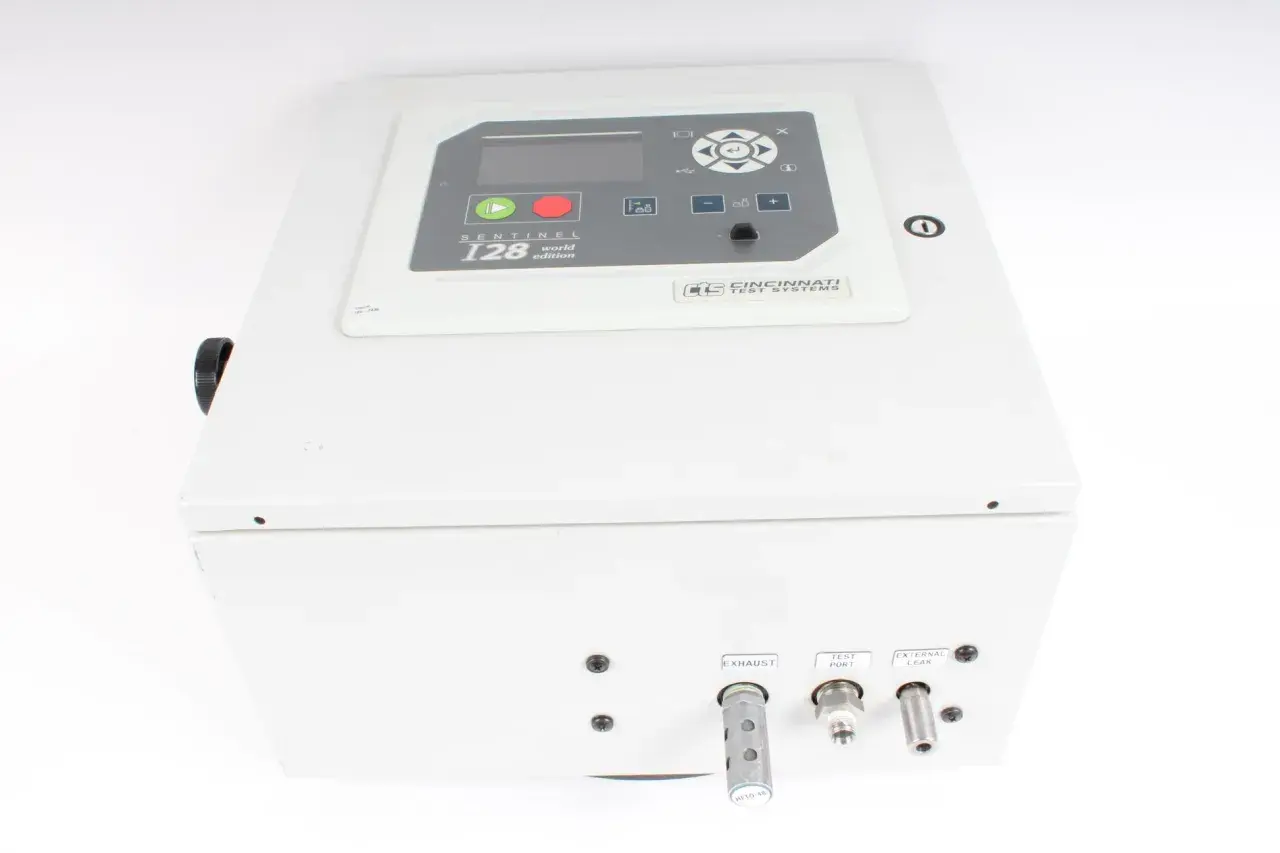
For manufacturers comparing production-test suppliers, one of the most established cincinnati testing systems vendors is Cincinnati Test Systems. The company focuses on leak detection, functional testing and assembly verification, which makes it relevant when a part must stay sealed, hold pressure or prove that it was assembled correctly. For UK buyers, the bigger question is not only what the equipment does, but whether the vendor can support integration, calibration and uptime after installation.
Key points that matter before you shortlist a vendor
- Cincinnati Test Systems is best known for leak detection and functional test equipment, not generic factory automation.
- Its portfolio covers pressure decay, vacuum decay, mass flow, tracer gas and helium recovery applications.
- The company positions itself as a supplier of both standard instruments and custom engineered systems.
- For UK manufacturers, support logistics, local representation and calibration are as important as the instrument itself.
- The strongest purchases are the ones validated on real parts, with fixtures, acceptance limits and cycle time tested early.
- The main risk is choosing the wrong test method or underestimating how much the fixture influences results.

What this vendor actually brings to the table
In practical terms, Cincinnati Test Systems is not just selling boxes with buttons. Its core value is the combination of leak-test instruments, engineered stations and application support that help manufacturers catch failures before parts leave the line. According to the company’s own materials, it has been doing this since 1981, which matters because leak testing is one of those disciplines where experience genuinely reduces bad assumptions.
What stands out to me is the breadth of the offering. The portfolio covers standard instruments, custom products and fully engineered systems, so a buyer can start with a bench instrument and move towards a more automated cell later. The company also highlights services such as factory and on-site training, instrument calibration, leak standard recertification, preventative maintenance and on-site support. That service layer is not an accessory; in high-volume manufacturing, it is part of the product.
For UK teams, that breadth is useful because it gives you more than one path to the same quality target. If your part is simple, a compact instrument may be enough. If your assembly is sensitive, messy or high mix, a custom station with fixturing and automation may be the better move. That leads naturally to the most important question: which test method actually fits the part?
Which test method fits the part you actually build
I would never start with brand selection alone. I would start with the failure mode. A vendor can only be a good fit if the method matches the way the part fails, the leak rate you need to detect and the pace of the production line. Pressure decay, vacuum decay, mass flow and tracer gas are all valid, but they solve different problems.
| Method | Best for | Main strength | Main trade-off |
|---|---|---|---|
| Pressure decay | Parts that can be pressurised and sealed reliably | Simple, widely used and well suited to production lines | Can be sensitive to part expansion and fixture quality |
| Vacuum decay | Parts that are easier to evacuate than pressurise | Useful when pulling a vacuum is safer or more practical | Not every part tolerates evacuation equally well |
| Mass flow | Assemblies where flow stability matters | Measures how much air is needed to maintain the test condition | Requires disciplined setup and good repeatability |
| Tracer gas or helium | Very small leaks, complex geometries and demanding quality targets | Higher sensitivity for difficult applications | More complex, more expensive and often slower to run |
| Functional test | Products that must do a job, not just remain sealed | Checks real-world performance rather than only integrity | Can become more application-specific and harder to standardise |
What UK buyers should check before they source from Ohio
For a UK manufacturer, the technical fit is only half the story. The other half is logistics, response time and support. A machine that performs well in a demo can still become a headache if commissioning is weak, spare parts are slow to arrive or the local service path is unclear.
When I evaluate a supplier like this for a UK plant, I want clear answers to five things before I even ask for a formal quote:
- Who is the local representative, and how fast can they respond?
- Can the vendor support on-site troubleshooting if the fixture drifts or the line changes?
- How will calibration and leak-standard recertification be handled over the life of the system?
- Is there a sensible training plan for operators and maintenance staff?
- What happens if the part design changes after the first installation?
The company says it has local representatives and on-site service options, which is a good sign, but I would still ask for the practical details in writing. That includes response windows, service escalation, parts availability and whether a UK team will be involved during installation. If that part is vague, the purchase is not really complete yet. Once the support path is clear, the next step is comparing strengths and limits with other vendors.
Where this vendor is strong and where caution is sensible
The main strength here is obvious: this is a specialist, not a generalist. That usually means better application depth, stronger test methodology and more confidence when the part is awkward or the leak limit is tight. I also like the fact that the portfolio spans standalone instruments and integrated systems, because many manufacturers outgrow a single method faster than they expect.
| Strength | Why it matters | When to be cautious |
|---|---|---|
| Broad test portfolio | Lets you match the method to the product instead of forcing one approach everywhere | Broad choice can make the decision harder if your team has not defined the leak mode well |
| Custom engineering | Useful when a standard instrument will not handle the part, fixture or cycle time | Custom systems need good sample parts and disciplined validation |
| Support and training | Reduces the risk of operator error and keeps the line stable after handover | Support value drops quickly if your regional service path is not defined early |
| Industry coverage | Relevant for automotive, medical, HVAC/R, consumer electronics and other industrial sectors | Industry fit still has to be proven on your exact part, not assumed from the sector label |
| Automation options | Helpful for high-volume or repeatable production environments | A full automated cell can be overkill if you only need a simple go/no-go check |
My rule of thumb is simple: if your process needs repeatability, traceability and enough engineering depth to solve awkward leak paths, this vendor deserves attention. If all you need is a light-duty desktop tester with minimal service requirements, a smaller local supplier may be enough. The right answer depends less on the logo and more on the production problem.
A practical buying process that reduces rework
If I were building a shortlist for a UK plant, I would keep the buying process disciplined and short. The biggest mistake I see is treating leak testing like a commodity purchase when it is really a process-control decision.
- Define the defect you are trying to catch in plain language, then convert it into a measurable leak-rate target.
- Send representative parts, including good samples and known-bad samples, so the vendor can test against reality rather than assumptions.
- Ask the vendor to recommend the method, the fixture concept and the expected cycle time.
- Run a lab trial or proof-of-principle test before you commit to a production design.
- Lock down the acceptance window, the calibration approach and the maintenance plan before purchase.
One detail that gets overlooked far too often is units. Leak-rate units such as sccm, ccm and accm are not interchangeable, so both sides need to agree on the measurement basis before validation starts. If the vendor’s test plan, your quality team and your plant engineers are not using the same units, the project will become noisy very quickly. Once those basics are in place, the final shortlist becomes much easier to defend.
What a sensible shortlist looks like before you request a quote
If your line depends on repeatable leak, flow or functional tests, Cincinnati Test Systems is the kind of vendor I would keep on the shortlist rather than the kind I would compare only at the end. The reason is not brand familiarity; it is the combination of method depth, custom engineering and support services that can matter once a system is in production.
For UK buyers, my practical advice is to judge the supplier on four things: method fit, fixture quality, support path and long-term serviceability. If those four are solid, the rest is usually manageable. If one of them is weak, the purchase can look good on paper and still become expensive in the plant. A leak-testing system should make quality more predictable, not create a second process to manage.
