
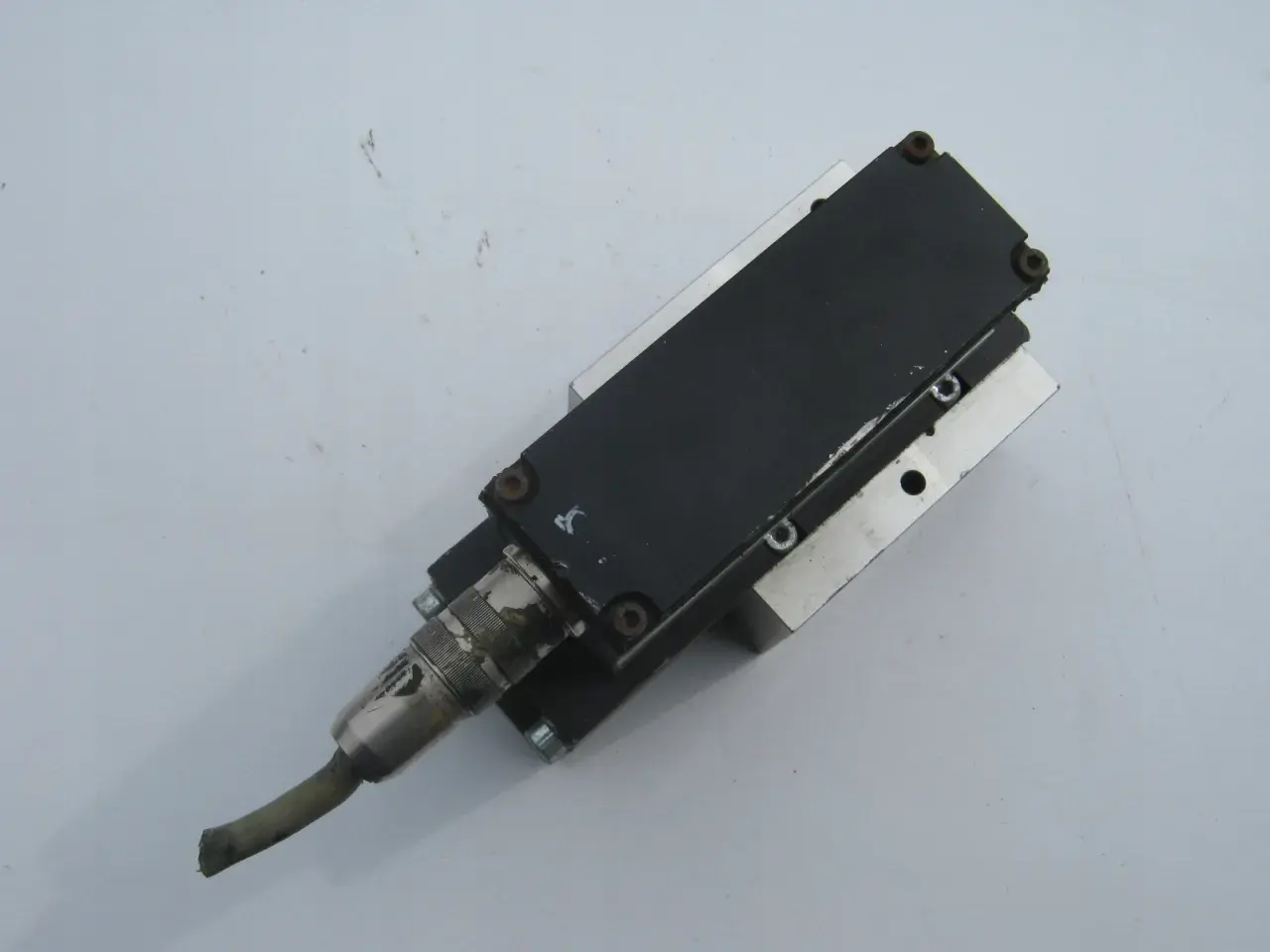
Numatics Inc. is best understood as a legacy pneumatics brand inside Emerson’s discrete automation portfolio, and that matters if you are comparing vendors, maintaining an installed base, or planning a replacement strategy. The practical questions are not academic: which product families are still active, what has been rebranded, and how do you avoid specifying an obsolete part in a UK plant? This article breaks down the company context, the products buyers actually use, and the checks I would make before I put the brand on a shortlist.
What matters most about this brand in one view
- It is no longer a standalone company in the way many older references suggest.
- The strongest fit is pneumatic automation: valves, cylinders, air preparation, and motion-control components.
- Some legacy part families remain available, while others have been renamed or replaced, so lifecycle checks matter.
- UK buyers should pay special attention to ISO sizing, documentation, spare-parts windows, and distributor support.
- For vendors, the real opportunity is cross-reference support, service, and replacement management.
What Numatics is inside Emerson’s portfolio
Today, the name survives more as a product brand than as a standalone company. Emerson still references Numatics-branded flow controls and several valve, cylinder, and air-prep families, but the broader commercial reality now sits inside Emerson Discrete Automation. That is important because procurement, documentation, and support often run through Emerson’s systems, even when the part number still looks like a classic Numatics SKU.
I read that as a signal to separate the label on the part from the business behind it. For a buyer, the brand tells you something about the lineage of the component; it does not tell you whether you are looking at current production, a migrated replacement, or a spare-only item.
This distinction matters even more in the UK, where many plants are running mixed generations of machinery. The brand can still be the right answer, but only if the lifecycle status matches the job.
That is why I start with the product families, not the logo. Once you understand those, the rest of the decision becomes much easier.
The product lines buyers actually care about
When people ask about Numatics, they are usually really asking about a narrow set of pneumatic families: directional control valves, cylinders, air preparation, and related flow-control hardware. Emerson’s current catalog still shows Numatics-branded items such as Series 140 valves with Cv up to 16.5, Series 12 and Series 14 air-prep products, and multiple cylinder families, which tells me the brand still has real installed-base relevance.
| Family | What it does | Why it matters in practice |
|---|---|---|
| Directional control valves | Route compressed air to the right actuator at the right time. | They are the first place reliability problems show up in high-cycle machines. |
| Cylinders and actuators | Turn air pressure into linear motion. | They determine stroke consistency, mounting compatibility, and service life. |
| Air preparation | Filter, regulate, lubricate, and isolate the supply air. | Clean air is the cheapest way to reduce wear and unplanned stoppages. |
| Flow control and manifolds | Coordinate multiple air channels and simplify machine plumbing. | They reduce wiring, shorten assembly time, and improve maintenance access. |
Valves are where reliability gets judged fast
Directional control valves are the most visible part of the system because every cycle depends on them. If a valve starts sticking, leaks too much, or reacts inconsistently, the problem is often upstream in air quality or sizing rather than in the valve alone. In practical terms, that means I would not evaluate the valve in isolation; I would evaluate the circuit.
Cylinders need standards, not just bore size
For British OEMs, metric cylinders and ISO-based dimensions are often a cleaner fit than imported hardware built around another standard. Numatics and Emerson offer both legacy and more standardised options, including ISO 6432 mini cylinders and NFPA-style cylinders. I would choose based on the installed base, the machine footprint, and the spare-parts strategy, not just on price.
Read Also: Hardy Process Solutions UK - Choose the Right Vendor
Air prep is the cheapest insurance in the system
Series 12 miniature FRLs and Series 14 air-preparation products are a good reminder that clean supply air is not an optional extra. If the plant air is wet, dirty, or poorly regulated, the downstream components will age faster and perform worse. In my experience, air prep is one of the few places where a modest spend reliably saves larger maintenance costs later.
Once you know which family you need, the real question becomes whether the part fits the machine, the site standards, and the support model. That is where UK buyers win or lose time.
How I would evaluate it for a UK project
When I spec a pneumatic component for a UK site, I look at four things before I even think about price:
- Fit and standardisation - metric bore, stroke, and mounting patterns save time on British OEM machines; NFPA can still work, but only when the installed base justifies it.
- Air quality - match the part to the plant’s air condition and service interval; a premium valve will not compensate for wet or contaminated air.
- Environment - check washdown, temperature, vibration, and corrosion exposure before choosing the family.
- Documentation - ask for CAD, datasheets, and UKCA/CE paperwork before you freeze the BOM.
Emerson’s engineering tools matter here because they shorten the gap between design and purchasing. If a vendor can generate CAD models, selection data, and pricing from one configuration flow, engineering makes fewer assumptions and buyers make fewer reorders.
For a British plant, I usually favour the simplest standard that genuinely fits the machine. That is not a purity test; it is a maintenance decision. The next challenge is less technical and more commercial: what should a vendor stock, and what should they warn about early?
What vendors should check before stocking or specifying it
If I were building a vendor offer around this brand, I would not start with stock depth. I would start with lifecycle visibility. The worst outcome is promising fast delivery on a part that has already moved to spare-only status or has a newer replacement path.
| Checkpoint | What I would verify | Why it matters |
|---|---|---|
| Lifecycle status | Current production, replacement, or spare-only. | Avoids quoting dead-end SKUs. |
| Cross-reference mapping | Legacy Numatics names versus current Emerson or AVENTICS equivalents. | Prevents confusion when old drawings meet new catalogues. |
| Spare-parts window | How long seals, kits, and subassemblies remain available. | Protects MRO customers who need service support over time. |
| Lead time and MOQ | How quickly parts can be replenished and in what quantities. | Determines whether the vendor can realistically hold stock. |
| Service tools | Configurators, CAD, and ordering support. | Reduces application errors and speeds quotation. |
Emerson’s own catalog shows why this matters. One example is the Series KG cylinders, which are listed as no longer available for sale as of 30 September 2025, with spare parts available until September 2027. That is exactly the kind of detail a good vendor should surface early, not after the machine is already in the field.
I also treat replacement paths as part of the product, not an afterthought. If a series has already been moved into a newer family, the vendor should explain the substitution clearly and keep the old drawing references alive long enough for maintenance teams to transition cleanly.
That leads to the brand question buyers always ask: is this really Numatics, or one of the other Emerson names?
Where it sits against AVENTICS and ASCO
Do not read these names as rival suppliers. I treat them as different doors into the same automation house, each with a slightly different history and use case. That distinction matters because a new machine build and a spare-part request are not the same buying problem.
| Name | How I read it | Best use | Watch-out |
|---|---|---|---|
| Numatics | Legacy pneumatic family with a strong installed base. | Replacements, maintenance, and specific valve or cylinder families. | Some parts have migrated to newer branding or lifecycle statuses. |
| AVENTICS | Modern pneumatic automation brand inside Emerson. | New builds, modular systems, and more current documentation flows. | Verify exact series names and the replacement path for older drawings. |
| ASCO | Fluid control and valve brand with overlap in some catalog areas. | Solenoid and process-style valve applications. | Not every ASCO line is a direct pneumatic substitute. |
For a UK OEM, I would usually start a new design with the current AVENTICS or ASCO family that fits the application, then step back to a legacy Numatics reference only if compatibility, installed base, or service continuity makes it necessary. That is the cleaner path, and it avoids creating a BOM that becomes awkward to support after launch.
The safest way to handle this market in 2026 is simple: treat the brand as a clue, not the decision. The decision should come from fit, lifecycle, and support, not from a familiar name on a PDF.
The safest way to handle legacy pneumatic parts in 2026
- Check whether the item is current, replacement, or spare-only before you quote it.
- Keep a cross-reference list for old Numatics part numbers and current Emerson equivalents.
- Ask for CAD, datasheets, and lifecycle notes together, not separately.
- Match the part to the site’s air quality, mounting standard, and maintenance interval.
- For existing machines, start from the serial number and legacy drawing; for new builds, start from the current family.
If I had to reduce the whole subject to one rule, it would be this: use the brand name as a clue, but make lifecycle status and support path the real decision. That is the approach that keeps legacy equipment running, avoids surprise obsolescence, and makes vendor conversations far more productive.
