
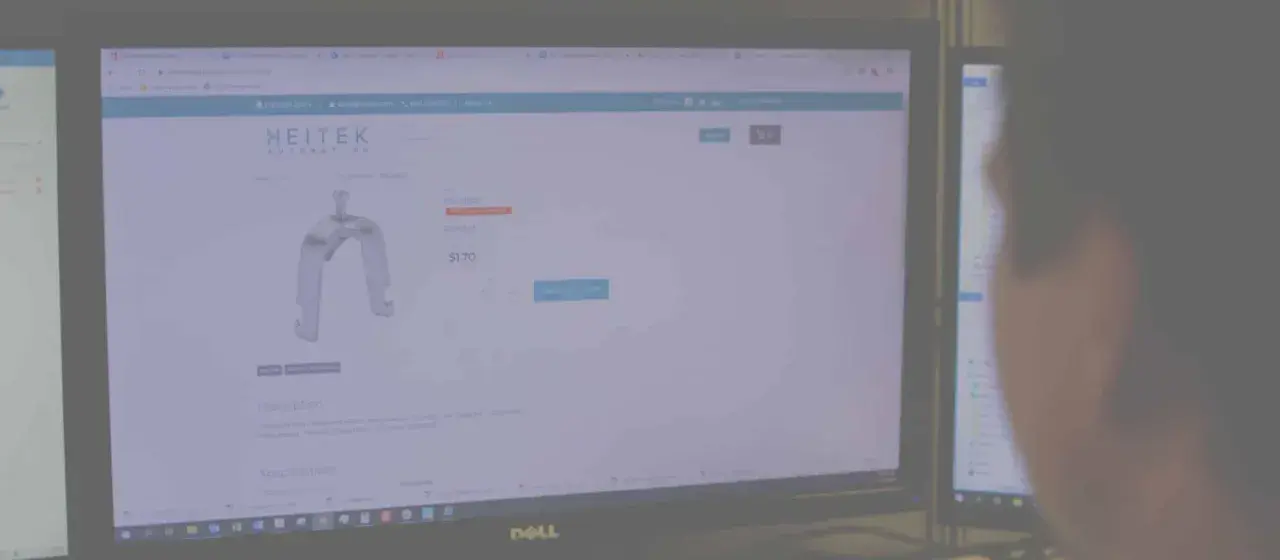
Heitek Automation sits in the part of the market where distribution, application support, and light engineering overlap. For buyers, that matters because you are not just choosing a source for parts; you are choosing the amount of technical help, stock access, and post-sale support that comes with them. This article breaks down what the company is, what it sells, how its vendor model works, and what a buyer in the United Kingdom should verify before treating it as a serious sourcing option.
The essentials buyers should know before they engage this vendor
- Heitek is a US-based industrial automation distributor, not a simple catalogue reseller.
- Its mix spans motion control, pneumatics, sensors, safety, panels, and custom-engineered solutions.
- The company publicly highlights UL508A, ITAR, and ISO 9001:2015, which are meaningful trust signals in industrial supply.
- Its own story page says it joined forces with SunSource in 2025, which matters for scale and back-end reach.
- For UK buyers, the key checks are logistics, documentation, standards alignment, and support response time.
What the company actually is
The clearest way to read this vendor is as a value-added industrial automation distributor. That means the company is not only moving boxes; it is helping customers select components, design assemblies, and keep systems running. The Arizona Commerce Authority notes that the business began in 2000 in Phoenix and later expanded across Arizona, Colorado, Utah, and New Mexico, which tells me this is a regional North American supplier with a real field presence rather than a generic online storefront.
Its own story page also says the business joined forces with SunSource in 2025. I see that as a meaningful signal for buyers, because it usually points to broader distribution reach, more internal resources, and a stronger ability to support larger or more complex accounts. For a UK reader, the important takeaway is simple: this is not a local British vendor, so the buying decision should be made with cross-border procurement in mind. That distinction becomes more important once you look at the product mix and service depth.
The product mix that defines its role

The breadth of the product mix is what makes Heitek more interesting than a narrow-line supplier. On the public homepage, the company highlights items such as drives, sensors, grippers, connection hardware, and pneumatic components, alongside partners like Siemens, Banner, Festo, 80/20, and Weidmuller. That combination suggests a vendor that is built to support a full automation project, not just one part of it.
| Area | What it covers | Why it matters to a buyer |
|---|---|---|
| Motion control | Drives, actuators, and related control hardware | Useful when precision, speed, and repeatability are part of the spec |
| Pneumatics | Cylinders, valves, air preparation, and fittings | Important for assembly lines, handling systems, and simple high-cycle automation |
| Sensors and vision | Detection, feedback, and inspection components | Needed when you want fewer errors and better process visibility |
| Control panels | Panel building and electrical integration | Reduces the burden on in-house engineering and speeds up deployment |
| Safety and guarding | Machine guarding, protection devices, and related systems | Critical when compliance and operator safety cannot be treated as an afterthought |
| Framing and assembly | Structural components for machine builds and workcells | Useful for OEMs and plant engineers building complete cells rather than isolated components |
That spread matters because it changes how a project is sourced. If one vendor can cover the electrical, pneumatic, and structural layers of a build, the procurement process becomes simpler and the risk of mismatched parts goes down. In practice, that often means fewer handoffs, fewer translation errors, and a cleaner bill of materials. The service model behind that catalogue is where the real difference shows up.
Why the service model matters more than the catalogue
When I evaluate a vendor like this, I look past the product list and ask what happens once the quote is requested. Heitek publicly frames its work around consulting, design, fulfillment, support, and training, and that is the right shape for an automation vendor. Industrial buyers rarely need just a component; they need a working result.
| Service | What it means in practice | Why it matters |
|---|---|---|
| Consulting | Helping define the right component or architecture before purchase | Reduces expensive spec mistakes early in the process |
| Design | Assisting with solution layout or application fit | Useful when the project needs more than a straightforward replacement part |
| Fulfillment | Managing supply, staging, and order handling | Helps if the project has multiple line items or phased delivery |
| Support | Technical help after selection and during deployment | Often the difference between a smooth install and a delayed one |
| Training | Workshops and knowledge transfer for users and maintenance teams | Improves adoption and reduces avoidable downtime later |
That is the part many buyers underestimate. A vendor can have a deep line card and still be weak where it counts if it cannot help translate a specification into a buildable solution. In automation, the ability to reduce wiring, consolidate interfaces, and keep the system serviceable often matters more than a marginal price difference. Once that is clear, the next question is whether the company has the credibility to back up those promises.
The trust signals worth checking before you buy
Industrial vendors live or die on reliability, and this is where certifications matter. Heitek publicly lists UL508A, ITAR compliance, and ISO 9001:2015. Those three signals do different jobs. UL508A is relevant to industrial control panel fabrication, ITAR matters for export-controlled or defense-adjacent work, and ISO 9001:2015 tells you the company is operating under a defined quality management system rather than improvising from job to job.
I would not treat those certifications as a guarantee of fit, but I would absolutely treat them as a baseline. They reduce uncertainty, especially when you are comparing a consultative vendor against a pure reseller. The broader team profile also matters: the company presents itself as a mix of consultants, engineers, and technical specialists, which is exactly the kind of staffing model you want when projects move beyond commodity parts. That said, a strong vendor on paper still has to clear one final test for UK buyers: practical cross-border usability.
How I would evaluate it from the United Kingdom
From a United Kingdom perspective, I would not ask whether the company is “good” in the abstract. I would ask whether it is a good fit for your procurement reality. A North American automation vendor can be an excellent partner, but only if the logistics, standards, and support model line up with your project.
| What to verify | What I would want in writing | Why it matters for UK buyers |
|---|---|---|
| Shipping and Incoterms | Who pays freight, duties, insurance, and customs handling | Prevents landed-cost surprises |
| Voltage and standards | Confirm electrical ratings, documentation, and any UK-specific constraints | Stops a component from being technically correct but operationally awkward |
| Lead times | Stock status and realistic dispatch dates for each line item | Automation delays are expensive, especially on shutdown-critical work |
| Support hours | Response windows that overlap with the United Kingdom workday | Time zone friction can slow down urgent troubleshooting |
| Returns and warranty | Clear RMA terms and who handles the process | Important if a part is wrong, damaged, or incompatible |
| Compliance | Any export-control issues, especially for sensitive applications | Essential for regulated sectors and controlled technologies |
If I were buying from the United Kingdom, I would also ask whether the vendor can support a BOM review before I commit. That is a practical way to catch hidden compatibility issues early. For urgent spares, local sourcing may still be better. For planned machine builds, a consultative distributor can be worth the extra coordination if it genuinely reduces engineering risk. The key is to be precise about what problem the vendor is supposed to solve.
The shortlist I would use before placing an order
My own shortlist is straightforward. First, I would decide whether the project needs a product supplier or a solutions partner. If the work includes control panels, mixed technology, or a custom layout, the latter usually pays off. Second, I would check whether the vendor can match the specification without pushing unnecessary substitutions. Third, I would ask for support terms that reflect the reality of UK time zones and international shipping.
- Use them if you need a multi-brand automation source with technical input.
- Use them if your project includes pneumatics, motion, sensing, or panel work in the same build.
- Use them if you value a vendor that can help with design and fulfillment, not just part numbers.
- Be cautious if you need local UK stock, on-site service in Britain, or very short replacement timelines.
In practical terms, Heitek looks strongest as a consultative automation vendor for buyers who want more than a simple transaction. If the logistics, documentation, and support model check out, it can be a credible sourcing option for UK teams working on industrial automation, smart manufacturing, or machine-building projects. If those boxes do not close cleanly, I would still keep the company on the shortlist, but I would not make it the default choice until the cross-border details are proven.
