
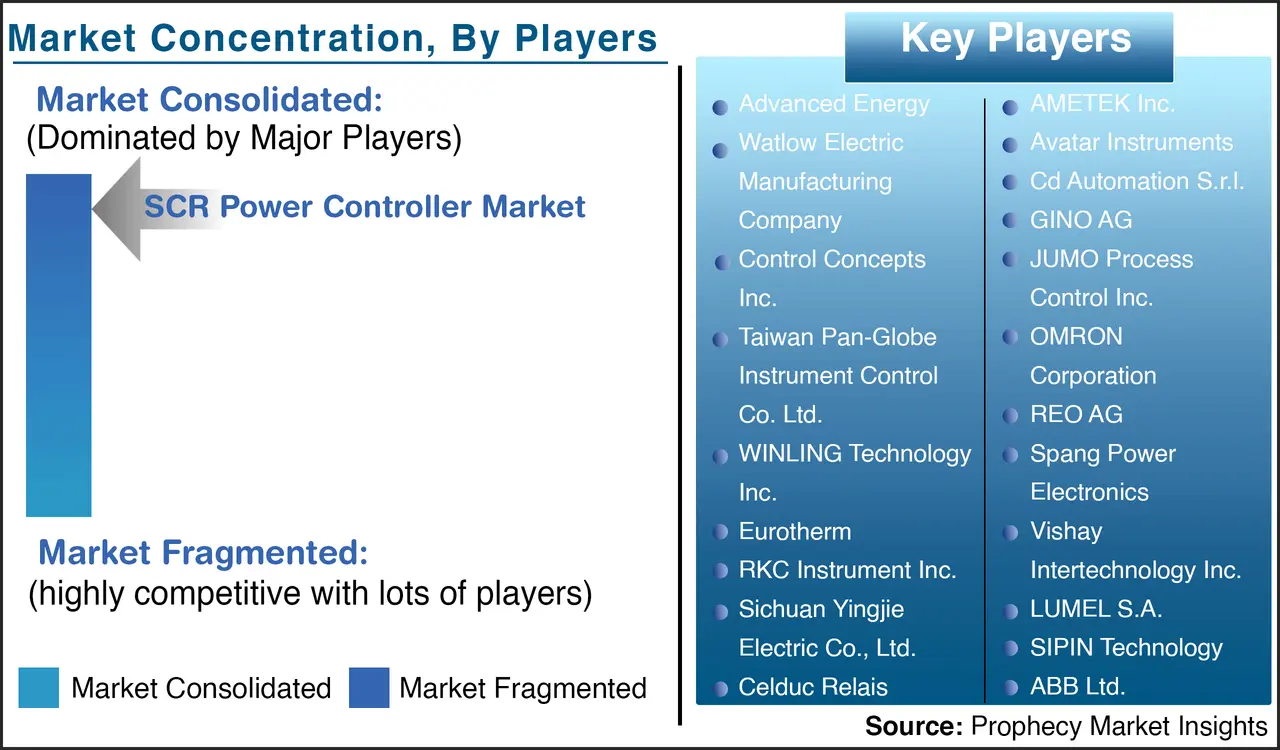
Industrial automation buyers usually need a specialist when power control is the problem, not a broad catalogue. In the case of Control Concepts, Inc., the value sits in a narrow but practical niche: SCR power controllers, related accessories, and the engineering support that sits around them. For UK teams working with heaters, ovens, furnaces, glass, solar, semiconductor, or other process lines, that matters because the vendor choice affects not just hardware, but commissioning speed, serviceability, and downtime risk.
Here I break down what the company actually supplies, how I would judge it as a vendor partner, and what a buyer in the United Kingdom should verify before specifying it. I also focus on the details that usually decide whether a purchase goes smoothly or turns into a support headache: load data, interface compatibility, repair turnaround, and the route to local supply.
What matters most about this vendor at a glance
- This is a specialist SCR power-control vendor, not a general industrial marketplace.
- The core product set covers single- and three-phase AC and DC controllers, plus digital interfaces, software, fuses, accessories, and custom/OEM work.
- Before asking for a quote, I would lock down voltage, phase, load type, command signal, fieldbus, and required certifications.
- The company offers repairs and maintenance, with most repairs taking 1 to 3 weeks and emergency one-day turnaround possible.
- For UK buyers, the biggest questions are distribution route, support overlap, freight timing, and the document pack needed for compliance.
What kind of vendor Control Concepts really is
I would classify this company as a specialist manufacturer first and a vendor second. Its public positioning is built around industrial control products and systems, with a very clear focus on SCR power controllers rather than broad-line automation hardware. That is usually a good sign when the application is demanding, because the same team that sells the product tends to understand the quirks that come with it.
There is also a naming trap worth avoiding. Several unrelated businesses use similar names, so I would verify the exact legal entity before I add anything to an approved-vendor list or a BOM. For the industrial power-control company I am discussing here, the signal is straightforward: it is a niche vendor with engineering depth, not a generic reseller.
| Buying route | When it works best | Tradeoff |
|---|---|---|
| Direct from the manufacturer | Unusual specs, application support, or custom/OEM work | Less local convenience if you need rapid regional stocking |
| Regional distributor | Standard purchases, repeat orders, and local coordination | Availability can vary by region and inventory cycle |
| Custom/OEM channel | Panels or assemblies that do not fit a catalog unit | Longer lead time and more engineering alignment up front |
That vendor shape matters because it changes how the technical conversation should happen, which leads directly to the product range itself.

Why the product range matters in process manufacturing
The portfolio is built around SCR power controllers for single-phase and three-phase AC, single-phase and three-phase DC, plus digital interfaces, software, fuses, accessories, and custom/OEM builds. The point is not just that the catalog is broad; it is that the products sit close to the process layer where thermal stability, current handling, and electrical noise can make or break an installation.
I would read that as a vendor whose value is tied to application fit. A controller is only useful if it matches the load, the control method, and the plant’s integration needs. The company’s product families also reach into compact and higher-capacity units, which is useful when a project starts small and later grows into a larger production line.
Read Also: Hardy Process Solutions UK - Choose the Right Vendor
Phase-angle and zero-cross are not interchangeable
Phase-angle control trims the waveform to adjust power continuously, which gives fine response when a process needs tight thermal regulation. Zero-cross switching waits for the AC waveform to cross zero, which is often cleaner electrically and can be easier on certain loads. I would choose between them based on the process, the load, and the electrical environment, not on habit or vendor preference.
| Product area | What it covers | Why it matters |
|---|---|---|
| AC and DC controllers | Single- and three-phase control options | Determines whether the vendor can actually serve the load architecture |
| Analog and digital interfaces | Signal and fieldbus integration | Decides how easily the unit drops into a PLC or HMI environment |
| Custom/OEM products | Application-specific assemblies | Useful when the standard catalog does not match the machine |
| Fuses and accessories | Protection, mounting, and setup hardware | Reduces commissioning gaps and spare-parts surprises |
Once the product family is clear, the buying conversation becomes much sharper, because the vendor can stop guessing and start quoting against real operating data.
What to confirm before you request a quote
I would not ask a vendor like this for a price until the application inputs are clean. The company’s own ordering guidance shows exactly why: these controllers are specified from the load outward, not from a generic part number inward. That is good discipline, because it forces the buyer to define the process instead of hoping the hardware will sort it out later.
| What to confirm | Example | Why it matters |
|---|---|---|
| Load voltage and phase | 480V, 3-phase | Sets the controller family and the power architecture |
| Load configuration | Delta or wye | Affects wiring and system behavior |
| Load rating | Amps, kW, kVA, or resistance | Prevents undersizing or overspending |
| Load type | Nichrome, silicon carbide, graphite, transformer-coupled | Different loads behave differently under control |
| Control type | Zero-cross or phase-angle | Changes response, noise profile, and process fit |
| Command signal | 4-20 mA, 0-5 V, 0-10 V | Must match the PLC or control system |
| Digital fieldbus | DeviceNet, Modbus RTU, Modbus TCP, Ethernet/IP, Profinet | Decides how well it integrates with plant networks |
| Required certifications | UL, CE, RoHS, SCCR | Protects the project from compliance delays |
If any of those fields are vague, the quote is usually vague too. In my experience, the hidden cost is not the extra emails; it is the lost time between engineering, procurement, and commissioning. That is why the support model matters as much as the hardware.
How support and after-sales service change the risk profile
Support is where a vendor proves whether it is a real partner or just a product source. The repair process here is structured: the company says most repairs can be completed in 1 to 3 weeks, with one-day turnaround possible in emergencies. It also notes that OEM-bought controllers should go back through the original supplier, which tells me the sales channel matters just as much as the part number.
For a plant manager, that means the real question is not only “Can I buy it?” but also “How fast can I recover if it fails?” I pay close attention to that because a controller that sits in a repair queue can cost far more than the original purchase price. If the line is critical, I would plan spares, identify the RMA path early, and ask who owns first-line diagnostics.
- Repair turnaround is reasonable for planned maintenance, but still worth tracking against uptime requirements.
- Emergency turnaround exists, but it should be treated as a contingency, not a standard operating assumption.
- OEM channel purchases may need a different support path, so do not assume direct-service rules automatically apply.
- Older equipment can still be repairable if parts are available and the unit arrives well documented and well packed.
That support profile becomes even more important for UK buyers, because geography adds another layer of timing and handoff complexity.
What UK buyers should verify before they lock the spec
For a UK project, I would not assume a local stock point or a same-day service path unless it is confirmed in writing. Based on the public pages, this looks like a distributor-led or direct-from-US model rather than a UK-first stockroom, so lead time, freight, and service ownership need to be checked early. That is an inference, not a criticism, and it is exactly the sort of detail that prevents late-stage surprises.
There is also a time-zone reality to manage. The support desk runs during US Central Time business hours, which gives UK teams only a narrow overlap. If your line is live and the problem is urgent, I would ask in advance how quickly a UK engineer, distributor, or local maintenance contractor can be looped in.
| UK issue | What I would ask |
|---|---|
| Supply route | Is this shipping direct, or through a regional distributor? |
| Documentation | Which certificates and electrical documents will come with the order? |
| Compliance | Do we need CE, UKCA, SCCR, or other project-specific paperwork? |
| Support hours | Who can answer commissioning questions during UK business hours? |
| Spare parts | Which items should we hold locally to protect uptime? |
If those answers are clear, the vendor becomes much easier to work with. If they are fuzzy, the problem is usually not the product itself but the path around it.
The mistakes that cost the most time and money
Most vendor problems in this category do not come from the technology being bad. They come from the buyer skipping one or two technical questions that should have been asked on day one. The list below is the one I would use in a real procurement review.
- Buying a controller before the load type is fully defined, which often leads to the wrong control method or the wrong sizing.
- Leaving the command signal vague, then discovering too late that the PLC and the controller do not speak the same language.
- Ignoring protection details such as fuses and short-circuit current rating, which can delay sign-off and commissioning.
- Assuming support will be simple just because the hardware is simple, which is rarely true in thermal process control.
- Confusing similarly named companies and ending up with the wrong vendor relationship altogether.
I would also add one more, because it shows up often in plant settings: treating custom/OEM work like a stock item. It is not. If you need a bespoke enclosure, a special interface, or a nonstandard load package, the engineering conversation has to happen early, not after procurement has already committed.
What I would do before placing the order
If I were specifying this vendor for a UK plant, I would keep the decision simple. First, I would confirm the exact load data and control architecture. Second, I would ask for the support route, including repair handling and who owns the RMA process. Third, I would get the document set sorted before the purchase order is raised. Those three steps remove most of the avoidable risk.
That is the real takeaway here: the hardware is only half the story. The better question is whether the vendor can support the exact process, compliance, and logistics path your line needs. When those pieces line up, Control Concepts looks like a strong specialist supplier. When they do not, the issue is usually specification discipline, not the controller itself.
