
A good industrial vendor does more than ship parts. In flow control, the real value is whether a supplier can match the fluid, temperature, signal type, mounting, and service expectations of the application without forcing you into a compromise. This article looks at what Proteus Industries actually supplies, how its UK channel is set up, and how I would judge it as a vendor for industrial automation, cooling, and machine-protection projects.
Key takeaways for UK buyers evaluating flow-control vendors
- The brand is a specialist in liquid flow meters, switches, sensors, and coolant-protection systems.
- Its strongest use cases are semiconductor cooling, robotic welding, medical imaging, data centre cooling, and rugged industrial loops.
- UK buyers are typically supported through a local representative in Marlborough rather than only through the US office.
- Series choice matters: a simple switch, a meter with relay output, and an EMI-resistant meter solve different problems.
- For complex or OEM work, local support, documentation, and configuration fit matter as much as the headline spec.
What this supplier actually brings to the table
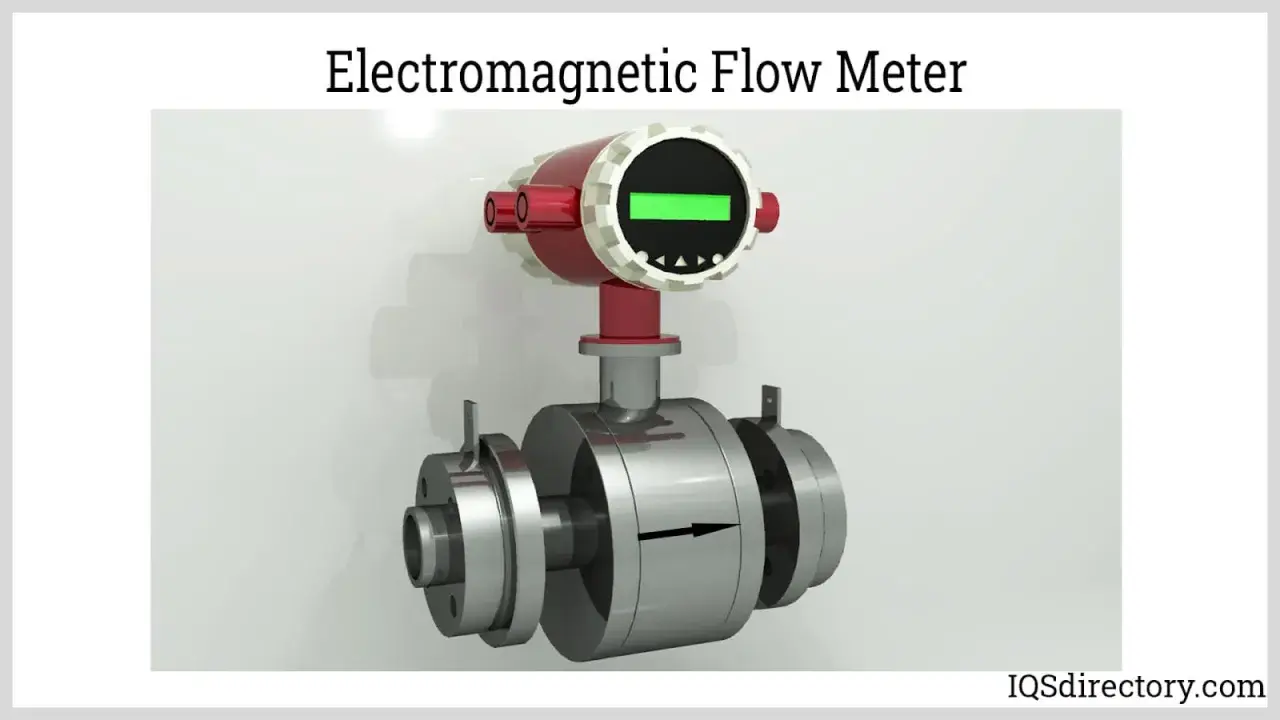
The product range is narrower than a broad-line automation catalogue, and that is the point. The company concentrates on liquid flow switches, flow meters, sensors, and control systems for cooling and protection duties in semiconductor tools, industrial machines, medical systems, data centres, and robotic welding cells. I care about that focus because specialist vendors are usually better when failure is expensive and the fluid loop is part of machine uptime rather than an accessory.
Its catalog also includes ruggedized and extreme-temperature series, with products designed for water or advanced heat-transfer fluids across roughly -100°C to 200°C, depending on the series. That tells me the brand is built for applications where ordinary off-the-shelf instrumentation can be too fragile, too warm, or too noisy electrically.
In practical terms, buyers usually come to this vendor for three things: monitoring, shutdown protection, and integration support. That leads naturally to the UK channel, because support path matters almost as much as the hardware itself.
How the UK distribution model works
The UK representative listed for the brand is John P. Kummer Ltd. in Marlborough. For a UK buyer, that detail is more than administrative trivia: it changes how you validate part numbers, ask about wiring, confirm stock, and get pre-sales guidance without pushing every question through the US office.
I would treat this as a classic split between direct-manufacturer depth and local-distributor convenience. The direct team is usually better for edge-case configuration, while the UK channel is often better for responsiveness and application translation. For industrial buyers, that balance matters because the first failure mode is often not the sensor itself, but a mismatch between the sensor, the coolant, the control panel, and the machine builder's expectations.
| Buying route | Best when | Main trade-off |
|---|---|---|
| Local UK representative | You need faster coordination, local context, and easier pre-sales support | Availability may depend on what is stocked or commonly supported locally |
| Direct manufacturer contact | You need a custom configuration, OEM integration, or unusual application fit | You may handle more of the import, logistics, and specification work yourself |
For most companies, the right answer is not either-or. I usually recommend using the local representative for the first technical pass, then escalating to the manufacturer only when the application truly needs it. That approach saves time and cuts down on avoidable specification errors, which is the real cost in vendor selection.
Which product family fits which application
When I narrow a vendor decision, I stop asking what the catalog contains and start asking which series solves the failure mode. That shift matters because a flow switch, a meter with a relay, and a rugged EMI-resistant unit do different jobs even when they look similar on paper.
| Product family | Best fit | Practical note |
|---|---|---|
| 100 Series flow switches | Simple proof-of-flow or low/high alarm logic | Flow range from 0.2 to 227 LPM / 0.06 to 60 GPM; useful when you want clear trip points more than rich analytics. |
| 8000 Series flow meters | Machine protection and monitored cooling loops | Rated for heat-transfer fluids from -40 to 90°C and includes relay output for alarm or shutdown. |
| 8000EMR and 8000XHT | Electrically noisy, shock-prone, or temperature-stressed environments | These are the series I would look at when EMI/RFI or extreme temperatures are part of the problem. |
| PV6000 and V7000 vortex meters | Longer-life sensing with no moving parts | Good fit where low maintenance and clean repeatability matter more than simply chasing the cheapest unit price. |
| WeldSaver coolant protection | Automotive robotic welding and coolant-loss protection | Useful when an interrupted coolant circuit can damage tooling, caps, or high-value equipment. |
The pattern is simple. If the job is basic proof-of-flow, the low-complexity switch is usually enough. If the job carries downtime risk, I move toward meters with shutdown logic or a ruggedized series. That distinction leads directly into the vendor qualities that matter more than the brochure headline.
What makes a vendor credible beyond the datasheet
I look at specialist vendors through a procurement lens, not a marketing lens. A strong datasheet is useful, but it does not tell me whether the supplier can support integration, document the product properly, or stand behind the install when the machine is already on the floor.
- Application fit - The vendor should know the fluid, temperature window, and control logic, not just the part number.
- Documentation quality - Installation manuals, drawings, and configuration details matter because they reduce commissioning mistakes.
- Integration details - Electrical output, relay behaviour, and shutdown logic need to match the PLC or controller strategy.
- Warranty and serviceability - Some product lines carry a five-year warranty, which is a useful signal when equipment sits in critical loops.
- Compliance evidence - Published warranty terms and RoHS, REACH, and WEEE policies are not glamorous, but they are a sign that the vendor is used to real procurement workflows.
The company also publishes manuals and product documentation, which is exactly what I want to see from a vendor selling into machine builders and plant engineers. I still ask for the exact drawing, electrical interface, and media compatibility before I commit, because the gap between a good catalog page and a successful installation is usually one missing detail. That is especially true once you start comparing where the brand fits well and where it does not.
Where this brand fits well and where I would look elsewhere
I would shortlist this vendor when the application is centred on liquid cooling, flow protection, or robust sensing under difficult conditions. I would not treat it as a general-purpose answer to every industrial instrumentation problem, because the range is specialised and that specialisation is what gives it value.
| Good fit | Less natural fit | Why |
|---|---|---|
| Liquid coolant loops in machine tools and semiconductor gear | Gas or air flow measurement | The catalog is centred on liquid flow products, not a broad multi-media portfolio. |
| High-value equipment protection | A commodity sensor chosen only on lowest price | The value proposition is precision, ruggedness, and protection, not bare-bones hardware. |
| Weld cells, imaging systems, and data centre cooling | Applications needing broad plant-wide instrumentation from one vendor | The product family is strong in niche cooling and monitoring work, but it is not a catch-all automation catalog. |
| OEM builds that need EMI resistance or temperature tolerance | Installations where local stock and same-day replacement are the only priorities | Specialist sourcing can be worth it, but you should confirm support and inventory expectations early. |
I would also be cautious if a project needs only a generic flow indication and nothing else. In that case, a simpler vendor may be easier to buy from and easier to support over the life of the machine. The right answer depends on whether the risk is low-cost inconvenience or high-cost downtime, and that distinction matters before any order is placed.
The checklist I would use before placing a UK order
In 2026, I would run the same short checklist every time I buy from a specialist flow vendor in the UK. It keeps the conversation practical and stops the team from overbuying the wrong specification.
- Define the fluid - Water, glycol mix, or advanced heat-transfer fluid changes the real operating envelope.
- Confirm the job - Decide whether you need simple flow proof, metering, alarm output, or shutdown protection.
- Check the environment - Temperature, vibration, shock, and EMI often decide the correct series.
- Match the signal - Make sure the output type fits the controller, relay logic, or display system.
- Ask about support path - Confirm whether the UK representative or the manufacturer will handle the integration questions.
- Request documentation up front - Installation instructions, dimensional drawings, and warranty terms should arrive before purchase, not after.
- Validate serviceability - Spare parts, rebuild kits, and calibration expectations are important if the loop is mission-critical.
My bottom line is straightforward: if your project depends on stable liquid cooling or coolant protection, this is a vendor worth shortlisting; if you need a broad generalist supplier, it is not the first place I would start. The best UK buying path is usually local technical qualification first, then manufacturer-level confirmation only for the edge cases.
