
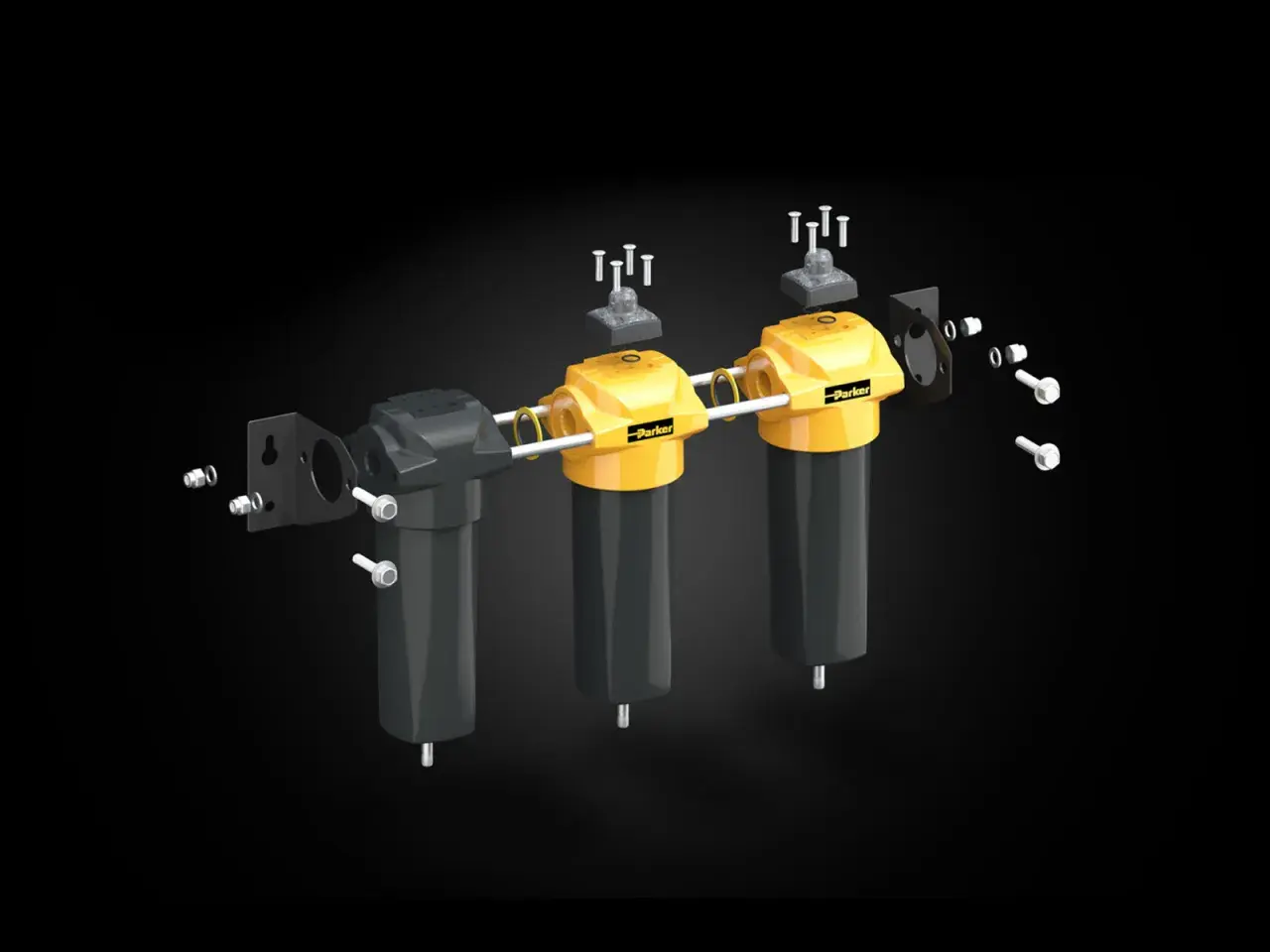
Industrial filtration rarely fails in a dramatic way. It usually drifts: a compressor works harder, a filter clogs sooner than expected, or quality issues start appearing at the edge of tolerance. That is why Parker’s filtration innovation centre matters; it is where media, elements, and manufacturing methods are developed and tested before they reach the market. In this article I focus on what that means for vendors in the UK, how Parker’s supply network is structured, and how to judge whether a supplier is giving you engineering support or just a part number.
The practical takeaways for UK buyers and vendors
- Parker’s R&D centre shows that filtration is treated as an engineered system, not a commodity part.
- In the UK, the practical buying paths are Parker’s authorised distribution network, ParkerStore-style channels, and specialist integrators.
- The best vendors can explain media choice, pressure drop, service life, and contamination risk in plain English.
- For complex applications, data, test evidence, and local support matter more than unit price.
- In 2026, connected manufacturing and application-specific media are where filtration value is being won.
Why Parker’s R&D centre matters to vendors
When I look at Parker’s R&D story, I do not see a brochure claim. I see a signal about how the company sells filtration: through application data, testing, and customer interviews. Parker says the centre houses research and development for all filtration products, with 82,000 square feet dedicated to new technologies and proprietary manufacturing processes. The published material also points to 64 manufacturing facilities globally, 38 technology centres, 500+ U.S. patents, and 1,200+ global patents tied to the filtration portfolio, which tells me Parker is set up to move from lab to production at scale.
The detail that matters most is the New Product Blueprinting approach. Instead of guessing what customers need, Parker uses a structured interview process to uncover filtration problems first and design solutions second. That is exactly how good vendors should behave too. They should ask about contamination, duty cycle, temperature, media compatibility, and maintenance windows before they quote.
Northumbria University’s case study on Parker GSFE in Gateshead makes the same point from a UK angle: the division was the original innovator of compressed air treatment technology, and one relaunch generated a 30% jump in sales. To me, that is a reminder that customer-led filtration design is not theory; it changes the commercial outcome. That also explains why the buying route matters, especially in the UK.
How the UK vendor network sits around Parker
In the UK, I would separate Parker sourcing into three practical routes rather than pretending there is one universal vendor model. For simple replenishment, authorised distributors and ParkerStore-style channels are the fastest route. For complex projects, Parker’s technical teams or a specialist systems partner make more sense. And for OEM or plant-wide upgrades, a vendor that can package filtration into a broader mechanical or automation scope is often the right fit.
| Route | Best for | Strength | Limitations |
|---|---|---|---|
| Direct Parker technical engagement | New designs, critical applications, validation work | Access to application specialists and product development insight | Not the fastest route for routine replacements |
| Authorised distributor or ParkerStore | Routine orders, spares, urgent swaps | Local stock, traceability, practical support | Range and depth vary by branch |
| Specialist vendor or integrator | Packaged systems, OEM builds, plant upgrades | Can bundle installation, commissioning, and service | Must verify they are specifying the right Parker element and not a loose equivalent |
Parker’s own UK distribution network is built around certified parts suppliers, so traceability is not an afterthought. That matters because a noisy pricing conversation means little if the part cannot be traced back to an authorised channel. Parker’s Gas Separation and Filtration division is based in Gateshead, so UK and EMEA buyers are not dealing with a distant, disconnected operation. That leads straight into the technical questions that separate a real vendor from a reseller.
The technical checks I would make before shortlisting a vendor
I use a simple rule when I shortlist a filtration vendor: if they cannot explain the failure mode, they do not yet understand the application. A good vendor should be able to talk about pressure drop, which is the resistance a filter adds to flow, and about contaminant loading, which is how quickly the element fills with captured debris. Those two variables often decide whether a solution saves money or quietly increases energy use.
| What to check | What good looks like | Why it matters |
|---|---|---|
| Application data | Flow rate, pressure, temperature, fluid or gas type, and duty cycle are clearly documented | Prevents oversizing or undersizing |
| Media choice | The vendor can explain whether coalescing, adsorption, nanofibre, or surface-modified media is the right fit | Matches the element to the actual contamination problem |
| Performance evidence | Test data, field references, and a realistic service-life estimate are available | Reduces guesswork and supports approvals |
| Support model | Spare elements, local stock, and maintenance guidance are part of the offer | Protects uptime after installation |
| Commercial view | Total cost of ownership is discussed, not just list price | Cheap parts can become expensive once changeout frequency rises |
| Traceability | Genuine parts status, batch information, and compliance paperwork are easy to obtain | Important for audit-heavy sectors such as food, pharma, and energy |
If a proposal only talks about micron rating, I treat it as incomplete. Micron rating is useful, but it is not the whole story, especially when the cost of a poor choice shows up later as downtime or higher compressor load. Coalescing captures fine liquid droplets, while adsorption targets vapours; they are not interchangeable. The technology inside the filter matters, which is why the R&D picture is worth studying.

Why the technology stack matters in 2026
What stands out to me in 2026 is that Parker’s innovation is not limited to one headline material. The published material points to embossed deep pleats, nanofibre development, surface modification, modelling and simulation, and real-world testing rigs. That mix matters because different applications fail in different ways.
- Deep pleat designs increase surface area and can extend service life, which is useful when service access is awkward or expensive.
- Surface modification changes how media interacts with water or oil, so hydrophobic, oleophobic, or hydrophilic behaviour can be engineered instead of guessed.
- Nanofibre media can improve efficiency in demanding environments, especially where fine contamination and low resistance both matter.
- Simulation and real-world testing help prove performance before the first production run, which is a serious advantage when failure is costly.
- Connected manufacturing uses IoT-style monitoring to improve productivity and uptime, and that usually translates into better repeatability for buyers and vendors alike.
The mistakes that still create bad filtration buys
The most common mistake I see is treating filtration as a line-item purchase. A filter is really a process control component, and when buyers ignore that, they usually pay for it later.
- Buying by price alone usually leads to shorter element life, more changeouts, and higher labour cost.
- Ignoring the contaminant profile means the filter may be wrong for moisture, oil mist, particulates, or vapour.
- Forgetting differential pressure can reduce flow and raise energy consumption, especially in compressed air systems.
- Mixing genuine and non-genuine parts without validation can complicate traceability and undermine performance assumptions.
- Skipping maintenance planning creates the false impression that the product failed, when the real issue was a no-stocking strategy.
When I review failed filtration buys, the root cause is usually not the element itself. It is a mismatch between the application and the way the vendor sold the solution. That is why the next step is not a generic quote request, but a focused technical brief.
What I would ask a vendor before I place an order
If I had to reduce filtration sourcing to one practical checklist, I would ask six questions before approving any order.
- What exact problem is this filter solving, and what contamination type was it designed around?
- What test data do you have for efficiency, service life, and pressure drop?
- Is this a genuine Parker product, an authorised replacement, or a compatible alternative?
- What is the UK stock position, and who supports urgent spares or replacements?
- What maintenance interval do you recommend, and what assumptions does that interval depend on?
- What documentation ships with the product, including compliance, traceability, and installation guidance?
I would also ask the vendor to explain the one thing that would make their recommendation wrong. Good suppliers usually know where the limits are. Weak ones sound confident until you ask about temperature swings, abnormal contamination spikes, or longer-than-expected service intervals.
How I would use Parker’s R&D when choosing a UK vendor
For routine spares, I would stay close to an authorised UK distributor or ParkerStore-style channel and buy on exact part numbers. For critical or complex applications, I would push for application support, test evidence, and a service plan before I think about price. That is where Parker’s R&D background becomes useful: it gives you a reference point for what a serious vendor should be able to explain.The practical rule I use is simple. If a supplier can show me why the media was chosen, how the element was tested, and how the UK supply chain will support the installation, I take the proposal seriously. If they cannot, I keep looking.
