
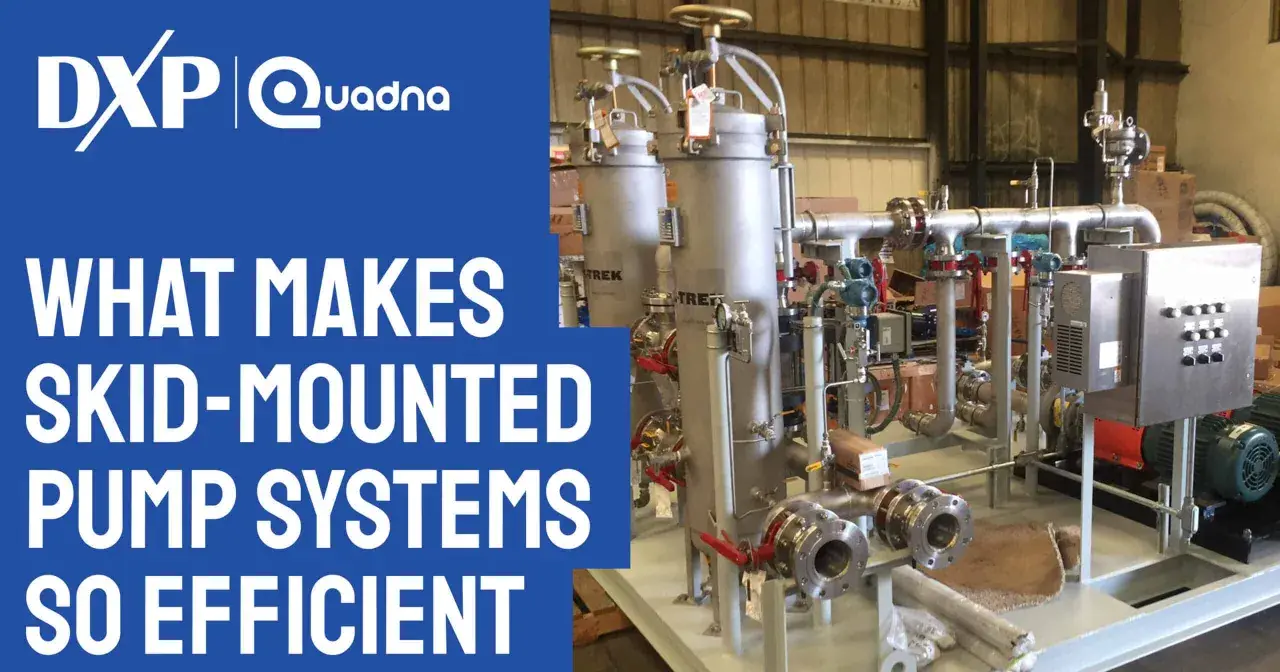
In plant and fluid-handling projects, the details matter: a pumping package that arrives as a complete, tested unit behaves very differently from one assembled piecemeal on site. For the UK industrial reader, the pump skid meaning is straightforward once you strip away the jargon: it is a pre-assembled unit that combines a pump with the drive, pipework, valves, controls, and supporting equipment on a single frame. That design choice affects installation time, reliability, maintenance, and how easily the system fits into a broader fluid power setup.
Key points to keep in mind
- A pump skid is a packaged pumping system mounted on a common base frame, not just a pump on steel.
- The skid usually includes the pump, motor or engine, valves, instrumentation, filtration, and controls.
- In fluid power, the skid often forms the hydraulic or liquid-handling source that feeds the rest of the system.
- Its main advantages are faster installation, better alignment, easier commissioning, and fewer site interfaces.
- It is a strong fit where space is tight, uptime matters, and off-site testing reduces risk.
- It is not always the best choice if equipment is too large, too bespoke, or awkward to transport.
What a pump skid is in practice
For me, the pump skid meaning is simply a packaged pumping unit built on a common base frame, with the main hardware already integrated before it reaches site. The skid is the structure that holds everything in position, keeps the assembly aligned, and makes the whole package transportable as one unit.
That sounds basic, but it changes the project quite a lot. A loose pump still needs mounting, alignment, pipework, wiring, instrument installation, and testing in the field. A skid package moves much of that work into the workshop, where tolerances are easier to control and problems are easier to catch before commissioning.
In other words, a pump skid is not a single component. It is a functional system with a defined duty, a defined footprint, and a defined connection strategy. Once that distinction is clear, the next question is what the package actually contains.

What usually sits on the skid
The exact specification changes from one project to the next, but the same core items show up again and again. I usually think of a skid as the place where mechanical, electrical, and control elements are brought together so the pump can do useful work with fewer site surprises.
| Component | Role in the skid | Why it matters |
|---|---|---|
| Base frame | Supports all equipment and fixes the geometry | Reduces vibration, preserves alignment, and simplifies transport |
| Pump | Moves the liquid or hydraulic fluid | Sets the flow and pressure capability of the package |
| Prime mover | Drives the pump, usually an electric motor or diesel engine | Determines how the system is powered in the field |
| Piping and manifolds | Connect the pump to the rest of the assembly | Reduces site pipework and keeps the flow path compact |
| Valves | Control isolation, flow, and pressure | Protect the system and make operation more flexible |
| Filters and strainers | Remove debris before it reaches sensitive parts | Extends service life and lowers the risk of damage |
| Instrumentation | Measures pressure, flow, temperature, or level | Gives operators visibility and supports troubleshooting |
| Controls | Automates start, stop, speed, alarms, and interlocks | Improves repeatability and makes remote monitoring possible |
| Cooling or pulsation control | Manages heat or pressure ripple where needed | Important in hydraulic and high-pressure duties |
Not every skid includes every one of those items. A simple transfer package may only need a pump, motor, valves, and gauges, while a hydraulic unit may also need a reservoir, return filtration, a relief valve, and cooling. The important point is that the package is designed as one system, not a pile of parts waiting for field assembly. That system view is what connects the skid to fluid power.
How it fits fluid power systems
In fluid power, the skid usually sits on the supply side of the circuit. A hydraulic pump creates flow, pressure builds when the circuit resists that flow, and valves then route the energy to cylinders or motors. I think that distinction matters, because people sometimes talk as if the pump itself creates pressure by default. In reality, the pump creates flow; the system creates pressure.
That is why skid design is so important in hydraulic equipment. If the package is feeding actuators, the builder has to think about cleanliness, pressure control, heat management, and safety logic. If the package is moving a process liquid, the focus shifts more towards flow stability, material compatibility, priming, and metering accuracy.
| Use case | What the skid is doing | Main design focus |
|---|---|---|
| Hydraulic power unit | Feeds cylinders or motors with pressurised fluid | Cleanliness, pressure control, heat management, and safety |
| Process pumping | Transfers product, water, chemicals, or fuel | Flow stability, material compatibility, and metering accuracy |
When a skid is part of an automation-heavy plant, I also look for the control layer. A variable frequency drive (VFD), which changes motor speed, can make a huge difference to energy use and process stability. A PLC, or programmable logic controller, often manages alarms, interlocks, and remote operation. In more connected plants, those signals are then pushed into SCADA or IoT systems so maintenance teams can see the skid’s condition before a failure turns into downtime. From there, the real design question becomes where skid mounting delivers the most value.
Where pump skids make the most sense in UK industry
I see the strongest case for skids in places where installation windows are short, access is awkward, or reliability matters more than having a low headline purchase price. That is one reason they are widely used in UK plant rooms, factories, and process facilities where space is tight and shutdown time is expensive.
- Water and wastewater plants, where pre-assembled packages speed up replacement and upgrade work.
- Chemical dosing and blending, where repeatability and safe containment matter.
- Food and beverage facilities, where hygiene, traceability, and clean pipework layout are important.
- Energy and offshore applications, where compact layouts and factory testing reduce site risk.
- Manufacturing lines and test rigs, where control, monitoring, and easy maintenance are part of the brief.
For retrofit work in the UK, this approach is especially practical. A pre-built skid can be lifted into place, connected, and commissioned with less disruption than a fully site-built system. That is useful when a plant cannot afford long stoppages or when the equipment has to be installed in a cramped mechanical room, a container, or an exposed industrial environment. The next step is to compare that value against a traditional site-built approach.
Skid mounted or site built
I do not treat skid mounting as the automatic winner. There are times when a conventional site-built installation is the better engineering choice, especially when the equipment is too large to fit on one frame or the process layout is highly unusual. The right answer depends on the project, not on fashion.
| Factor | Pump skid | Site-built installation |
|---|---|---|
| Installation speed | Usually faster because much of the build is complete off site | Slower because more work happens in the field |
| Quality control | More consistent because assembly and testing happen in a controlled workshop | More variable because multiple trades and site conditions affect the result |
| Footprint | Compact and easy to plan around | Can be larger and less tidy in layout |
| Transport | Designed to move as one package | Individual items may need separate delivery and assembly |
| Flexibility | Very good when the duty point is well defined | Better when the layout must be adjusted on site |
| Best use case | Predictable duties, tight schedules, repeatable installations | Large, awkward, or highly bespoke projects |
The practical limitation is simple: if the frame cannot safely contain the equipment, the skid loses its edge. If the process requires long runs of pipework, unusual separation distances, or heavy maintenance access around multiple large components, a traditional arrangement may be cleaner. Once that is understood, specifying the package correctly becomes much easier.
What to define before you order one
The most common mistake I see is under-specifying the duty. A skid can be beautifully built and still miss the mark if the fluid data, controls, or operating environment were vague from the start. Before you commit, I would want the following nailed down.
- Fluid type and properties, including viscosity, temperature, solids content, and corrosion risk.
- Required flow rate and discharge pressure, plus the normal operating range rather than just the design point.
- Duty cycle, starting frequency, and whether the skid runs continuously, intermittently, or in standby.
- Power supply and control requirements, including local control, remote signals, and any VFD or PLC integration.
- Site constraints, such as footprint, lifting access, vibration limits, and maintenance clearance.
- Testing scope, including factory acceptance testing, leak checks, rotation checks, and instrumentation verification.
When I review supplier information, I also want to see the piping and instrumentation diagram (P&ID), the general arrangement drawing, the list of exclusions, and the test documentation. Those items tell you what is included, how it is meant to work, and where the interfaces begin and end. If the skid is going into a higher-risk area, you also need the correct hazardous-area classification and documentation for the site environment. With those details in hand, the package is much easier to buy, install, and live with.
What matters most when the skid reaches site
Once a pump skid arrives on site, the real value shows up in commissioning and day-to-day use. A well-built package should save time, but it should also make faults easier to trace and maintenance easier to plan. That is why I always treat the skid as part of a broader operating system, not as a one-off purchase.
If the assembly was engineered well, the installation team should be dealing with connection points and integration, not redesigning the package in the yard. If the documentation is clear, the maintenance team should know which parts are wear items, how the controls behave, and what normal operating readings look like. That is the practical test I use: not whether the skid looks neat, but whether it helps the plant run more predictably after it is commissioned.
