
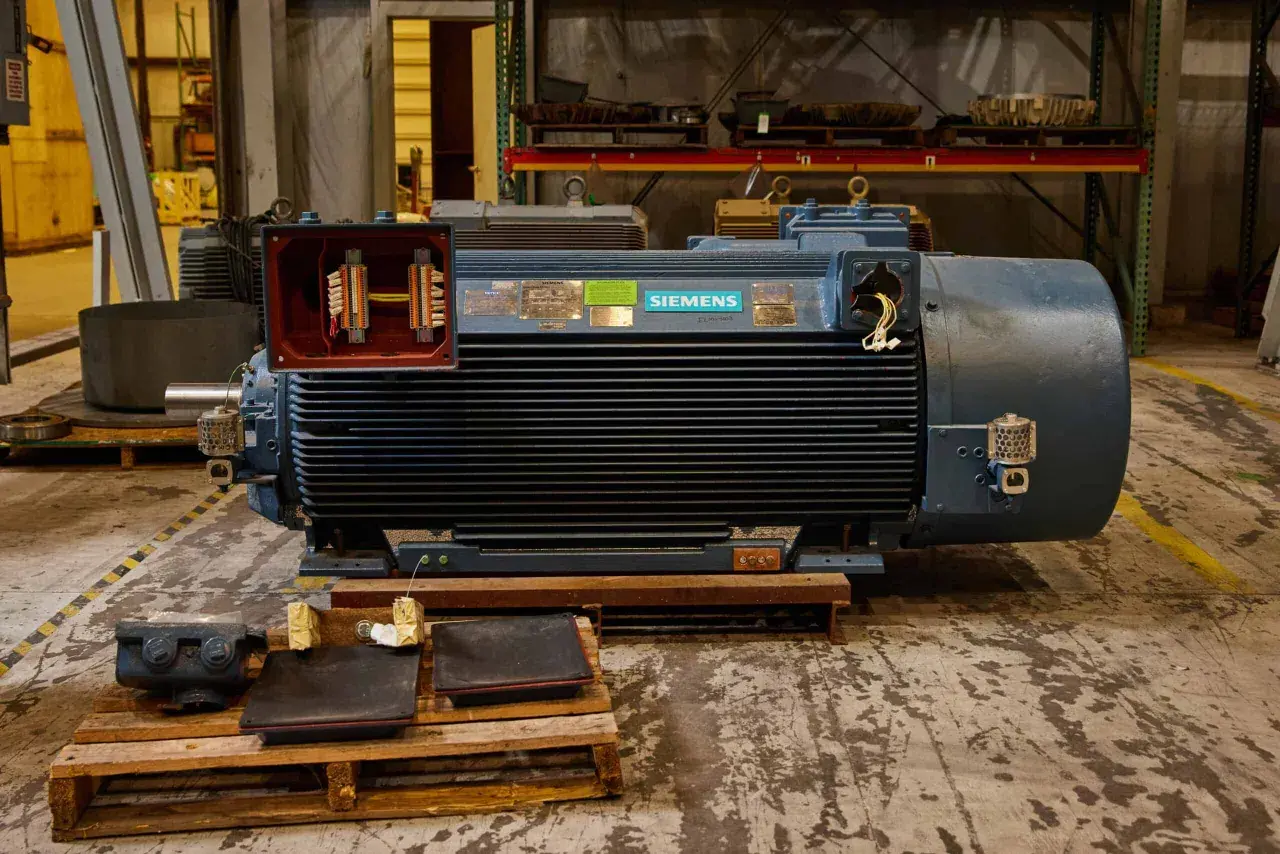
In motion control, the enclosure is not a cosmetic detail; it decides how a motor handles dust, spray, cleaning chemicals, condensation and heat. The practical difference between motor enclosure types is often the difference between a stable axis and one that runs hot, loses torque, or fails early. In this article I break down the common housing families, how protection and cooling interact, and what I would specify for real industrial and servo applications in the UK.
The main decision is protection versus heat
- Open designs suit clean, dry spaces, but they are a poor fit for dust, mist or washdown.
- Sealed housings improve protection, yet they can make heat rejection more difficult.
- IP ratings describe ingress resistance, not corrosion resistance or every real-world failure mode.
- For motion control, low-speed torque and cable sealing matter as much as the motor frame itself.
- The best choice usually balances environment, duty cycle, ambient temperature and maintenance access.
Why enclosure choice matters more than the nameplate suggests
I usually start with the operating environment, not the horsepower. In a clean plant room, an open or lightly ventilated motor can make perfect sense. In a UK food line, a packaging cell, or a workshop with coolant mist, the enclosure has to protect against far more than dust. It also has to manage heat well enough to keep the windings, bearings and feedback components within their design limits.
That is the real trade-off. A tighter housing gives you better protection from ingress, but it can also trap heat and reduce the continuous torque the motor can deliver. If the cooling path is weak, the motor may still “fit” mechanically while quietly running too hot for long-term reliability. In practice, the weakest point is often not the shell itself but the shaft seal, cable gland or connector. Once you see enclosure design that way, the next step is comparing the main housing families rather than chasing a single badge.

The main motor enclosure families and where they fit
In catalogues you will see a mix of IEC-style IP ratings and NEMA-style enclosure labels. The names are different, but the engineering question is the same: how does the motor keep contamination out, and how does it get heat back out again?
| Enclosure family | Cooling method | Protection focus | Best fit | Main caution |
|---|---|---|---|---|
| ODP / open ventilated | Ambient air passes through the frame | Very limited ingress protection | Clean, dry indoor areas with low contamination | Not suitable for dust, spray, coolant mist or washdown |
| TEFC | Shaft-mounted external fan cools a sealed frame | Good general protection against dust and moisture | General industrial use, pumps, conveyors, machine tools | Cooling falls away at low speed because the fan depends on shaft rotation |
| TENV | Natural convection, no fan | Sealed against free air exchange | Smaller motors, quiet machines, intermittent duty | Limited heat rejection, so continuous output is lower |
| TEAO | Relies on a separate air stream | Sealed motor body with external airflow requirement | Fans, blowers and HVAC-style duty | The motor must stay inside the intended airflow path |
| TEBC | Separate blower provides independent cooling | Sealed or partially sealed motor with forced cooling | Low-speed, high-torque motion control and inverter duty | More parts, more wiring and more maintenance than a self-fan motor |
| Washdown-duty | Usually fan-cooled or natural-cooled, with smooth surfaces and sealed interfaces | Designed for frequent cleaning and corrosive exposure | Food, beverage, pharma and hygiene-critical production | Higher cost, and thermal design matters because smooth bodies shed heat differently |
| Liquid-cooled | Coolant jacket or fluid circuit removes heat | High protection plus high power density | Compact machines, heavy-duty servo axes, high continuous torque | Plumbing, leak management and system integration are more demanding |
I treat that table as a starting point, not a one-to-one conversion chart. The exact protection class and temperature rise still depend on the manufacturer’s design, the mounting position and the way cables and seals are built. If you work in a hazardous area, the conversation becomes a certification question as well, not just a housing question. That leads neatly into the language used by IEC and NEMA to describe protection.
How IEC IP ratings and NEMA labels fit together
In the UK market, I usually see IEC language first. The IP code from IEC 60529 uses two digits: the first describes protection against solid objects, and the second describes protection against liquids. For rotating electrical machines, IEC 60034-5 applies the same idea specifically to motor enclosures. In practical terms, IP54 and IP55 are common industrial baselines, IP65 and IP66 are much more protective against dust and water jets, and IP67 is used when temporary immersion is part of the design brief.
That said, the IP code answers only part of the question. It does not tell you whether the enclosure is corrosion-resistant, whether the cable gland is well matched, or whether the seals will hold up after years of vibration and thermal cycling. It also does not mean that every IP67 motor behaves like a perfect IP67 assembly in motion; connectors, shafts and dynamic seals can become the weak link. NEMA-style labels such as ODP, TEFC and TENV are still common in global catalogues because they describe the construction and cooling style more directly, but there is no exact one-to-one conversion between the systems.
- IP5X is about dust protection, not a guarantee of complete dust tightness.
- IP6X indicates dust-tight performance under the standard test conditions.
- IPX5 and IPX6 focus on water jets, with the latter being more severe.
- IP67 is useful when immersion is part of the requirement, but the whole motor assembly still has to be designed for the job.
Once those labels are clear, the next question is not “What is the strongest enclosure?” but “What does the motion profile do to cooling and sealing in real operation?”
What motion control systems usually need from a housing
Motion control is harder on a motor than simple constant-speed duty. Servo axes accelerate, decelerate, reverse and hold position, so the cooling method matters just as much as ingress protection. A shaft-mounted fan on a standard TEFC motor can look impressive on paper, but if the axis spends long periods below a few hundred rpm, the fan moves less air and the continuous torque curve shrinks. That is why I pay close attention to speed profile, stall time and duty cycle before I look at the housing badge.
Self-fan cooled motors
These are fine when the motor spends most of its life near rated speed. In packaging conveyors, pumps and general automation, they are often the most economical choice. The weakness is simple: once speed drops, cooling drops with it.
Externally blown designs
For low-speed torque, held position or long acceleration ramps, a separate blower is often the safer option. It keeps the thermal performance much more stable than a shaft fan, which is why I see it used frequently on inverter-duty and heavier servo applications.
Read Also: VFD Applications - Beyond Speed Control
Liquid-cooled motors
When power density is the priority, liquid cooling is hard to beat. It is common in compact machines, high-duty servo axes and systems where ambient air is already hot or contaminated. The trade-off is integration effort: you have to think about plumbing, pressure, maintenance and leak detection, not just electrical selection.
For connected production lines, the enclosure decision also affects the feedback system, brakes and cable routing. A servo can be IP67 on paper and still fail early if the connector, encoder housing or gland is under-specified. That is why the selection process should start with the whole axis, not the motor body in isolation.
How I would choose one in practice
When I specify a motor housing, I work through the decision in the same order every time. It keeps the choice grounded in the machine rather than in a catalogue photograph.
- Define the environment first: dust, fibre, oil mist, coolant, washdown, outdoor exposure or humidity.
- Define the thermal load: continuous torque, peak torque, low-speed duty and how long the axis sits near stall.
- Match the cooling method to that load: self-fan, external blower, liquid cooling or natural convection.
- Check the weak links: shaft seals, cable glands, connectors, brake leads, encoder housing and mounting orientation.
- Think about cleaning and service: how often the motor is washed, inspected, relubricated or replaced.
- Ask for the real test data: IP rating, ambient temperature, altitude, duty cycle and any derating curve that applies.
The biggest mistake is over-specifying the enclosure and under-specifying the cooling. I see this most often when someone moves from a clean machine room to a harsher production line and assumes that a higher IP number alone will solve the problem. It won’t. If the heat path is weak, the motor still runs hot. If the cable entry is poor, the motor still gets contaminated. The right enclosure is the one that survives the environment without forcing you to pay for unnecessary complexity.
The mistakes that create overheating and ingress failures
Most enclosure-related failures are predictable. They come from choosing a design that looks safe on the surface but does not match the way the machine actually runs. In a damp UK plant, condensation is a common trap: a motor can be well sealed against spray and still suffer if temperature swings pull moisture into the housing or terminal box. Corrosion, not just water ingress, then becomes the long-term problem.
- Choosing the highest IP code possible while ignoring the thermal penalty.
- Assuming a shaft fan will be enough for low-speed continuous torque.
- Forgetting that connectors and glands often fail before the motor frame does.
- Ignoring the effect of cleaning chemicals on seals, paint and stainless hardware.
- Reusing the same enclosure specification for different mounting positions or ambient temperatures.
- Overlooking condensation control, especially in unheated plant rooms and cabinets.
The practical fix is usually boring, which is another reason it works: match the cooling to the duty, seal every entry point properly, and treat moisture management as part of the design, not an afterthought. That mindset is what makes the final checklist useful.
A practical specification checklist for the next build
If I had to write a short spec for a new machine today, I would keep it focused on the things that actually change outcomes.
- State the real environment: dust class, spray, washdown, coolant mist, humidity or outdoor exposure.
- State the real duty: continuous torque, peak torque, speed range, holding time and reversal frequency.
- State the cooling path: self-fan, external blower, liquid cooling or cabinet-assisted airflow.
- State the ingress target: IP level, connector sealing, shaft seal requirement and cable entry method.
- State the service plan: inspection interval, cleaning method, relubrication and replacement expectations.
- State any compliance constraints: IEC enclosure protection, hygiene rules or hazardous-area certification if relevant.
Once you know the main motor enclosure types, you can choose a housing that matches the environment instead of trying to compensate later with derating, maintenance or last-minute redesign. That is the difference between a motor that simply fits and a motor that keeps performing when the machine is under real pressure.
